

Best Fuse Holder Company: Essential Guide to Selecting a Dependable Manufacturer
2026-11-02
Spend enough time on a production floor and you'll learn one thing fast: the smallest parts often cause the biggest headaches. A fuse holder might be a few dollars' worth of metal and plastic, but a bad one can take down an entire system. So when it comes to picking a manufacturer, 'good enough' really isn't. This guide breaks down the essentials—from materials and certifications to real-world testing—and explains why SINGI keeps showing up in conversations about dependable fuse holder suppliers.
What Actually Matters in Fuse Holder Construction
The contact clips do more heavy lifting than the housing they sit in. A well-made clip uses a copper alloy with enough spring reserve to keep a consistent grip on the fuse ferrule through repeated thermal cycling. Once the metal relaxes, resistance climbs and heat follows, so clip geometry and plating matter far more than how thick the outer shell looks.
Heat has to go somewhere, and the holder is part of that path. Terminal cross-section and the connection to the wiring play a bigger role than many realize. A slim terminal or a loose rivet becomes a hot spot that ages the fuse prematurely. Good designs spread the current across the whole contact area instead of relying on a single point.
The insulating body needs real dimensional stability, not just a high temperature rating on paper. Under load, the plastic should not soften enough to let the clips drift or the mounting points flex. Details like polarizing features and a firm snap when the fuse seats correctly are signs the holder was engineered for service, not just to fill a panel cutout.
Reading Between the Lines of Certifications
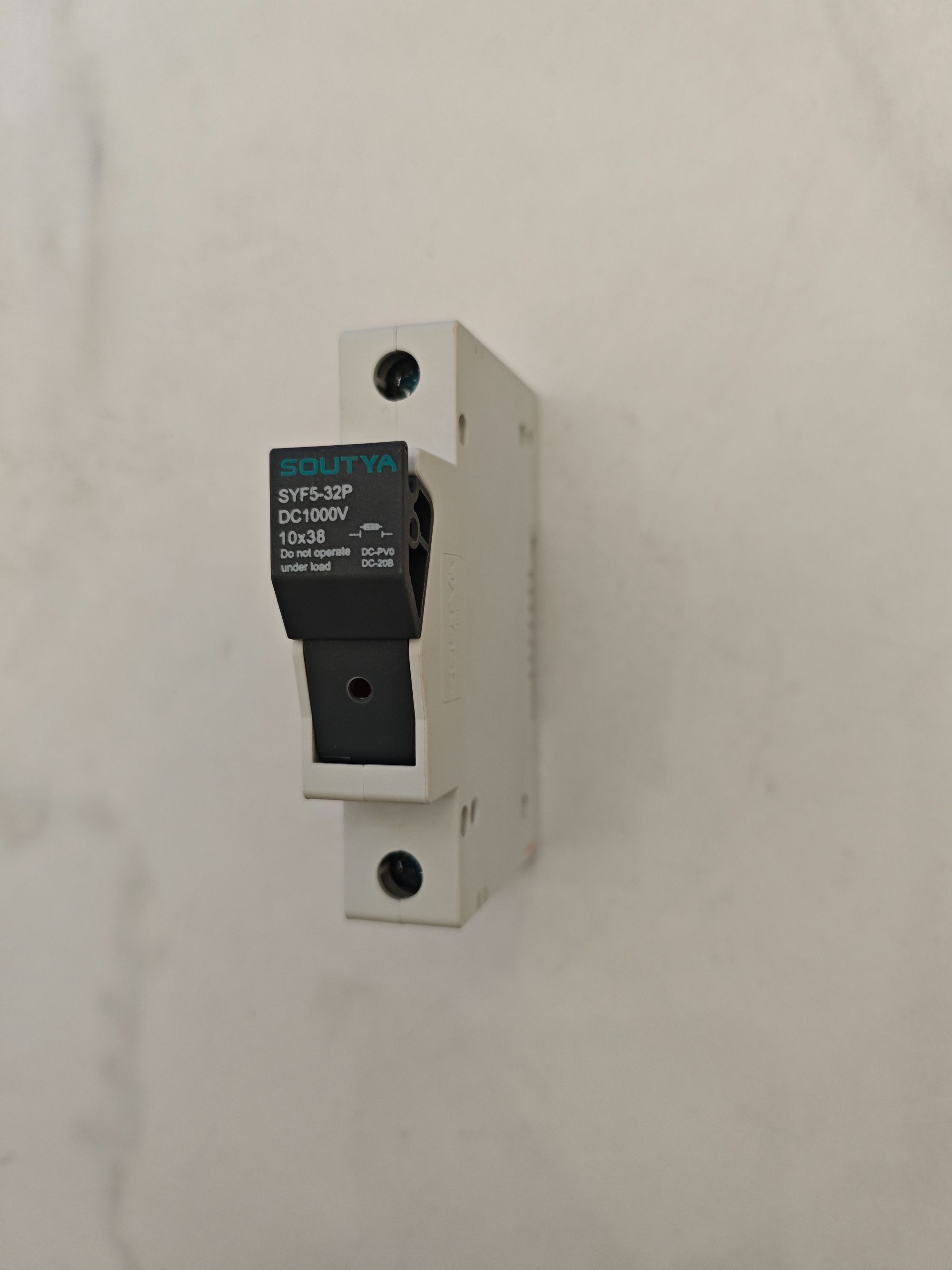
A certification’s surface claims rarely tell the whole story. The fine print—scope limitations, exclusion clauses, and the specific version of a standard being referenced—often reveals more than the logo on the box. What a vendor chooses to omit from their compliance statement can be as telling as what they highlight, and a sharp reader learns to treat every bullet point as a starting point for questions rather than a conclusion.
Equally important is understanding who actually stands behind the certificate. Some accreditations are issued after rigorous on-site audits, while others amount to little more than a paid self-assessment with a digital badge. The difference becomes obvious only when you trace the issuing body, check the audit cycle frequency, and confirm whether the certification covers the specific product line or merely the parent company’s headquarters. These details sit quietly in footnotes, yet they can entirely reshape what you think you have been promised.
Certifications also have a life span, and that dimension is frequently ignored. A credential earned three years ago under an older regulatory framework may no longer reflect current operational realities. Smart readers cross-reference the date of issue, the revision of the relevant standard, and any surveillance audit results that exist in between. The goal is not to dismiss certifications but to read them with a healthy skepticism that separates durable assurance from decorative paperwork.
When Customization Becomes the Safer Bet
The conventional wisdom says off-the-shelf tools are the low-risk choice—proven, cheap, and immediately available. But that logic flips when your processes don’t match the assumed “standard.” Forcing a team to reshape how they work around a rigid system often leads to workarounds, double entry, and quiet frustration. Customization, in those cases, isn’t a luxury; it’s the option that doesn’t break what already works.
Think about compliance-heavy environments. A generic platform may technically “support” your industry, but you end up bolting on patches, maintaining external spreadsheets, and hoping an update doesn’t wipe out a critical tweak. A customized build starts from your actual requirements—down to the odd exception that only your department cares about. That specificity removes the risk of discovering, six months in, that the tool can’t handle a core workflow.
There’s also a quieter risk with one-size-fits-all: the cost of training people to use something that fights them. When a system mirrors how your team already thinks and works, adoption isn’t a battle. Fewer mistakes happen, not because people are more careful, but because the path of least resistance is also the correct one. In that sense, customization shifts the bet from “will this survive our reality?” to “how much faster can we move now?”
Spotting Manufacturers That Test Beyond the Minimum
Most factories can point to a certificate on the wall and call it quality control. The harder question is what happens when nobody is watching. Manufacturers that genuinely test beyond the minimum tend to volunteer data before you ask—batch-specific results, raw material lot tracing, even the failed runs they caught internally. That transparency is usually a stronger signal than any polished compliance badge.
Another tell is how they talk about limits. A baseline supplier will say a product “meets spec.” A more serious one will discuss margin-to-limit, stability under stress, and which parameters they deliberately tighten beyond the official standard because they’ve seen drift in the real world. Ask for a recent out-of-spec investigation and watch the reaction. The ones who welcome the question are typically the ones who already treat testing as a feedback loop rather than a checkbox.
The Hidden Costs of a Cheap Fuse Holder
A fuse holder looks like a trivial part—just a clip, a base, and a couple of terminals. But when you buy the cheapest option on the shelf, you're not saving money. You're just moving the expense to a different line item. Those flimsy plastic bodies warp under heat from normal current flow. The contacts lose their spring tension after a few thermal cycles. Soon you've got a loose connection that arcs, melts the insulation, and takes out a control board that costs fifty times more than the "savings" on the holder.
Then there's the labor side. A cheap holder often means fiddly assembly, inconsistent screw torque, or terminals that don't seat properly in automated soldering. Every minute a technician spends reworking a bad connection is a minute not spent on productive work. In high-volume production, even a two-percent failure rate from marginal fuse holders translates into hundreds of hours of troubleshooting, rework, and line stoppages. The invoice for the holder says $0.18. The real cost is buried in your production report.
Reliability isn't just about avoiding field failures. It's about predictable maintenance. When a quality fuse holder is specified, you know the fuse will blow cleanly and the holder will survive dozens of replacement cycles. With cheap units, the fuse may not even make proper contact after the first swap. You end up replacing the holder every time you replace the fuse, turning a five-minute preventive task into a panel teardown. Cheap parts don't just fail—they erode your maintenance schedule and your team's trust in the equipment.
Questions Worth Asking Before You Commit
Most people focus on whether the other person is right, but the sharper questions are about you. What are you actually willing to give up? Commitment always costs something—time, spontaneity, the chance to keep your options open. If you can't name the trade-offs without resentment, that's a signal worth sitting with.
Pay attention to how you handle disagreement now. It's easy to assume friction will fade, but the small conflicts rarely vanish; they just get louder under pressure. Ask yourself whether the two of you can disagree without contempt, and whether either of you has a habit of keeping score. Those patterns, not grand promises, predict the quality of years ahead.
Finally, ask what you're running toward rather than away from. Committing because you're tired of dating, lonely, or behind some imagined timeline tends to collapse when the initial relief wears off. The strongest reason to commit is that your life already feels more like yours with this person in it—not that absence feels bad, but that presence feels generative.
FAQ
Focus on the body material and contact plating. Ceramic or high-grade thermoset bodies handle heat better than cheap thermoplastics, and tin- or silver-plated contacts resist corrosion. Also check if the unit has been tested for vibration and thermal cycling—those results tell you more than a glossy spec sheet.
Ask for third-party test reports from labs like UL, TÜV, or Intertek. A dependable maker will share documentation on dielectric strength, temperature rise, and endurance cycles. If they hesitate or offer only an in-house certificate, treat that as a warning sign.
Yes. Glass fuses often need open-style holders for easy inspection, while ceramic fuses work better in closed or panel-mount holders that contain arc flash. Blade fuses require tight, vibration-resistant terminals. Match the holder's clamping force and terminal style to the fuse type, not just the size.
High contact resistance creates heat at the connection point, which can degrade the fuse, warp the holder, or cause nuisance blowing. A quality holder will specify its contact resistance (often in milliohms) and use spring materials that maintain pressure over thousands of insertions.
Look for UL recognition (like UL 4248 or UL 512), IEC compliance (such as IEC 60127-6), and possibly RoHS/REACH for materials. These aren't just badges—they mean the holder has passed independent testing for safety, fire resistance, and environmental limits.
Many established manufacturers offer custom terminal angles, mounting ears, or color coding if your order volume justifies tooling. Share a CAD file early and ask about their design review process. A good partner will point out potential heat dissipation or clearance issues before you commit.
Very. A fuse holder is often a low-cost item, but a stockout can halt your whole assembly line. Ask whether they keep buffer stock for standard models, what their typical reorder window is, and whether they have regional warehouses. Reliable suppliers will give you a straight answer instead of a vague "we'll see."
Request samples and run a simple side-by-side test: measure insertion force, wiggle the fuse after installation, and check for any plastic flash or bent terminals. Then send both suppliers a technical question and see who responds with useful engineering detail. That tells you more about long-term partnership than a quote.
Conclusion
Choosing a fuse holder manufacturer comes down to more than spec sheets and glossy brochures. The actual build quality starts with the contact materials and housing—spring clips made from high-grade copper alloys hold tension over thousands of cycles, while the base resin must resist heat, arc tracking, and moisture without becoming brittle. Certifications are useful, but only if you read the fine print: a UL or IEC mark means little when the test conditions don't match your operating voltage, interrupting rating, or ambient temperature. Smart buyers ask for the full test report, not just the certificate.
Customization often becomes the safer route when standard parts force compromises in mounting, wire entry, or fuse size. A dependable supplier will modify lug orientation, terminal plating, or marking without treating it as a special favor. Equally important is what happens beyond minimum compliance—look for manufacturers that run thermal cycling, vibration, salt spray, and endurance tests on production samples, not only prototypes. The hidden costs of a cheap fuse holder appear later as loose clips, overheating, field failures, or rejected shipments. Before committing, ask direct questions: Which raw material certificates can you share? What tolerance do you hold on clip retention force? How do you handle a lot that drifts out of spec? A factory that answers clearly, shares data, and accepts accountability is worth far more than the lowest quote.
Contact Us
Contact Person: Jack
Email: [email protected]
Tel/WhatsApp: (+86) 13757759651
Website: https://www.singi.com