

Best Low-Dew-Point Wheel Desiccant Dehumidifier Units for Efficient Moisture Removal
2026-11-02
Most dehumidifiers promise drier air, but achieving a truly low dew point takes a different breed of equipment. Wheel desiccant dehumidifiers are built for exactly that, pulling moisture out of the air even when conventional systems fail. Whether you're protecting sensitive materials or optimizing a production line, the right unit makes all the difference. Below, we break down the best low-dew-point options on the market—and explain why ROTER has become a name worth knowing.
Why Dew Point Drops Below Freezing in Desiccant Wheels
The reason a desiccant wheel can push the dew point below freezing lies in the extremely low equilibrium vapor pressure of the desiccant surface. As process air passes through the wheel, water molecules are captured not just by condensation but by adsorption into the pore structure of materials like silica gel or molecular sieve. This adsorption pulls the air's absolute humidity down to levels where the remaining water vapor pressure is less than the saturation pressure over ice at 0°C—about 611 pascals. The air leaves warmer due to the heat of adsorption, but its moisture content is so low that the dew point falls well into negative territory.
Achieving sub-zero dew points also depends on how dry the desiccant is before it rotates back into the process sector. A high regeneration temperature, typically between 120°C and 180°C, drives off nearly all the moisture collected during the previous cycle. When this deeply dried material encounters the process air, its surface vapor pressure is so low that it can continue adsorbing water vapor even when the air's relative humidity drops below 1%. Under these conditions, the outlet air can easily reach a dew point of -20°C or -40°C, especially if the wheel uses a molecular sieve or a specialty low-dew-point desiccant.
It is also worth noting that the inlet air's own dew point plays a role. If the incoming air has already been pre-cooled or comes from a cold, dry climate, its initial moisture load is small. The desiccant wheel then removes the remaining moisture so effectively that the outlet dew point slides below freezing even though the dry-bulb temperature may still be above 0°C. This is why desiccant wheels are often paired with cooling coils or used in winter conditions to produce extremely dry air for processes like lithium battery manufacturing or pharmaceutical drying.
Spotting Misleading Dew Point Ratings on Spec Sheets
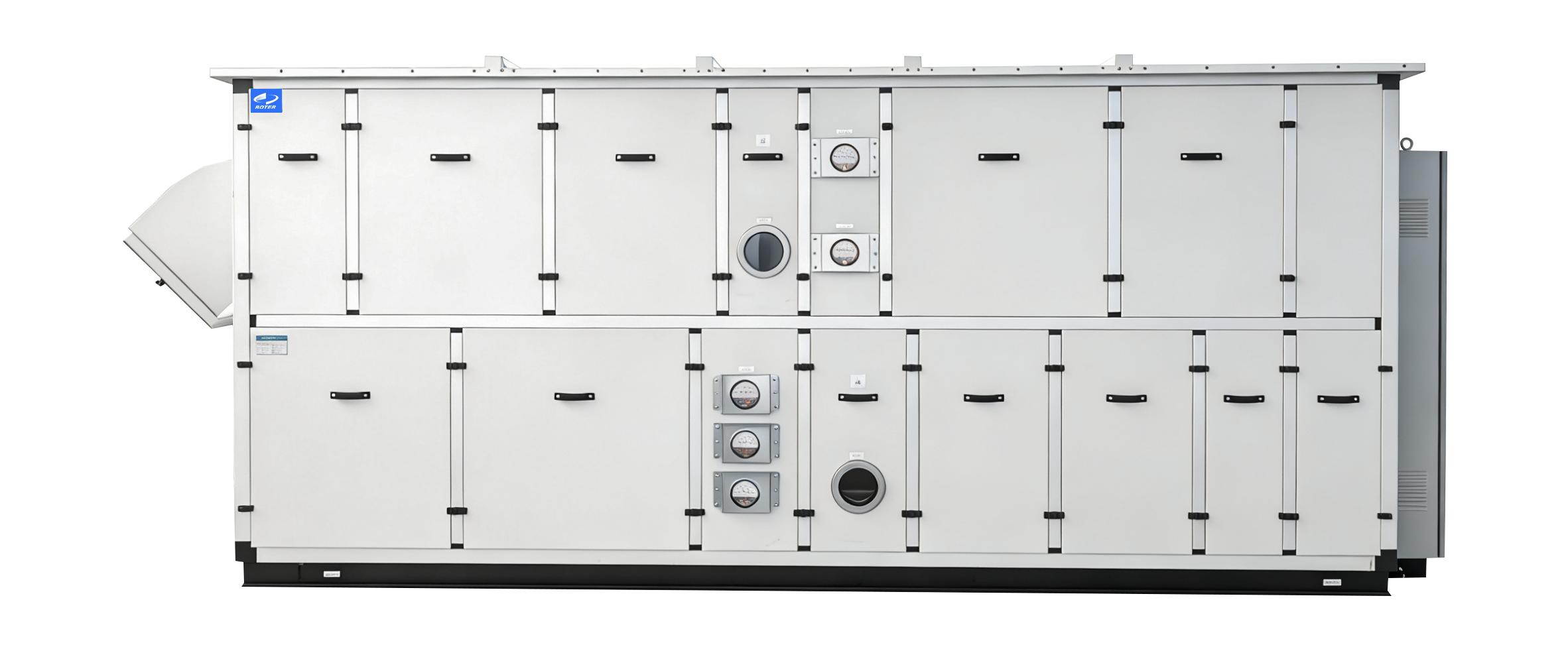
Many spec sheets lead with an impressive dew point like -40°F or -100°F, but that figure often assumes a very specific set of conditions: 100°F inlet temperature, 100°F ambient, 100 psig, and a low inlet humidity load. If your compressed air system runs hotter or at a different pressure, the actual dew point can drift significantly warmer. A machine that hits -40°F on a cool test bench might only manage +20°F on a humid summer day when the compressor room is baking.
The distinction between pressure dew point and atmospheric dew point trips up a lot of buyers. A dryer claiming -40°F atmospheric dew point is not nearly as dry as one delivering -40°F pressure dew point at 100 psig, because the compression concentrates water vapor. Spec sheets sometimes omit the word 'pressure' or bury the reference condition in a footnote. If you don't see a pressure and a temperature next to the dew point, treat the number as marketing rather than engineering.
Look for a full dew point curve across your actual flow range and ambient conditions instead of a single cherry-picked data point. A credible manufacturer will publish test data at multiple inlet temperatures and pressures, and they'll note the maximum allowable inlet temperature for that rating. If the spec sheet only gives one dew point with no context, ask for the ISO 8573-1 class and the test protocol. That usually reveals whether the rating is a real operational target or a lab curiosity.
Regeneration Heat Recovery That Lowers Operating Bills
Regeneration heat recovery captures thermal energy that would otherwise escape during the desiccant or adsorbent regeneration cycle, redirecting it back into the system. This approach turns a routine exhaust stream into a practical resource, trimming the amount of external fuel or electricity needed to maintain target temperatures. Instead of venting hot, moisture-laden air outdoors, the unit passes it through a heat exchanger that preheats incoming process air or pre-dries the next regeneration batch. The result is a measurable drop in utility consumption without any change to the core drying or dehumidification performance.
The financial benefit shows up quickly in facilities that run continuous regeneration, such as industrial dryers, air handling units with desiccant wheels, or solvent recovery lines. By recovering even a modest share of the exhaust heat, operators often see operating bills fall by 10% to 30% depending on flow rates and temperature differentials. The payback period for adding a recovery loop is typically under two years, and in high-load plants it can be less than a single heating season. Lower energy demand also means reduced strain on boilers or electric heaters, which extends equipment life and smooths out peak power charges.
Practical installations keep the recovery path simple: a corrosion-resistant exchanger, a bypass damper for start-up or maintenance, and controls that modulate flow only when the exhaust temperature exceeds a useful threshold. This avoids over-recovery that could cool the regeneration stream too much and slow the cycle. Maintenance stays minimal because the moving parts are limited to dampers and a small circulating fan. In retrofit projects, the recovery module often bolts onto the existing exhaust stack, so there is no need to redesign the main drying chamber or replace the desiccant media. The savings come from better use of heat already paid for, not from running the system harder.
Sealing Duct Systems for Stable Ultra-Dry Air Delivery
Achieving stable ultra-dry air delivery depends on ductwork that holds its integrity under constant pressure differentials. Even a pinhole-sized leak can pull humid ambient air into the stream, pushing the dew point upward and eroding process conditions that may have taken hours to establish. Sealing here is not a finishing step; it is the primary defense against gradual moisture ingress. Joints, seams, and penetrations all become potential failure points if treated as afterthoughts. The goal is a continuous, non-porous path from the drying equipment to the point of use, with no shortcuts that might allow conditioned air to escape or untreated air to enter.
Welded stainless steel or aluminum ducting often outperforms mechanically fastened alternatives in ultra-dry applications. Continuous welds eliminate the crevices where moisture can collect and where gaskets might age or relax over time. Where flanged connections are unavoidable, selecting the right sealing material matters more than tightening torque alone. PTFE-based gaskets or metal O-rings resist the drying effects of extremely low humidity and do not shed particles or outgas moisture the way some elastomers do. During assembly, keep the interior clean and free of cutting oils or fingerprints, since even trace organics can interfere with dew point stability once the system is operational.
Verification should move beyond a simple visual check. Pressure decay testing, tracer gas detection, or soap bubble inspection at every joint gives a clearer picture of what the duct will do under load. After commissioning, periodic re-testing catches seal degradation before it becomes a process deviation. Some facilities also monitor the pressure profile across long duct runs—unexpected drops or fluctuations often point to a leaking section long before humidity sensors register the change. Sealing duct systems for ultra-dry air, then, is less about a single perfect installation and more about maintaining a barrier that stays tight through thermal cycles, vibration, and years of service.
Choosing Wheel Over Refrigerant for Deep Moisture Removal
When the goal shifts from simply cooling a space to pulling stubborn humidity out of the air, the choice of equipment matters more than most people realize. Refrigerant-based dehumidifiers work by chilling coils below the dew point, which is efficient in warm, damp conditions but loses its edge as temperatures drop or as the target moisture level gets very low. A desiccant wheel, by contrast, uses a rotating matrix of moisture-absorbing material to strip water vapor directly from the airstream, independent of ambient temperature. That distinction becomes critical in basements, cold storage rooms, or process drying applications where a refrigerant unit would either ice up or waste energy trying to reach an unreachable dew point.
Another factor often overlooked is how each technology behaves under part-load or intermittent operation. Refrigerant systems need time to stabilize, and frequent cycling can strain the compressor while leaving humidity spikes in between. A wheel-based unit responds almost instantly, delivering consistent outlet moisture levels whether it runs for ten minutes or ten hours. This makes it a better fit for spaces that experience sudden moisture loads—like after a floor wash, a burst pipe cleanup, or a seasonal shift that brings wet air indoors. The wheel keeps working at peak effectiveness even when the surrounding temperature swings, something a coil-and-compressor setup simply cannot match.
Maintenance and longevity also tilt the scale in favor of the wheel for dedicated deep-drying tasks. Refrigerant circuits are sealed systems prone to leaks, and the coils collect dust and biofilm that reduce performance over time. A desiccant rotor, on the other hand, can be cleaned or even washed in many designs, and the only moving part is a low-speed motor that rarely fails. For anyone tired of replacing portable refrigerant dehumidifiers every few years or watching their energy bills climb while humidity stays stubbornly high, switching to a wheel-based approach often feels less like an upgrade and more like the first time the problem was actually solved.
Troubleshooting Drifting Dew Points in the Field
A drifting dew point reading rarely points to a single culprit. Start by checking the sample line for pinhole leaks or loose fittings, especially if the system runs under vacuum. Even a tiny ingress of ambient air can pull the reading toward room conditions, and the shift often comes and goes with changes in temperature or wind. Use a hand-held leak detector or temporarily isolate sections with shutoff valves to narrow the location. If the drift tracks outdoor humidity swings, suspect the sample conditioning or filter housing before touching the sensor itself.
Next, look at flow stability. Many chilled-mirror and polymer sensors become sluggish or erratic when flow drops below the manufacturer's minimum, which allows stagnant pockets to form. Check the rotameter or mass flow meter against expected values, and inspect the pump diaphragm for wear if one is in the loop. A failing bypass valve can also cause intermittent backpressure that shifts the measured dew point without any real change in process gas. Swapping in a calibrated reference hygrometer at the sample tap is the fastest way to confirm whether you are chasing a sensor problem or a sample system problem.
Finally, consider what the sensor has been exposed to recently. A dew point probe that has seen liquid water, compressor oil mist, or acidic condensate can take days to recover, and during that time the output will wander. Bake-out or dry purge may help, but if the drift continues after the sample is confirmed clean and dry, recalibrate against a known generator. When the error shifts with temperature, check the sensor's built-in temperature compensation and whether the mounting block is actually at the gas temperature. Field drift is often a system symptom, not a sensor failure.
FAQ
Unlike refrigerant models that cool air to condense moisture, these units use a rotating desiccant wheel to physically adsorb water vapor. That lets them keep pulling moisture even at very low temperatures or when the target dew point is well below freezing, which refrigerant systems can't manage.
Depending on the rotor material and regeneration setup, a well-configured unit can push the outlet dew point down to -40°F (-40°C) or even lower. Some specialized industrial builds reach -80°F (-62°C), but for most commercial and pharmaceutical needs, -20°F to -40°F is common.
The desiccant wheel itself is fairly durable, but you'll want to check the air filters every few weeks, inspect the regeneration heater and seals for wear, and occasionally clean the rotor surface with low-pressure air. Belt tension and drive motor bearings also deserve a look during routine service.
While many units are built for warehouses, labs, and manufacturing floors, smaller modular versions exist for cold storage rooms, archive vaults, and even some residential applications with extreme humidity issues. The key is matching the process airflow and regeneration heat source to the space.
Yes, continuous operation is normal. The wheel keeps rotating through process and regeneration zones, so there's no ice buildup or defrost cycle like you'd get with a refrigerant coil. As long as the regeneration heater gets proper energy input and filters stay clean, downtime is rare.
Look beyond just the rated airflow. Pay attention to the dew point spec at your actual inlet conditions, regeneration energy source and consumption, rotor diameter and desiccant type, casing material for corrosion resistance, and how easily you can access filters and bearings. A slightly higher upfront cost often pays back through lower energy use and longer rotor life.
A common issue is undersizing the regeneration heater or using wet, unfiltered air for regeneration, which shortens desiccant life. Another is placing the unit where process air can short-circuit back into the intake. Proper ducting and ensuring the regeneration exhaust vents away from the intake matter more than many realize.
Conclusion
Wheel desiccant dehumidifiers are the go-to choice when you need to pull moisture down to extremely low dew points—often well below freezing—because the desiccant’s adsorption process doesn’t rely on condensation. Unlike refrigerant systems that struggle as frost forms on coils, a properly specified wheel keeps working as the air gets drier. That said, not all spec sheets tell the truth. Some manufacturers list dew point ratings based on ideal lab conditions or omit that the wheel’s regeneration temperature and air leakage play a huge role. Look beyond the headline number: check the actual moisture removal capacity at your target dew point, and ask about regeneration heat recovery. Recovering heat from the regeneration exhaust can cut operating bills significantly, especially in continuous-duty applications where the burner or heater runs constantly.
Once you have the right wheel, the system design matters just as much. Sealing the ductwork and the wheel cassette itself prevents humid ambient air from sneaking back into the ultra-dry supply stream—a common cause of drifting dew points in the field. If you’re seeing the dew point creep up over time, inspect the seals, check the regeneration air temperature, and verify that the desiccant hasn’t been saturated by a failed pre-cooling coil or a clogged filter. For deep moisture removal below 0°F dew point, a wheel desiccant unit almost always beats a refrigerant-based dryer, not just on performance but on long-term reliability. The key is spec’ing a unit with honest ratings, integrated heat recovery, and a well-sealed air path, then keeping an eye on those seals and regeneration settings during operation.
Contact Us
Contact Person: Rhea
Email: [email protected]
Tel/WhatsApp: +8618800560886
Website: https://www.rotorairtech.com