

China Boron Carbide Ceramic The Ultimate Guide to Properties and Uses
2026-11-03
Boron carbide ceramic isn't just another hard material—it's the quiet workhorse behind armor plating, nuclear shielding, and wear-resistant components that most people never see. If you've ever wondered why China has become a global hub for advanced ceramics, or how this remarkable material balances extreme hardness with surprisingly low density, you're in the right place. This guide walks through the properties that make boron carbide ceramic indispensable and the practical uses driving demand across industries. And when sourcing reliable material, partnering with a specialist like HUAYI TECH can make all the difference. Let's dig into what makes this ceramic so unique—and why it matters for your next project.
Where Hardness Meets Lightweight Design
The usual trade-off between durability and weight disappears here. Instead of adding mass to gain strength, the design leans on a carefully selected material matrix and structural geometry that spreads stress without the penalty of extra grams.
Tiny surface treatments and edge geometry do the heavy lifting. The result is a part that shrugs off wear and impact while staying easy to handle, install, or carry—no brittle over-engineering, no hollow compromises.
In hand, the difference is immediate. It feels dense where it should, but never burdensome. That balance isn't a spec sheet trick; it's the result of iterative testing against real misuse, not just lab numbers.
Armor, Abrasives, and Nuclear Shielding: Where It Actually Gets Used
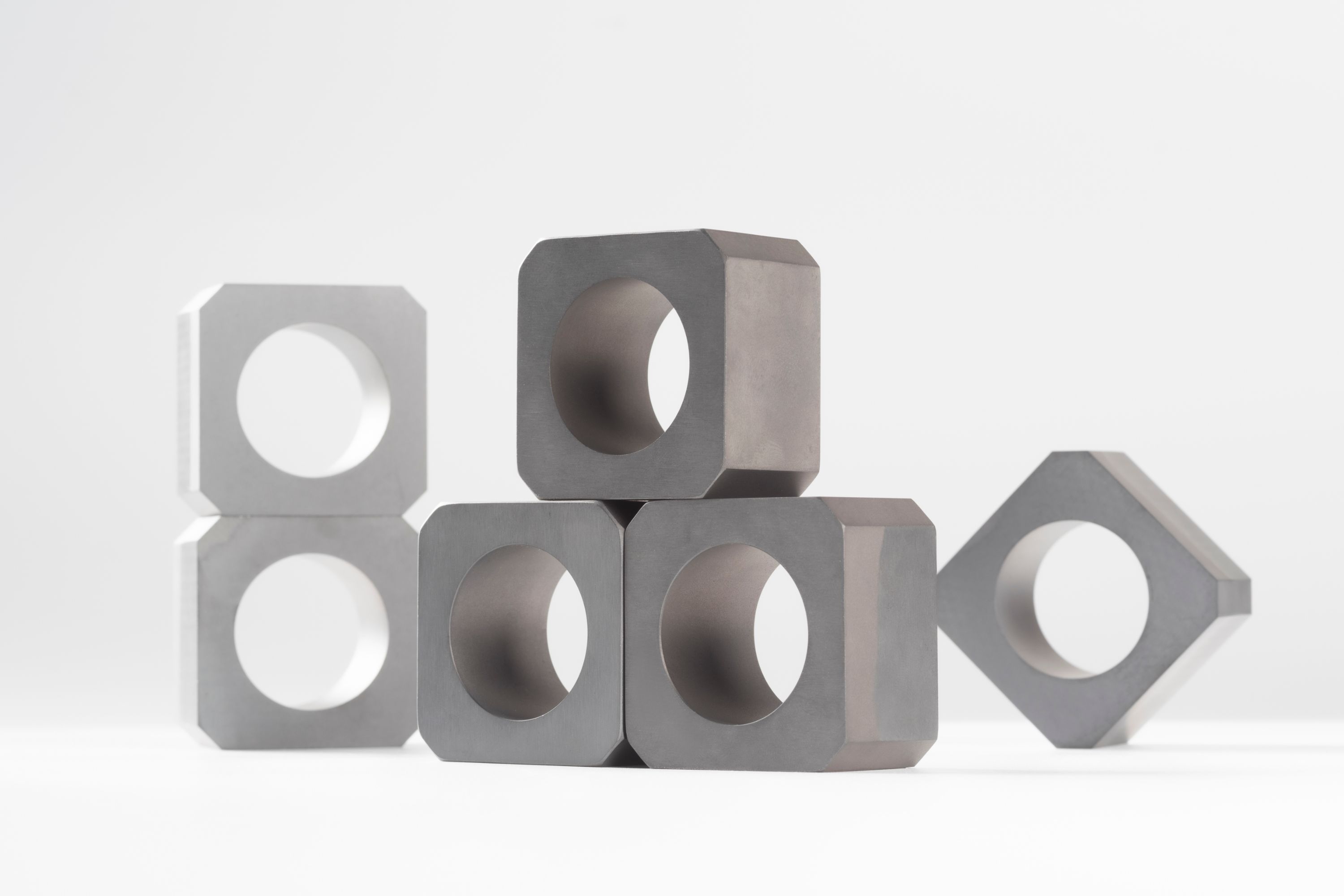
When most people hear about advanced ceramics, they picture coffee mugs or bathroom tiles. But boron carbide sits in a completely different league, and its real-world applications are far more intense than anything you'd find in a kitchen. In body armor and vehicle plating, this material's extreme hardness—just behind diamond and cubic boron nitride—allows it to shatter incoming projectiles rather than simply stopping them. That brittle fracture behavior, often seen as a weakness in ceramics, is exactly what makes it work so well against high-velocity threats.
The same property that stops bullets also makes boron carbide a brutal abrasive. It chews through hardened steels, tungsten carbide, and even other ceramics during grinding and lapping operations. Unlike softer abrasives that wear down quickly, boron carbide particles keep their sharp edges longer, which means less downtime and more consistent finishes in precision manufacturing.
Then there's the nuclear side. Boron has a naturally occurring isotope, boron-10, that gobbles up thermal neutrons without producing dangerous secondary radiation. That's why you'll find boron carbide pellets inside control rods and as a filler in polymer-based shielding for spent fuel casks. It's not glamorous, but it quietly prevents chain reactions from running away.
Why Chinese Suppliers Keep Tight Control Over Grain Size
Grain size rarely gets the attention it deserves until a batch arrives off-spec. Many Chinese suppliers learned this the hard way over years of exporting abrasives, powders, and specialty materials. A shift of a few microns can change how a coating flows, how a cutting wheel wears, or how a refractory lining holds up under heat. So instead of treating particle size as an afterthought, they bake it into the production routine from the start.
Tight control here means more than running a sieve check at the end of the line. It involves adjusting mill settings, monitoring moisture and temperature, and pulling samples at intervals that make sense for the material. Some plants keep their own reference samples from past shipments, allowing them to match a customer's existing supply rather than just meeting a generic spec. That kind of continuity is difficult to fake and costly to ignore.
The payoff shows up in repeat orders. When a buyer can drop new material into an established process without recalibrating everything, the supplier becomes harder to replace. Chinese manufacturers know this advantage well, and it is one reason they invest in better classification equipment and trained lab staff even when the market is soft.
Sintering Choices That Shape the Final Ceramic
Sintering temperature and ramp rate play central roles. A slow ramp to peak allows organics to burn out and grains to rearrange before densification, reducing trapped porosity. Too fast and the surface may seal early, trapping gases that later blister or weaken the body. Lower peak temperatures usually preserve finer grain sizes but risk incomplete densification; higher temperatures promote diffusion and pore elimination but can trigger exaggerated grain growth or even melting of minor phases. The choice often hinges on the specific ceramic formulation and the balance between translucency, strength, and dimensional tolerance.
Atmosphere control is another lever that is often underestimated. In air, oxides may stay stoichiometric, while reducing conditions can create oxygen vacancies that alter color, conductivity, or sintering kinetics. For non-oxide ceramics like silicon nitride or silicon carbide, a nitrogen or argon overpressure is sometimes needed to suppress decomposition at high heat. Even trace moisture can shift the outcome, influencing whether a glaze matures to a glossy surface or a matte crystalline texture.
Post-sintering cooling rates and applied pressure also define the final ceramic. Fast cooling can freeze in residual stresses that improve toughness but may cause microcracking if the thermal expansion mismatch is too severe. Pressure-assisted methods drive rapid densification at lower temperatures, limiting grain growth and producing components with near-net shape and uniform microstructures. Each of these choices interacts with the others, so the final ceramic is rarely the result of a single parameter but of a tightly choreographed thermal and atmospheric path.
Reading a Boron Carbide Spec Sheet Without Getting Lost
Spec sheets for boron carbide often bury the numbers that actually matter under layers of density and particle size data. Instead of getting stuck on individual values, look at the relationships between them. If the listed theoretical density is 2.52 g/cm³ but your sintered part only reaches 2.45, that gap usually comes from porosity, not from a flawed raw powder. Check whether total boron plus carbon adds up to at least 98% once oxygen and nitrogen are accounted for. Anything lower tends to point toward hidden binder residue or free carbon, both of which quietly eat away at hardness and wear resistance.
Particle size distributions can be just as misleading. A D50 of 0.8 µm sounds ideal until you notice a wide span where the D90 is above 5 µm. That means agglomerates are present, and you will need extra dispersion energy during milling or pressing. If the D90 is more than three times the D50, treat that powder as if it were coarser than the average suggests. Oxygen content is another signal worth watching: values above 0.5 wt% usually indicate surface oxidation that will interfere with densification unless you adjust the sintering atmosphere accordingly.
Hardness numbers often look impressive without context. A quoted Vickers hardness of 30 GPa at 0.5 kgf is not the same as 28 GPa at 1 kgf because the indentation size effect inflates low-load readings. Before comparing materials, find out which load was used. If the sheet omits it, ask for Knoop hardness at 1 kgf instead, since that gives a more practical comparison for armor and wear applications.
When Boron Carbide Wins Over Tungsten Carbide
The biggest argument for boron carbide over tungsten carbide is weight. At just 2.5 grams per cubic centimeter, boron carbide is roughly one-sixth the density of tungsten carbide. That matters enormously in personal armor and helicopter seat pans, where fighters and crews already carry enough gear. Boron carbide plates stop rifle rounds at a fraction of the mass, so mobility and endurance improve without giving up protection.
Hardness also tips the scale in certain wear applications. With a Vickers hardness near 30 GPa, boron carbide edges out tungsten carbide by a wide margin. For sandblasting nozzles, water-jet orifices, and lapping compounds used on hardened steels, that extra hardness translates directly into longer service intervals. Tungsten carbide may shrug off impact, but in pure sliding abrasion with no shock loading, boron carbide simply wears slower.
Nuclear environments present a completely different kind of win. Boron has an unusually large neutron capture cross-section, so boron carbide is the standard choice for control rods, spent fuel pool racks, and cask liners. Tungsten carbide, dense as it is, cannot absorb neutrons the same way. When shielding must stop radiation without adding bulk or activating dangerously, boron carbide steps in and outperforms.
FAQ
It ranks among the hardest materials available, with a Mohs hardness around 9.5, yet its density stays near 2.52 g/cm³. This combination gives it an edge in lightweight armor, and Chinese suppliers often use hot pressing to keep the microstructure consistent.
Its hardness-to-weight ratio is better than alumina and silicon carbide, meaning you can achieve the same protection level with noticeably less mass. The high elastic modulus also helps spread impact energy, though lower fracture toughness means it usually needs a backing layer.
Hot pressing delivers higher density and finer grains, which improves flexural strength and hardness. Pressureless sintering can produce more complex shapes but may leave slightly higher porosity, so the choice depends on whether you need mechanical performance or design freedom.
Typical applications include sandblasting nozzles, waterjet cutting orifices, neutron absorbers in nuclear reactors, wear-resistant seals, and precision bearing parts. Its chemical inertness also makes it suitable for handling corrosive slurries.
Yes, but machining requires diamond grinding or laser cutting because of the extreme hardness. Complex internal cavities or thin walls drive up cost significantly, and the material's brittleness means sharp corners or abrupt cross-section changes should be avoided in the design.
Check that the density is close to the theoretical 2.52 g/cm³, request Vickers hardness reports with HV1 values above 3000, and confirm uniform grain size. ISO 9001 certification and high-purity boron carbide powder are also important because impurities can weaken impact resistance.
In inert atmospheres it can handle temperatures above 2000°C, but oxidation begins around 600°C in air, so coatings or protective atmospheres are needed in oxidizing conditions. Compared to silicon nitride, it retains strength better at high temperature but is less oxidation resistant.
Finished parts are stable and safe under normal conditions, but grinding dust can be harmful if inhaled, so ventilation and respiratory protection are essential during machining. Its neutron absorption capability may also require specific handling procedures in nuclear-related applications.
Conclusion
Boron carbide occupies a strange niche: it is one of the hardest materials you can actually buy in bulk, yet it weighs almost nothing compared to the metals it often replaces. That combination of Vickers hardness above 30 GPa and a density around 2.52 g/cm³ is why Chinese manufacturers push it so hard for armor inserts, sandblasting nozzles, and control rods in nuclear reactors. The lightweight strength matters most in body armor and helicopter seats, where every gram counts, while the neutron-absorbing boron-10 isotope makes it indispensable for shielding and spent fuel storage. On the abrasive side, the same hardness that stops a rifle round also eats through tungsten carbide tooling, which is why blast cabinets and water-jet cutting often favor boron carbide powders.
None of that performance shows up by accident. Chinese suppliers obsess over grain size distribution because a narrow, submicron spread lowers sintering temperature and prevents the grain growth that turns a tough plate into a brittle one. Pressureless sintering, hot pressing, and spark plasma sintering each leave a different fingerprint on density, porosity, and final hardness, so reading a spec sheet means looking past the marketing numbers: flexural strength, fracture toughness, and open porosity tell you more than a single hardness claim. In direct comparison, boron carbide beats tungsten carbide when the job demands low mass, high hardness, or exposure to radiation, even though tungsten carbide still wins on fracture toughness and cost in many industrial wear parts.
Contact Us
Contact Person: Junting Leo
Email: [email protected]
Tel/WhatsApp: +86 18615009766
Website: https://www.huayimaterial-china.com/