

China Charging Hose Sourcing Tips for Consistent Quality
2026-11-18
Sourcing charging hoses from China often feels like a bet on quality that only shows up after the first production run. The real challenge isn’t finding a supplier—it’s keeping every batch identical. This guide breaks down practical sourcing tips that go beyond spec sheets, including how HONGSEN approaches consistency at the factory level. If you’re tired of approving samples that never match the shipment, keep reading.
Walk the Charging Hose Line Before You Negotiate
Before you agree to a price, take a slow walk along the full length of the charging hose line as if you were already using it under real workload. Look for cracks near the couplings, flattening from repeated bending, or spots where the outer jacket has started to peel away from the inner core. These are the details a quick glance at the reel will miss, and they usually surface days after the deal closes, when the burden shifts entirely to you.
Pay attention to how the hose behaves at the points where it drags across the floor or rubs against the charger frame. If the line has kinked permanently in one place, that bend will become a weak point under pressure. Feel for stiffness in cold-prone sections and for soft bulges that suggest the inner lining is already breaking down. Mention what you see in plain terms, not as a complaint, but as a list of repairs the current condition already demands.
Use those observations to reset the conversation. A seller who knows you have inspected the line closely is less likely to frame the charger as trouble-free. Ask for a short demonstration with the hose fully unwound, then let the negotiation move from vague promises to specific allowances for replacement hose, fittings, or labor. Concrete wear gives you a firmer position than general skepticism ever will.
Ask Which Polymer Batch Went Into Your Sample
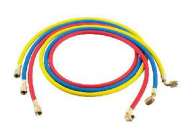
Batch numbers tend to get ignored until a property drifts outside the expected range. If the sample container or packing slip is still around, start there. The lot code is usually stamped near the production date, and it gives you the fastest route back to a specific run, a specific reactor, or a specific day on the line.
When the original packaging is gone, ask your supplier for the batch genealogy or the certificate of analysis tied to your shipment. Give them the purchase order, delivery date, or the reference number from your incoming inspection log. A careful vendor can match those records to the exact resin lot, additive package, or compounding setup that produced the material.
Do not settle for the first lot number you see. If the polymer was blended, repacked, or stored in a shared silo, ask whether the batch was split or combined before it reached you. That detail often matters more than the label itself, because it tells you whether your sample still reflects the material sitting in your inventory.
Pull the Cyclic Pressure Test Records, Not the Brochure Chart
Aircraft maintenance manuals love a tidy graph. The cyclic pressure chart printed in the brochure plots a smooth curve that assumes brand-new seals, perfectly machined fittings, and a test bench calibrated yesterday. Real hydraulic components rarely cooperate with that fantasy. When a technician pulls the actual cyclic pressure test records from the last overhaul, the story changes: pressure spikes appear where the brochure shows a gentle slope, and decay rates flatten in ways the marketing curve never predicted.
Field data routinely exposes a gap between theoretical performance and what survives the hangar floor. A pump that should hold 3,000 psi for ninety seconds according to the brochure might show a gradual bleed-down starting at forty seconds on the actual test log. Those records capture temperature swings, contaminated fluid, and worn poppet seats that no static chart can illustrate. Ignoring them means signing off an aircraft with a false sense of hydraulic health.
The smart approach is to treat the brochure chart as a suggestion from the engineering department, not a rule for airworthiness. Compare the recorded cyclic pressure curves from the last three maintenance cycles and look for trends: a leftward shift in pressure retention, an increase in recovery time, a spike that repeats at a specific RPM. Those patterns live only in the records, and they often reveal an impending failure long before the component throws a master caution. Pull the logbook data first, then decide if the glossy chart still applies.
Watch the Coupling and Crimp Step in Real Time
Seeing the coupling and crimp step as it happens removes guesswork. A close-up camera or integrated sensor feed lets you catch alignment drift, strand placement errors, or inconsistent pressure before the cycle completes. Instead of waiting for a pull test to reveal a bad crimp, the operator can stop the press mid-squeeze and correct the setup.
The real value comes from how the live view changes habits. Once people can watch the dies close around the terminal, they begin to notice subtle variations in barrel fill or insulation position that usually go unnoticed. That immediate feedback loop turns the crimp station into something closer to a controlled process rather than a repeatable but blind motion.
Some systems let you freeze frames at the moment of full crimp height. That makes it easier to compare one cycle to the next and to keep a visual record tied to batch numbers or tooling changes. When a questionable part shows up later, the operator can pull the exact image sequence and see whether the problem started at material feed, strip length, or die closure.
Keep a Sealed Reference Hose for Every Future Order
Keeping a sealed reference hose on file changes the way repeat orders are handled. Instead of relying on memory, old email threads, or partial specs, the exact construction, material, and fitting profile remain sealed against contamination and ready to inspect. That single physical sample removes the guesswork when a customer says they want “the same one as before.”
It also gives the production team a clear benchmark for wall thickness, surface finish, and end connection orientation. When a replacement run starts, the sealed sample is opened, compared against the incoming material, and checked before cutting or crimping begins. Any drift in compound feel, braid angle, or marking placement gets caught before it becomes a field failure.
For clients with custom assemblies or hard-to-match tolerances, the reference hose becomes a quiet form of insurance. It travels into the quality room, sits beside the new build at final inspection, and then goes back into storage once the order ships. Over years of repeat business, that one sealed unit often does more than a written datasheet ever could.
Put End Cap and Coil Packing Rules in the Purchase Order
Every order that includes exposed coils or capped ends needs explicit handling instructions, not a generic line about standard packaging. Instead of relying on a supplier's default method, write down the exact cap material, the inner diameter tolerance, and whether the cap must be taped, strapped, or shrink-wrapped to the coil. This removes guesswork during unloading and prevents the classic problem of caps arriving loose after a long truck ride.
Be just as specific about coil packing. State the number of circumferential straps, their minimum break strength, and where edge protectors must sit. If the coils are nested, define the separator type and the maximum stack height. A purchase order that simply says "export packing" invites shortcuts, while a short list of measurable rules gives the warehouse crew a clear pass-or-fail checklist before the material ever leaves the dock.
Finally, link the packing rules to receiving and payment terms. For example, note that visibly damaged or non-compliant packing will be photographed, documented, and held for inspection before acceptance. That single sentence changes the supplier's incentive from doing the minimum to proving the packing was done right, which is far cheaper than discovering bent edges or water-stained coils after the invoice has already been paid.
FAQ
Start with the raw material certificates and the actual polymer grades used in the hose liner and cover. Many consistency issues trace back to suppliers swapping materials after approval, so asking for batch-level traceability from resin to finished hose matters more than a glossy factory tour.
Put the approved sample's physical properties in writing and make them part of the purchase order. Then require a pre-production sample from the same production line and the same material lot that will be used for bulk. Random third-party testing of both samples against the agreed specs helps close the gap.
Depending on the market, ask for UL, CE, or relevant IEC testing for electrical safety if it's an EV charging hose, plus material compliance like RoHS and REACH. But don't stop at certificates; verify them with the issuing body and ask for the test reports that match the actual product model.
It often comes down to uncontrolled raw material substitutions, weak process discipline, and poor final inspection. You can reduce risk by narrowing your supplier list to those with documented process controls, requiring any material or process change to be approved in writing, and scheduling unannounced inspections during production rather than only at the end.
A factory gives you more direct control over production and specifications, but not all factories are good at handling export documentation or small-batch flexibility. A trading company can manage QC and logistics if it has a stable factory partner. The key is not the label; it's whether the actual production site can be identified and audited.
Include the exact specification sheet, approved sample reference, acceptable defect limits, test methods, and consequences for non-conformance, such as rejection or price reduction. Also state that any change to material, design, or production location requires prior written approval.
Start with visual and dimensional checks, then stress the hose with pressure, flexibility, and pull tests. For electrical charging hoses, verify insulation resistance and continuity. It's often cheaper to send an inspector with a small test kit than to ship defective goods back.
Make it clear that substitutions without approval will be treated as a breach of contract, not a cost-saving favor. Require sealed reference samples and batch test reports, and if it happens once, move to a stricter inspection plan or switch suppliers before the problem becomes a pattern.
Conclusion
Most buyers spend too much time on unit price and not enough on the line that actually makes the hose. Walk the production floor before you sit down to negotiate, and pay attention to how raw tube and cover material are handled. Ask which polymer batch went into the sample you approved, not just the generic compound name. Batch-level differences in plasticizer content or filler can change flexibility, kink resistance, and long-term pressure retention. Then ask to see the cyclic pressure test records for that batch. A brochure curve means little if the actual data shows early fatigue around the fitting or a wide spread between samples. Consistency comes from records, not from a clean data sheet.
Watch the coupling and crimp step in real time, because that is where a good hose can quietly become a warranty claim. Check whether operators use the correct dies, clean the hose end, and verify crimp diameter against a daily setup sample. Once you approve a hose, keep a sealed reference length from that exact production run. It becomes your physical standard for shore hardness, marking, fit, and finish on every later shipment. Finally, put end cap and coil packing rules directly in the purchase order rather than assuming the factory will remember. Specify sealed caps, minimum bend radius, coil size, and pallet stacking. Those small packaging demands stop moisture, dirt, and kinked ends from ruining the consistency you worked to lock in.
Contact Us
Contact Person: KOPASS HO
Email: [email protected]
Tel/WhatsApp: 8613606566112
Website: https://www.hongsenref.com/