

China TECO Gearmotor: Your Ultimate Guide to Reliable Industrial Power
2026-06-26
When industrial operations demand unwavering reliability, China TECO gearmotors stand as a proven backbone for heavy-duty applications worldwide. Yet, navigating the market to find genuine, high-performance units can be a challenge. At Soochee, we bridge that gap by connecting you directly with the trusted TECO drives that keep your machinery running smoothly. In this guide, we’ll unpack everything from selection to maintenance, so you can power forward with confidence.
Why TECO Gearmotors Outperform in Harsh Industrial Settings
When dust, moisture, and extreme temperatures become daily challenges, most gearmotors falter—but not TECO’s. Their rugged construction starts with a cast-iron housing that shrugs off impacts and seals out contaminants. Internally, advanced labyrinth sealing and high-temperature-rated insulation keep the motor protected even when the air is thick with abrasive particles or washdown fluids. The gearing itself is precision-honed from hardened alloys, delivering consistent torque without the accelerated wear you’d expect in foundries, mines, or chemical plants.
Beyond just survival, TECO gearmotors actively lower the maintenance burden. Grease-for-life bearings and auto-tensioning belt drives mean fewer inspections and no re-lubrication intervals—critical when equipment is buried in remote, dirty corners of a facility. For environments where condensation poses a constant short-circuit risk, the windings receive an extra dip-and-bake varnish treatment, ensuring the motor starts reliably even after sitting idle in damp conditions. This design philosophy turns what would be a headache for maintenance crews into a “set and forget” asset.
Another edge is the adaptive thermal management. Instead of a one-size-fits-all cooling fan, TECO employs shrouded, unidirectional airflow paths that self-clean and resist clogging from airborne debris. In high-altitude or enclosed installations, optional oversized cooling fins and thermal sensors prevent derating, so the gearmotor maintains nameplate output without faltering. Paired with vibration-dampening mounts that isolate the drive train from structural resonance, these units deliver quiet, reliable operation where others would shake themselves apart.
Inside the Engineering: What Makes TECO’s Powertrain Tick
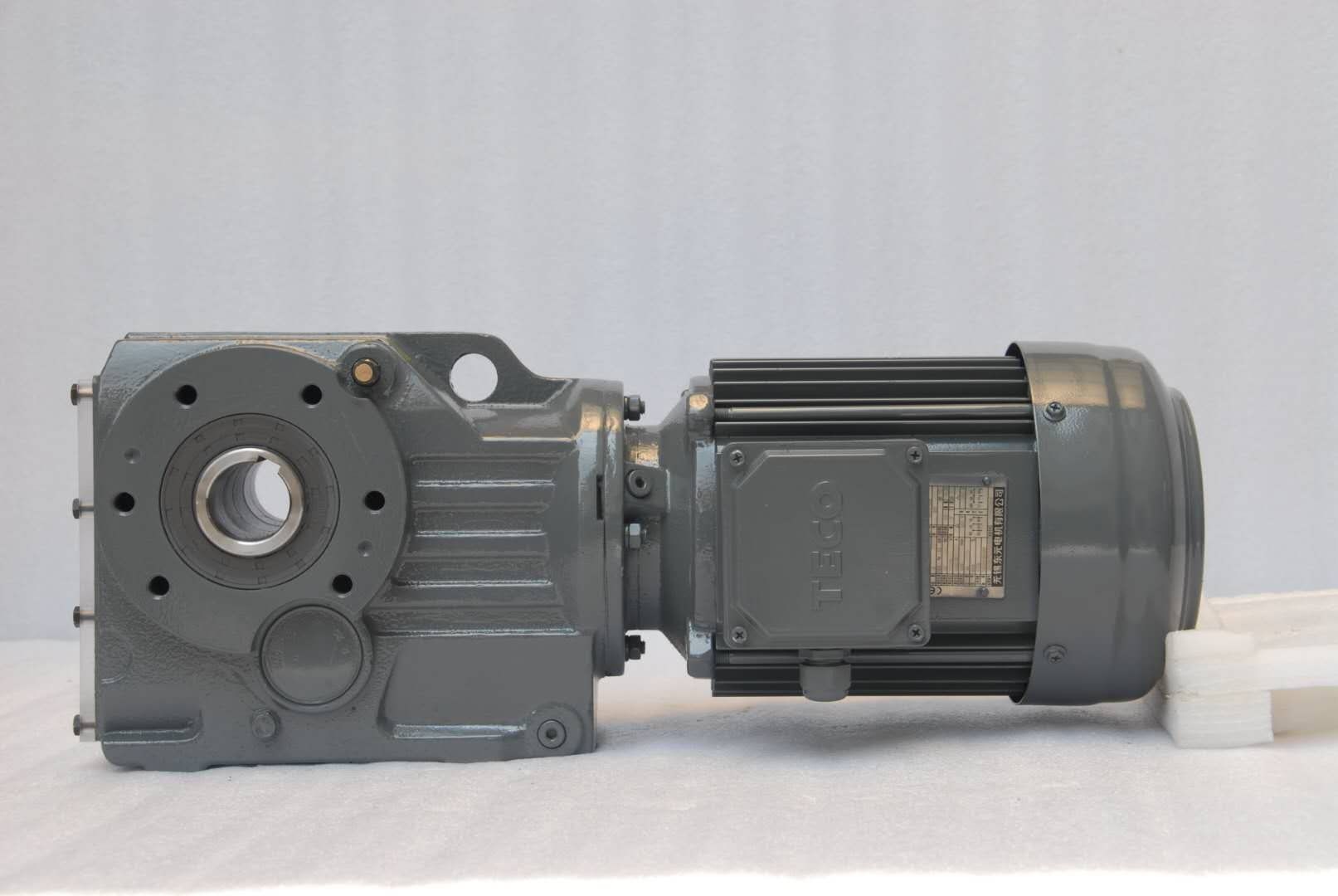
At the core of TECO's powertrain lies a meticulously engineered motor that prioritizes torque density without sacrificing efficiency. The stator uses segmented winding techniques, allowing for tighter copper fill and reduced end-turn losses. This isn't just about packing more wire into the slot; the geometry is optimized through iterative electromagnetic simulations that balance magnetic flux distribution and thermal hotspots. The result is a motor that delivers consistent peak torque even under sustained load, a rarity in compact designs.
What sets the system apart, however, is the integration of the inverter with proprietary switching algorithms. Rather than relying on off-the-shelf gate drivers, TECO developed a custom control scheme that dynamically adjusts dead-time and modulates the carrier frequency based on real-time temperature and torque demands. This adaptive approach minimizes switching losses at light loads while preserving crisp throttle response when acceleration calls. The synergy between the motor's physical design and the software-defined responsiveness creates a driving experience that feels both planted and eager, without the brittle suddenness common in many EV powertrains.
Equally critical is the thermal management loop, which uses a dual-circuit system to separately cool the rotor and stator end caps. This not only prevents demagnetization during aggressive driving but also allows the powertrain to maintain consistent performance across a wide ambient range. By embedding temperature sensing directly into the winding overhangs and feeding that data into the inverter's logic, the system preemptively throttles or boosts output before any protection limits are hit. It's this holistic interplay—from magnetic design to control strategy and cooling—that makes TECO's engineering philosophy stand out as a case study in integrated thinking rather than component selection.
Real-World Applications Where TECO Delivers Unmatched Uptime
Manufacturing floors never sleep, and TECO motors are the heartbeat that keeps them going. In automotive assembly lines, a single stoppage can ripple into thousands in lost revenue—our drives handle sudden load shifts without breaking stride, tested under the harshest 24/7 conditions where standard motors would overheat or stall.
Data centers demand more than just power; they demand predictability. TECO’s cooling pump systems are built to run years without unplanned intervention, using sealed bearings and advanced thermal management that slashes failure rates. One colocation facility saw a 40% drop in downtime events after switching—not because we market it, but because their maintenance logs don’t lie.
Out in the field, reliability saves lives. Offshore wind turbines and remote pumping stations rely on TECO motors where service calls mean helicopters and hazard pay. By engineering out common wear points and integrating real-time health monitoring, we’ve kept critical equipment spinning through storms that would sideline lesser machines, proving uptime isn’t a spec—it’s a track record.
Sizing and Selection: Getting the Right Gearmotor Without Overkill
First, get a realistic handle on the load. It's tempting to pad the torque figure “just to be safe,” but that quickly multiplies cost and bulk. Measure or calculate the actual continuous and peak forces, including any impact or cyclic variance. Often, a modest service factor is enough when you truly understand the application rhythm.
With the load profile nailed down, look at the gear arrangement. Not every setup needs a planetary stage; a well-chosen worm or helical gearbox might slip right into the same envelope with better cost efficiency. Think about how often the motor starts and stops—frequent reversals put more stress on the drivetrain, so orient your selection around real-world duty cycles rather than hypothetical extremes.
Don't overlook the surroundings. Dust, washdowns, or odd mounting angles can derail a theoretically perfect choice. Select the enclosure and lubrication for the actual environment, not the worst-case you might someday encounter. By trimming the spec to what's truly necessary, you land a gearmotor that runs cool, lasts, and stays off the excess-cost list.
Maintenance Habits That Double the Life of Your TECO Unit
Most folks overlook the simplest thing: keeping the unit clean. Dust and grime don’t just sit there—they force the motor and coils to work harder, generating extra heat. That steady strain quietly shaves years off its lifespan. A quick wipe-down of external surfaces every couple of weeks, plus clearing away any debris around vents, makes a surprising difference. It’s low effort with a huge payoff.
Beyond the surface, those hidden filters and electrical connections need regular attention. I’ve seen too many units fail because a clogged filter choked airflow or a loose wire caused intermittent faults. Check the filters monthly—if they look dingy, clean or replace them. While you’re at it, tighten any accessible terminals. This prevents the small hiccups that eventually snowball into costly breakdowns.
Don’t wait for something to smell burnt or sound off before calling a pro. An annual check-up catches the stuff you can’t—like refrigerant levels or internal corrosion. Think of it as a physical for your machine; it keeps everything running smoothly and spots trouble when it’s still cheap to fix. Pair that with your own simple habits, and you’ve got a recipe that genuinely doubles the unit’s working life.
The Shift Toward Energy-Smart Motion: How TECO Stacks Up
Industry is quietly rethinking what it means to move efficiently. It’s no longer just about horsepower or torque; it’s about how intelligently that force is delivered. TECO has leaned into this shift by engineering products that don’t simply consume energy—they adapt. Across their motor and drive lines, you’ll spot a deliberate focus on variable-speed integration and system-level responsiveness, trimming waste in ways that pure spec sheets rarely capture.
What sets TECO apart isn’t a single breakthrough component, but an insistence on real-world tuning. Their teams model duty cycles from the outset, matching motor design to the erratic rhythms of actual conveyors, pumps, and fans rather than idealized test benches. The result is a portfolio that feels less like a catalog and more like a collection of purpose-fitted tools—equipment that often drops in without forcing awkward overhauls of existing lines.
Where many suppliers talk efficiency, TECO tends to demonstrate it in cumulative savings. Maintenance logs tell a quieter story: fewer thermal failures, less belt slip, and compressed-air auxiliaries that run only when truly needed. It’s a pragmatic, almost understated approach to energy-smart motion, but one that holds up well when the meters spin month after month.
FAQ
TECO gearmotors are backed by decades of engineering expertise, with manufacturing facilities in China that adhere to global ISO standards. Every unit undergoes rigorous testing—from material stress analysis to full-load endurance runs—so they hold up under demanding conditions. The use of hardened steel gears, premium bearings, and sealed housings minimizes unexpected downtime, which is why plant managers consistently trust them for critical processes.
They combine high-precision helical or worm gearing with motors designed to IE3 or IE4 efficiency levels. This means less energy is lost as heat, and more of it goes directly into torque. The optimized tooth profiles and reduced backlash also improve transmission accuracy, helping conveyors, mixers, and crushers run smoother and consume fewer kilowatts over a shift.
You’ll often find them in food and beverage processing, where washdown-capable models resist moisture. They’re equally common in material handling, packaging lines, textile looms, and automated warehousing. Any sector that requires consistent speed regulation, frequent starts and stops, or heavy load handling tends to lean on these gearmotors for uninterrupted operation.
Absolutely. Beyond standard configurations, manufacturers can adjust motor winding voltages, offer brake-integrated versions, modify shaft dimensions, or supply special mounting flanges. Some applications demand double-output shafts or corrosion-resistant coatings, and these are handled without long lead times. The goal is to fit the gearmotor into your machine—not the other way around.
Keep an eye on lubricant condition and replace it per the manual's schedule—typically synthetic oil changes are needed less often than mineral ones. Check shaft seals for leaks, keep cooling fins clear of debris, and periodically measure temperature and vibration spikes. If a unit is operating in a dusty or wet environment, more frequent inspections pay off by catching early signs of wear before they force a shutdown.
Factories operate with automated CNC gear cutting, robotic assembly cells, and inline testing stations that check noise, torque, and insulation resistance. Each batch goes through a first-article inspection and random sampling is retested after shipment simulation. This blend of high-volume efficiency and detailed quality control ensures the gearmotor you unwrap performs identically to the specification sheet, even years later.
Conclusion
In demanding industrial environments, few components earn their keep as consistently as TECO gearmotors. Their edge starts with a powertrain engineered to handle heat, dust, and vibration without flinching—helical and bevel gears mesh with precision, while advanced seals and cooling channels keep contaminants out and temperatures down. This isn’t just lab theory; on the floor of a steel mill or inside a packaging line, TECO units routinely deliver uptime that maintenance teams depend on. Real-world installations show that when other drives falter under shock loads or continuous duty, TECO’s design keeps production moving with minimal intervention.
Getting that kind of reliability isn’t just about buying the toughest nameplate—it’s about matching the unit to the task. Oversizing wastes energy and budget, while undersizing risks failure, so a careful look at torque curves and service factors pays off. Once in place, simple habits like routine lubrication and vibration checks can double a unit’s service life, turning a capital expense into a long-term asset. Meanwhile, the industry’s push toward energy-smart motion finds a natural ally in TECO’s high-efficiency motors and variable-speed packages, which trim electrical consumption without sacrificing response. This blend of hard-wearing design, practical selection criteria, and forward-looking efficiency makes TECO a steady force in modern industrial power.
Contact Us
Contact Person: Jenny Jaa
Email: [email protected]
Tel/WhatsApp: 0086 152 9510 6006
Website: https://www.china-motor-supplier.com