

China Yuchai Generator Sets: Your Ultimate Guide to Reliable Industrial Power
2026-05-08
When power outages threaten your operations, every second counts. China Yuchai generator sets have long been the backbone of industrial power, known for their rugged reliability and efficiency. At Hichai Power, we bring this proven technology directly to you, ensuring your business never skips a beat. In this guide, we'll walk you through what makes Yuchai generators a top choice and how Hichai Power elevates your experience with expert support and tailored solutions.
Why Yuchai Gen Sets Are the Backbone of Industrial Operations
In heavy manufacturing plants, every minute of downtime carves a deep hole in the balance sheet. Yuchai generator sets earn their reputation not from glossy brochures but from the grit of keeping assembly lines humming when the grid fails. Their engines are tuned for relentless duty, shrugging off heat, dust, and vibration that would choke lesser machines. Maintenance crews appreciate the straightforward design—no exotic tools or cryptic software, just solid engineering that can be serviced by local hands with minimal training. It's this blend of tolerance and simplicity that makes them a quiet linchpin of operational continuity.
Remote mining sites and oil fields tell a starker story of dependence. When you're three hundred kilometers from the nearest road, reliability isn't a feature; it's oxygen. Yuchai units have carved a niche in these unforgiving places because they start after sitting idle for weeks, run on variable fuel qualities, and keep churning out power while caked in grime. Field technicians swap stories about gen sets that outlast the contracts they were bought for, often with nothing more than regular oil changes. That kind of durability rewrites the calculus of total cost, turning a purchase into a decades-long partnership that procurement teams value more than slick sales pitches.
What often goes unmentioned is the adaptive backbone these generators provide across fluctuating load demands. Unlike delicate backup systems that balk at sudden surges, Yuchai's prime movers handle the erratic draw of crushers, welders, and conveyor belts with a steady frequency that protects sensitive downstream equipment. This resilience allows site managers to expand operations incrementally without re-engineering their power infrastructure. It's a practical, unglamorous strength—but it's exactly why so many industrial operations, from textile mills to water treatment plants, have grown around these generators as if they were part of the foundation itself.
Inside Yuchai’s Engine Technology: Built for the Long Haul
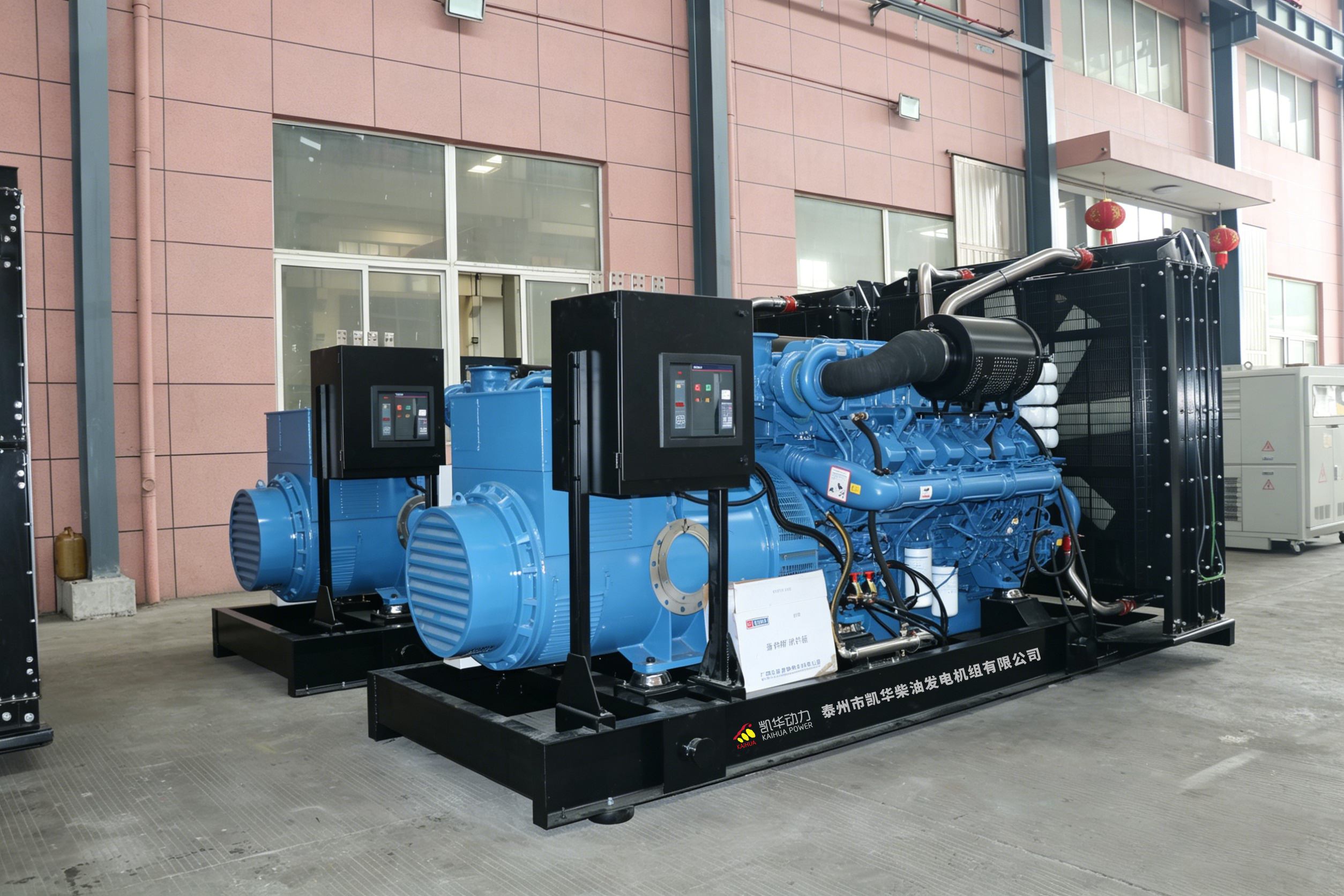
Yuchai approaches engine building with an obsession over thermal efficiency and component fatigue. Instead of chasing the highest possible peak output, their engineers map how cylinder pressures behave across thousands of hours under real-world loading patterns. This data feeds back into block casting geometries and piston crown profiles, deliberately thickening high-stress regions without adding unnecessary mass. The resulting power unit doesn't just meet durability targets on a spreadsheet—it handles the relentless stop-start of mining trucks and the constant drone of irrigation pumps with the same unbothered consistency.
Material choices inside these engines tell the same story. Bearing shells get a polymer overlay that tolerates brief oil starvation during steep inclines, something a paper filter test would never replicate. Cylinder liners are plateau honed not only for ring seating but also to trap microscopic lubricant reservoirs that survive dusty environments. Even the turbocharger center housing rotates coolant flow around the bearing cartridge before it reaches the radiator, shedding heat more aggressively than conventional parallel-path designs. Every decision points toward longevity that owners in remote job sites actually feel.
Validation cycles compound the difference. A prototype might run 2,000-hour blocks on a dyno while a technician intentionally degrades cooling airflow or introduces abrasive fines into the intake—mimicking the neglect engines suffer in the field. Only after surviving these gauntlets does a configuration move into limited fleet trials, where telemetry from actual equipment working in quarries or rice paddies gets scrutinized for wear trends invisible in a lab. It's a slow path, but it’s why engines with half a million kilometers of hard service often come back for their first major overhaul with ring gaps still within tolerance.
Tailoring Power Solutions: Yuchai’s Range of Generator Sets
Every operation has its own rhythm, its own demands, and its own vulnerabilities when the grid lets you down. Yuchai understands this deeply, which is why their generator sets aren't off-the-shelf boxes but carefully calibrated systems. From remote mining sites battling altitude sickness to hospitals where a single flicker is unthinkable, Yuchai engineers start by listening. They map your load profile, ambient conditions, and fuel realities before proposing anything—because a generator that works perfectly at sea level can choke on thin mountain air, and a set sized for peak draw might waste fuel for months.
This obsession with fit extends across their entire lineup. Need brute force? Their heavy-duty industrial units deliver rock-steady power for days on end, with block heaters and reinforced cooling packages that laugh at extreme cold. Running a boutique hotel where guests judge by the whisper of the night? The silent canopy series uses multi-layer soundproofing and anti-vibration mounts to blend into the background. Yuchai doesn’t just slap a different silencer on the same engine—they rethink air paths, resonance spots, and exhaust routing specific to the dB target. And for those operating beyond the reach of diesel refineries, their natural gas and biogas variants unlock fuel flexibility, often running on what others flare away.
What truly sets their approach apart, though, is how the tailoring continues after the sale. Remote monitoring hardware comes standard on most models, feeding live data to your phone—coolant temp dipping before a storm? Load pattern shifting on a public holiday? You see it when it matters. Local support teams, armed with proprietary diagnostic tools, don’t just arrive with a wrench; they understand the full backstory of your installation. This isn’t a catalogue sale. It’s a power partnership, where each generator set becomes a mirror of the challenge it serves, wearing a Yuchai badge but breathing your air.
Keeping the Lights On: Maintenance Best Practices
Regular inspections are the backbone of any solid maintenance plan. You can't just wait for a flicker to become a full-blown outage before taking action. Walking through the facility with a checklist—examining wiring, connections, and load levels—helps catch issues early. It's often the small things, like a loose terminal or a misaligned sensor, that cascade into bigger problems if ignored. Make these walkthroughs a habit, not an afterthought.
Another often overlooked practice is keeping detailed documentation of every repair and test. When the veteran technician who knows every quirk of the system retires, that knowledge leaves with them unless it's written down. A simple logbook or digital record of what was fixed, when, and why can save hours of downtime later. It also helps spot patterns—maybe that breaker trips every July when the AC kicks in. That's not a coincidence; it's a trend you can act on.
Finally, never underestimate the value of stocking critical spares. Even the best-maintained equipment fails eventually, and waiting for a part to arrive can mean days of darkness. Keep a well-organized inventory of fuses, relays, and control boards. Rotate stock so nothing goes stale, and build relationships with suppliers who can fast-track orders. It's an investment in peace of mind.
Real-World Performance: Yuchai in Action
Yuchai engines don’t just deliver on paper—they prove themselves in the toughest conditions every single day. From construction sites in Southeast Asia to agricultural fields in South America, these power units keep machines running when it matters most. Operators consistently report how the engines handle extreme temperatures, high dust levels, and continuous operation without missing a beat. There’s a quiet confidence that comes from knowing the equipment won’t let you down during peak harvest or a critical infrastructure project.
What sets Yuchai apart is the feedback loop between field performance and engineering refinement. Data collected from hundreds of active installations feeds directly into design improvements, making each generation more reliable than the last. It’s not uncommon to hear about units reaching 20,000 hours of service with basic maintenance, a testament to the robust architecture and quality control.
The real story is in the small moments: a fishing boat returning through rough seas without engine trouble, a generator kicking in seamlessly during a blackout at a rural hospital, an excavator completing a foundation dig ahead of schedule. These aren’t scenarios from a lab—they’re daily occurrences where Yuchai’s engineering translates into tangible results.
The Future of Industrial Power: Yuchai’s Green Initiatives
Yuchai is redefining the landscape of industrial power by embedding sustainability into every facet of its operations. The company’s shift toward alternative fuels and electrification is not merely a response to regulatory pressure—it’s a deliberate strategy to future-proof heavy machinery and commercial transport. From advanced natural gas engines that slash carbon emissions to fully electric powertrains designed for urban logistics, Yuchai’s portfolio demonstrates a clear break from diesel dependency. Each product reflects years of in-house R&D, ensuring reliability matches environmental ambition. This transformation is already visible in ports, mines, and city fleets where Yuchai’s technology operates daily with lower noise, cleaner exhaust, and reduced fuel costs.
Beyond powertrains, Yuchai is investing in intelligent energy ecosystems that tie together generation, storage, and consumption. Hybrid systems combining engines with battery packs are being deployed in construction equipment, allowing operators to run emission-free on sensitive job sites while retaining the flexibility of conventional power for heavy-duty tasks. Meanwhile, lifecycle analysis guides everything from material sourcing to remanufacturing, shrinking waste and extending component life. Partnerships with universities and startups feed a steady stream of innovations—such as hydrogen combustion prototypes and smart sensors that optimize performance in real time. These initiatives are not fringe experiments but core business lines, already generating revenue while positioning Yuchai as a partner for companies navigating their own decarbonization journeys.
What sets Yuchai apart is its pragmatic approach to the energy transition. Rather than waiting for a single breakthrough, the company is scaling practical solutions today—compressed natural gas, range-extended electric drives, and digital monitoring services that help fleet managers cut consumption. Training programs ensure the workforce evolves alongside the machinery, while modular designs allow customers to upgrade rather than replace equipment. This strategy turns sustainability into a competitive advantage, lowering total cost of ownership and meeting tightening global standards without sacrificing performance. As the industrial world grapples with net-zero targets, Yuchai’s green initiatives offer a tangible blueprint for balancing productivity with planetary boundaries.
FAQ
Yuchai has built a reputation on decades of diesel engine manufacturing expertise. Their generators are engineered for continuous heavy loads, featuring robust construction, low fuel consumption, and easy maintenance. The integrated design means every component, from the engine to the alternator, is tuned to work seamlessly under harsh conditions.
They come with reinforced cooling systems, all-weather enclosures, and heavy-duty air filtration. Whether in high humidity, dust, or temperature swings from -20°C to 50°C, the sets maintain stable output. Optional cold-start kits and tropicalized alternators extend their operational range even further.
The lineup spans roughly 20 kVA to 2500 kVA, covering everything from small backup units for remote telecom towers to multi-megawatt prime power stations for mining or manufacturing. This scalability lets businesses stay with one proven brand as their needs grow.
Absolutely. Their engines use high-pressure common rail injection and electronic governing to optimize combustion. Real-world users often report specific fuel consumption 5-8% lower than competing legacy designs, which translates to significant savings in 24/7 operations.
Yuchai maintains a sprawling global distributor network with authorized service centers in over 80 countries. Genuine parts are stocked regionally, and most wear items are compatible with standard industry parts, so unplanned downtime is minimized. Technical training programs ensure local technicians know these sets inside out.
Yes, they support full auto-synchronization and load sharing with mains, other gen-sets, or renewable sources. Control modules from Deep Sea or ComAp are common, enabling seamless islanding, peak shaving, and grid parallel operation right out of the box.
Standard warranty runs 12 months or 1500 hours, extendable up to 5 years with a tailored service agreement. Yuchai also offers commissioning support, remote monitoring setup, and life-cycle cost analysis to help operators maximize ROI over the machine's 20,000+ hour typical design life.
Conclusion
Yuchai generator sets have quietly become the workhorses of countless industrial operations, and for good reason. Beyond just keeping the lights on, these units are engineered from the ground up to handle brutal, nonstop workloads. The heart of every set is a Yuchai engine designed with reinforced blocks, high-pressure fuel systems, and thermal management that laughs at extreme conditions. It’s this build-for-the-long-haul philosophy that lets mines, factories, and remote sites depend on them year after year without flinching. Yet raw durability is only half the story—flexibility seals the deal. Yuchai’s lineup spans from compact mobile units to containerized multi-megawatt installations, and their engineering teams regularly customize governors, cooling packages, and enclosures to fit precise site demands. That means you’re never forced to shoehorn a standard machine into a non-standard job.
But even the best hardware needs a smart human touch. Regular maintenance—think fuel system flushing, load bank testing, and oil analysis—keeps these gen sets humming at full capacity, and Yuchai’s modular design makes those tasks unexpectedly straightforward. Out in the field, the proof is in the performance: hospitals ride through grid failures, offshore platforms endure salt spray, and remote telecom towers run unattended for months, all testament to Yuchai’s real-world reliability. Looking ahead, the company isn’t resting on its reputation. Their green initiatives are pushing into clean-burning natural gas, biogas, and even hybrid solar-diesel systems, proving that industrial power doesn’t have to come at the environment’s expense. What emerges is a picture of a manufacturer that balances ruggedness, customization, and a genuine push toward sustainability—without ever losing sight of uptime.
Contact Us
Contact Person: Ms. Lu
Email: [email protected]
Tel/WhatsApp: 8618917899306
Website: https://www.hichaipower.com