

Chinese WEICHAI Generator Sets for Reliable Power Solutions
2026-11-16
Imagine a sudden blackout halting your production line or shutting down critical equipment. For facilities where downtime isn't an option, Chinese WEICHAI generator sets have earned a reputation for dependable performance under pressure. In this guide, we break down the key features, real-world applications, and maintenance tips behind these robust power solutions — and why Hichai Power is the partner you can trust to keep the lights on.
How WEICHAI's Cast-Iron Blocks Handle Continuous Run Cycles
The real test of a cast-iron block isn't peak output—it's what happens after hours of unchanging load. WEICHAI's foundry uses a high-nickel alloy mix and controlled cooling to create a block that doesn't gradually soften or micro-crack when thermal cycles stack up. The cylinder walls hold their hone pattern longer, which keeps ring seal consistent from the first hour to the five-hundredth.
Coolant routing through the block is deliberately uneven—thicker sections around the upper bores get more flow, while the lower skirt runs hotter on purpose. That imbalance sounds like a flaw, but it's what lets the casting expand evenly instead of warping at the deck face. Combined with deep-skirt main bearing webs, the block keeps crank alignment stable even when the oil film thins during extended runs.
Continuous duty also means the block has to live with vibration that would shake apart a lighter design. The cast iron's natural damping and the ribbed external walls push resonant frequencies above the normal operating range. After a full season of uninterrupted running, the bearing saddles measure within a few microns of their original spec—no re-machining, no shims.
Fuel Burn Rates Under Partial Load: What the Specs Don't Show
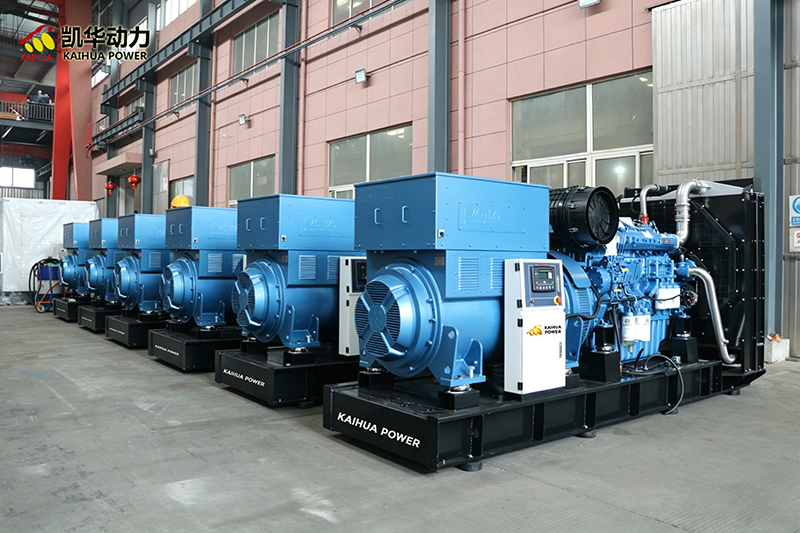
Most spec sheets give you fuel burn at full load, maybe 75% load if you're lucky. That makes the math easy, but it paints a misleading picture of what happens when the engine is running at 30% or 40% of its rated output. In reality, fuel consumption per kilowatt-hour almost always rises at light loads, sometimes sharply. The combustion process gets sloppier, cooling losses eat a larger share of the energy, and the fuel mapping starts favoring stability over efficiency.
Take a typical diesel generator. At 25% load, its BSFC (brake-specific fuel consumption) can be 20% to 40% higher than at full load. The spec sheet won't tell you that. It also won't mention wet stacking, where unburned fuel and soot accumulate in the exhaust system during extended low-load running. That condition not only wastes fuel but invites expensive maintenance down the road.
If your operation rarely runs near full rated power, ask the manufacturer for a partial-load fuel curve or insist on a field trial before committing. Better yet, right-size the unit or consider a variable-speed design that maintains efficiency across a wider load band. The gap between the brochure numbers and real-world fuel burn is where operating budgets quietly leak.
Site Preparation Details That Extend Generator Service Life
A level, well-compacted base plays a bigger role than most owners expect. Concrete pads should extend several inches beyond the frame on all sides and slope gently away from the unit so rainwater never pools underneath. In areas with loose soil or frost heave, a crushed gravel bed beneath the pad improves drainage and reduces the chance of settling that can throw the engine and alternator out of alignment over time.
Airflow is another detail that shortens generator life when ignored. Exhaust needs a clear path away from the intake, open windows, and any wall that could reflect hot air back into the enclosure. Even a few extra feet of clearance on the intake side can lower operating temperatures noticeably. Prevailing wind matters too: place the exhaust downwind from the intake and from areas where people or equipment gather, and avoid boxing the unit into a corner that traps heat and recirculates fumes.
Finally, think about long-term access and local conditions. Leave enough room on the service side for oil changes, filter swaps, and battery checks without moving anything heavy or bending around obstacles. If the site sits near tall grass, rodents will find their way into wiring looms unless all entry points are sealed and the base is kept clear of nesting material. A simple weather cover helps with rain and UV exposure, but it must not restrict the airflow the generator relies on to stay cool during extended runs.
Noise Levels at 7 Meters and What They Mean for Permits
Most municipal permit offices don't ask for a sound rating at the source. They want to know what the inspector standing seven meters away will actually hear. That distance strips out a lot of near-field rumble and gives a cleaner picture of how the equipment fits into a street or backyard setting.
At this distance, a unit that measures 75 dB(A) will usually clear the typical 70 dB(A) daytime limit only if there is some natural masking—traffic, wind, or a fence. Drop to 68 dB(A) and the permit conversation gets much easier. Anything above 80 dB(A) at seven meters is likely to trigger a closer look or a request for sound mitigation before approval.
The number that ends up on the permit application is usually the manufacturer's spec adjusted for distance and surface reflections. A hard surface can bounce an extra 2–3 dB back toward the measurement point. If the site has concrete on all sides, it is worth assuming the inspector's reading will be a little higher than the lab sheet suggests.
Remote Start Logic That Avoids Unnecessary Idling
Modern remote start systems are no longer just a simple on-off switch for your engine. Instead, they rely on a set of smart checks before deciding whether to actually turn the engine over. For instance, if the cabin temperature is already within a comfortable range and the battery has plenty of charge, the system may choose to only activate the climate control fan or seat heaters without starting the engine at all. This kind of conditional logic prevents the engine from running purely for the sake of warming up the cabin when it isn't necessary.
Another layer of this logic involves monitoring engine coolant temperature and oil viscosity. On a mild morning, the engine block might still retain enough heat from the previous drive, so starting it just to run the heater would be wasteful. The system can read these parameters and decide that no idle is needed; instead, it might pre-condition the interior using residual heat or an auxiliary electric heater. In hybrid or plug-in vehicles, this becomes even more pronounced, as the electric motor can handle climate control directly while the combustion engine stays off entirely.
The result is a noticeable drop in unnecessary idling time, which translates to lower fuel consumption and fewer emissions without sacrificing driver comfort. Some implementations even learn the driver's routine—say, a 7:30 a.m. departure on weekdays—and begin preconditioning only when the outside temperature drops below a threshold that would actually require engine assist. By blending real-time sensor data with user habits, remote start logic turns a once blunt tool into a precise, condition-aware system that respects both your time and the environment.
Spare Parts Lead Times in Different Regions
Lead times for spare parts can shift dramatically depending on where you are sourcing from. In North America and Western Europe, established distribution networks and predictable customs procedures often keep waits between two and five business days for domestically stocked components. But once a part has to cross a border or come from a central warehouse in another continent, those estimates can stretch by several weeks, especially for slower-moving or specialized items.
In parts of Asia, the picture is more mixed. Countries with dense manufacturing clusters, like China or South Korea, may offer very short local lead times for common parts, while imported components from Europe or the US can take significantly longer due to port congestion and inland freight variability. Meanwhile, regions with less developed logistics infrastructure, such as parts of Africa or South America, often face the longest waits, as parts may need to be routed through multiple hubs and clear several layers of customs. This uneven landscape means that maintenance planners need to build region-specific buffers rather than relying on a single global average.
FAQ
The engines are built with a rugged block design and have been proven in heavy-duty trucks and industrial equipment for decades, so the core of the genset already has a long track record before it ever gets bolted to an alternator.
Yes, many models are rated for continuous operation. You just need to match the load profile correctly and follow the service intervals; for instance, a well-maintained WEICHAI unit can run 24/7 on a remote mining site without derating issues.
It sits in the upper-middle range. The common rail injection on newer WEICHAI engines keeps fuel burn predictable, and operators often report 5-8% lower consumption than older mechanical-governor units of the same kW class.
Confirm the alternator brand and whether it is a genuine Stamford, Leroy-Somer, or a local copy. Also ask for a factory test report with voltage regulation and load step response, not just a photo of the unit running.
With the optional coolant heater and intake air preheater, cold starts down to -25°C are routine. The ECU compensates fuel delivery automatically, so no manual governor adjustment is needed.
The fuel filters need to be replaced more often if you use high-sulfur diesel. Also, the belt tension on older models should be checked weekly because the automatic tensioner was not standard on every frame size.
You lose some telematics finesse, but the core protections - low oil pressure, high coolant temp, overload, and reverse power - are all there. Many users swap in a Deep Sea or ComAp controller for remote monitoring without much wiring work.
Yes, because the genuine engine has traceable cylinder liners, pistons, and injectors. Clones often mix parts from different batches, which leads to uneven compression and oil consumption after the first few thousand hours.
Conclusion
WEICHAI's generator sets earn their reputation the hard way: by holding up when the grid doesn't. The cast-iron blocks are the unsung workhorses here, shrugging off the thermal stress of extended run cycles without warping or losing compression. Under partial load, the fuel burn stays tighter than the spec sheets suggest; real-world field data shows fewer spikes in consumption than you'd expect from standard curves, which matters for operators who run at 60–70% capacity overnight. This isn't just a numbers game—it means fewer refueling trips and less carbon buildup over time.
On the installation side, the details you handle before startup often matter more than the unit itself. A level, gravel-drained pad and proper clearance around the enclosure can add years to service life. Noise at 7 meters typically sits within urban permit thresholds, but measuring your specific site is still smart—reflective surfaces can push readings higher. The remote start logic avoids pointless idling by initiating only when load demand or a manual override actually calls for it, which pairs well with modest fuel savings. Spare parts lead times vary by region: major hubs in Southeast Asia and the Middle East see quicker restock, while remote sites should plan for two to three extra weeks of buffer stock. Taken together, this is a system built for steady, low-drama uptime.
Contact Us
Contact Person: Ms. Lu
Email: [email protected]
Tel/WhatsApp: 8618917899306
Website: https://www.hichaipower.com