

Dual Channel Tissue Cutter Manufacturer Delivering Consistent Precision Cutting
2026-11-02
Precision in tissue processing isn't a nice-to-have—it's the difference between reliable data and wasted runs. That's why labs are taking a closer look at dual channel tissue cutters, and why DAXIN keeps showing up in the conversation. With two independently controlled channels, consistent cutting becomes less of a hope and more of a measurable outcome. Before you settle for single-channel limitations, here's what a purpose-built manufacturer can change.
Why Two Paths Beat One in Dual Channel Cutting
A single cutting path forces every operation through one narrow lane. When the workload spikes, that lane jams while the rest of the system sits idle. Dual channel cutting changes the arithmetic: two independent paths let you split complex jobs or run separate tasks side by side, so no single bottleneck dictates the pace.
Real gains show up in cycle time and tool wear. With two channels, you can alternate passes or run roughing and finishing simultaneously on different sections. That keeps heat and stress from concentrating in one area, which means fewer mid-run stops and more consistent edge quality.
It also buys flexibility. When one path needs a tool change or a quick adjustment, the other keeps moving. That overlap turns what used to be dead time into productive time, and it makes scheduling less brittle on mixed-lot jobs.
Precision That Stays Put Even After Thousands of Cuts
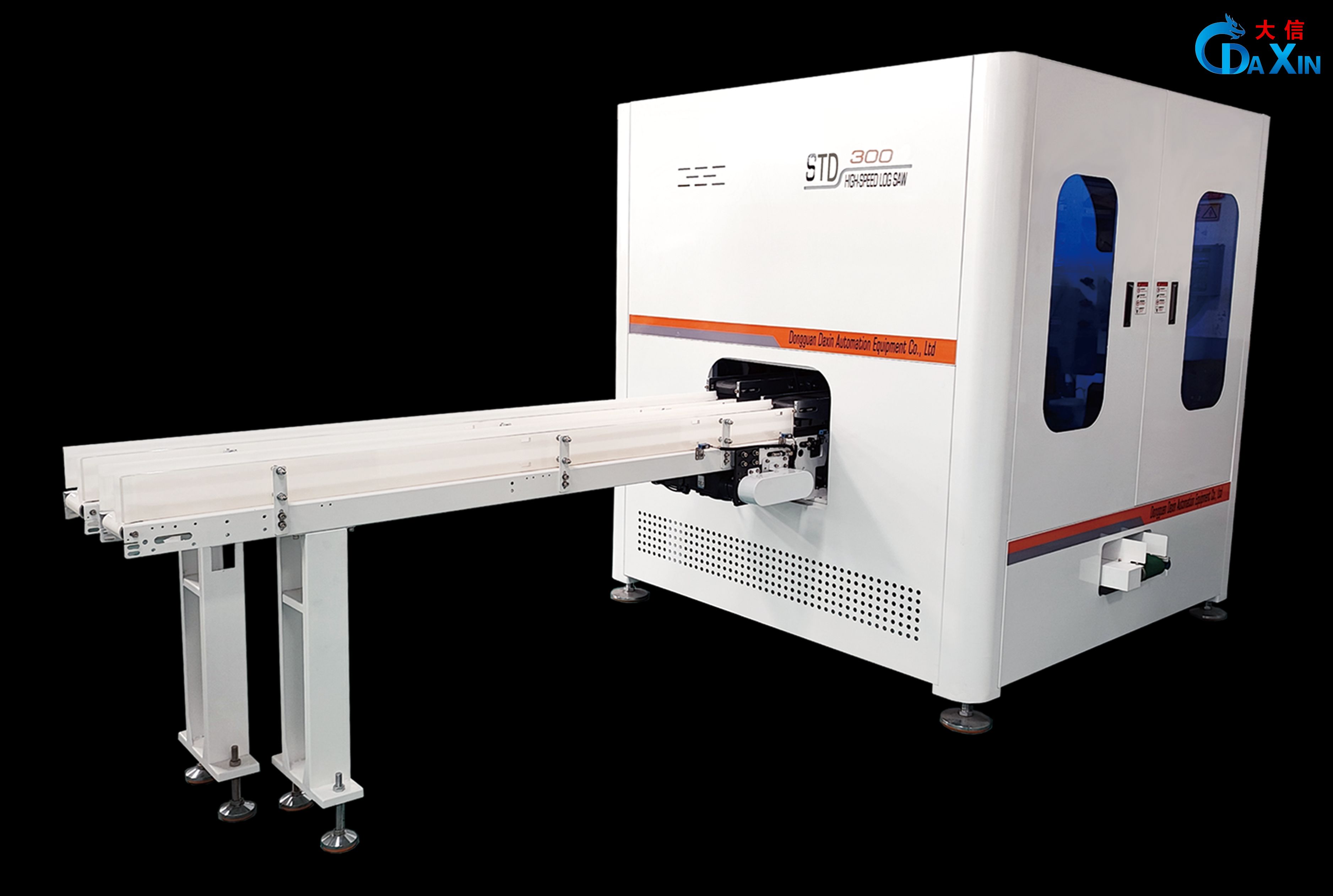
A blade that dulls after a few dozen cuts forces you to compensate with extra pressure, which leads to slips and uneven work. This edge holds its geometry through repeated contact with hard materials because the steel is tempered to a narrow hardness range and the final honing is done at a shallow, consistent angle. The result is a cutting edge that shears cleanly on cut number one and on cut number ten thousand.
What usually kills precision is not a single hard impact but the slow rounding of the apex. Here, the carbide distribution in the steel resists that rounding without making the edge brittle. You can feel it in the way the tool enters the material—no hesitation, no wandering—even after months of daily use in a busy shop.
What Consistent Precision Actually Means on the Bench
In benchrest shooting, a single tiny group can be a fluke; what separates serious shooters is how often those groups repeat. Consistent precision means the rifle, ammunition, and shooter hold the same point of impact across multiple strings, under changing conditions. It's less about one hero group and more about low average dispersion over ten or twenty five-shot groups.
That consistency shows up in standard deviation and extreme spread. A load that occasionally prints 0.2 inches but routinely opens to 0.6 is not precise; it's unpredictable. On the bench, you look for vertical stability at long range, minimal velocity variation, and a barrel that doesn't wander as it heats. When everything stays inside a predictable cone shot after shot, that's real precision.
The Manufacturing Discipline Behind Repeatable Results
Repeatability rarely comes from a clever trick. It comes from process controls that leave almost nothing to chance. On the floor, tooling is checked at fixed intervals, raw material batches are verified before they touch a machine, and every operator follows the same sequence of steps, down to how a fixture is clamped and released. This is not bureaucracy for its own sake; it is how a plant makes sure the five hundredth unit behaves like the first.
The discipline shows up in documentation that gets updated after every meaningful change, not once a year. Work instructions carry revision dates and approval signatures. When a defect appears, the response is not to work around it but to trace it back to the exact station, batch, and shift. That traceability turns a single problem into a permanent fix instead of a recurring headache.
What separates disciplined manufacturers is not that they never face variation. It is that variation triggers a known response. A shift in ambient temperature, a slight tool wear pattern, a new supplier’s material lot: each has a predefined checkpoint or control limit. People on the line are trained to react to signals, not to random noise. Over time, that turns repeatability from an aspiration into a measurable, boring, and deeply valuable routine.
Avoiding the Usual Drift in Tissue Sectioning
Tissue sectioning often suffers from a slow, almost imperceptible shift in blade position that wreaks havoc on slice uniformity. This drift rarely announces itself; it accumulates over dozens of cuts until ribbons start wedging, compressing, or tearing at the most inconvenient moments. Instead of blaming the microtome or the operator, look first at thermal expansion. The block holder and blade assembly warm up unevenly during long sessions, and that asymmetry quietly pushes the cutting plane off its original axis. A simple fix is to let the instrument idle for fifteen minutes before starting, then re-zero the clearance angle. Many labs skip this and wonder why their best sections come only in the first ten minutes.
Another overlooked culprit is the mechanical play hidden in the advance mechanism. Even high-end rotary microtomes develop micro-backlash after repeated use, especially if the handwheel is released too quickly between strokes. That tiny reverse movement can accumulate as a lateral offset, so the blade no longer tracks the same line through the block. Try this: after each full rotation, pause for half a second with light forward pressure before the next cut. You will notice fewer chatter marks and a more consistent ribbon. Also check the blade clamp screws—too tight creates stress deformation, too loose invites vibration. The sweet spot is just past finger-tight, then a quarter turn more with the wrench.
Finally, consider the specimen itself. Inconsistent infiltration or a slightly tilted embedding mold forces the blade to compensate, and that compensation feels like drift. If the block face is not perfectly parallel to the knife edge, every section gets progressively thinner on one side. Re-trim the block with a fresh blade, using only the forward stroke and never pulling back through the tissue. Then mark the cassette orientation with a permanent marker so you always load it the same way. Once these habits become routine, the usual drift stops being usual.
Questions to Ask Before Choosing a Tissue Cutter Partner
When you start talking to a potential tissue cutter partner, the first thing worth pressing them on is material variability. Ask what range of densities, moisture levels, and thicknesses they've actually run on their equipment—not just what the spec sheet claims. Better yet, send them a few rolls or sheets from your own production line and see how their machine handles the real stuff. A partner who only wants to run their own tidy demo samples might be hiding a lack of flexibility that will show up on your floor within the first month.
Downtime is where most partnerships quietly fall apart, so get specific about maintenance. Find out typical blade life under your expected load, how often calibration drifts, and what their average response time is when something breaks. Don't settle for vague promises—ask for contact details of two or three current customers who run similar volumes. Then ask those references about the worst breakdown they've had and how the partner reacted. Anyone can look good during installation; what matters is who picks up the phone at 2 a.m. when the line stops.
Finally, trace their consumables and spare parts pipeline before you sign anything. If blades, belts, or specialized components have to ship from overseas with a four-week lead time, your entire operation becomes hostage to someone else's inventory. Question whether they stock regional depots, offer loaner units during extended repairs, or at least provide remote diagnostics that can solve problems without a site visit. The right tissue cutter partner treats your uptime as their own problem—not an afterthought buried in the warranty fine print.
FAQ
A dual channel design lets you run two independent cutting streams simultaneously, so you can process paired samples or different tissue types in the same run without cross-contamination. That translates to higher throughput and less idle time, especially in labs handling high volumes.
We control blade geometry and feed rate through a closed-loop system that monitors cutting force in real time. Any drift triggers an immediate micro-adjustment, so the first slice and the thousandth slice have the same thickness and edge quality.
It's designed for a broad range, from soft tissues like liver and brain to denser samples such as cartilage or fibrotic tissue. The dual channel independent pressure control lets you fine-tune each side for the specific tissue consistency.
Yes. We offer modular blade cassettes and programmable speed profiles. Many customers send us sample tissue blocks, and we configure the cutter to match their exact thickness target, down to 10 microns.
Every cutter runs a 48-hour continuous cutting test using standardized tissue phantoms. We measure edge deviation, channel-to-channel consistency, and blade wear under load. Only units that stay within a 2% tolerance band ship out.
We send a field engineer for on-site setup and run a half-day training session with your lab team. After that, you get access to step-by-step video guides and a direct line to our support engineers for any troubleshooting.
Blades need inspection every 500 cutting hours, and the guide rails should be lubricated monthly. We also recommend an annual calibration service, which we can perform remotely or on-site. Most labs spend under 30 minutes a month on upkeep.
Usually it's the combination of independent channel control and our tolerance guarantee. Labs that were fighting blade drift or cross-channel contamination find they can run paired experiments with reliable, repeatable slices, and they don't have to babysit the machine.
Conclusion
A dual channel tissue cutter changes the rhythm of sectioning work because two parallel paths double throughput without doubling the operator's attention. The real advantage isn't just speed; it's that each channel maintains its own cutting geometry, so a nick or wear pattern on one side doesn't bleed into the other. That separation matters when you look at what happens after thousands of cuts. Single-channel devices tend to show a slow drift in section thickness or a slight tilt in the block face, and you compensate by adjusting settings more often. The dual channel design keeps both lanes within a tighter window because the load is distributed and the alignment isn't fighting a single point of fatigue. On the bench, consistent precision means you can load a ribbon of sections and trust that the first and last slice are close enough for downstream staining or imaging without rechecking the micrometer after every batch.
That kind of repeatability doesn't come from a clever marketing phrase; it comes from how the cutter is built. A manufacturer that holds tight tolerances on the guide rails, uses hardened blade carriers, and controls the feed screw backlash will produce fewer surprises over months of daily use. Drift in tissue sectioning usually creeps in through thermal expansion, worn bearings, or loose adjustment knobs, so the manufacturing discipline has to address those failure points before the machine ships. When you evaluate a potential partner, ask directly how they test for long-run stability, how often the blade holder needs recalibration, and what wear parts are user-replaceable. If the answers are vague or point only to a spec sheet, that's a red flag. You want a supplier who can talk about the exact mechanisms that keep both channels aligned and who treats consistency as a measurable outcome, not a feeling.
Contact Us
Contact Person: Sam Xie
Email: [email protected]
Tel/WhatsApp: 86-18938538530
Website: https://www.daxin321.com/