

Fanfold Corrugated Cardboard Factory Solutions for Modern Packaging Needs
2026-11-18
Corrugated packaging has a quiet problem: rigid sheet sizes often force companies to pay for air, storage, and damage they don’t need. Fanfold board flips that logic. Instead of being locked into fixed boxes, production lines can cut exactly what each order demands—less waste, faster packing, tighter loads. At ShiTeng Packaging, that shift is built into factory solutions designed for modern packing lines. This post breaks down what makes fanfold corrugated cardboard a practical fit for today’s throughput, cost, and sustainability targets.
Why Fanfold Corrugated Board Is Replacing Stacked Box Inventory
Walk through a packaging area that still relies on stacked box inventory and you will usually see the same pattern: rows of pallets holding only a handful of cartons that actually move, while the rest take up space waiting for an order that may never come. Fanfold corrugated board replaces that mix with one dense, scored stack that operators cut to order.
Because the material arrives as a continuous sheet, there is no need to forecast which box size will be needed three months from now. Packaging changes no longer leave behind a corner full of obsolete cartons, and the warehouse can reclaim the square footage once reserved for empty box storage.
The production benefit is immediate. A packer can dial in the correct panel length and form a carton around the product instead of trimming, stuffing, or taping down a poorly matched box. The result is a tighter package, less void fill, and fewer damage claims.
Matching Flute Profiles and Wall Counts to Product Fragility
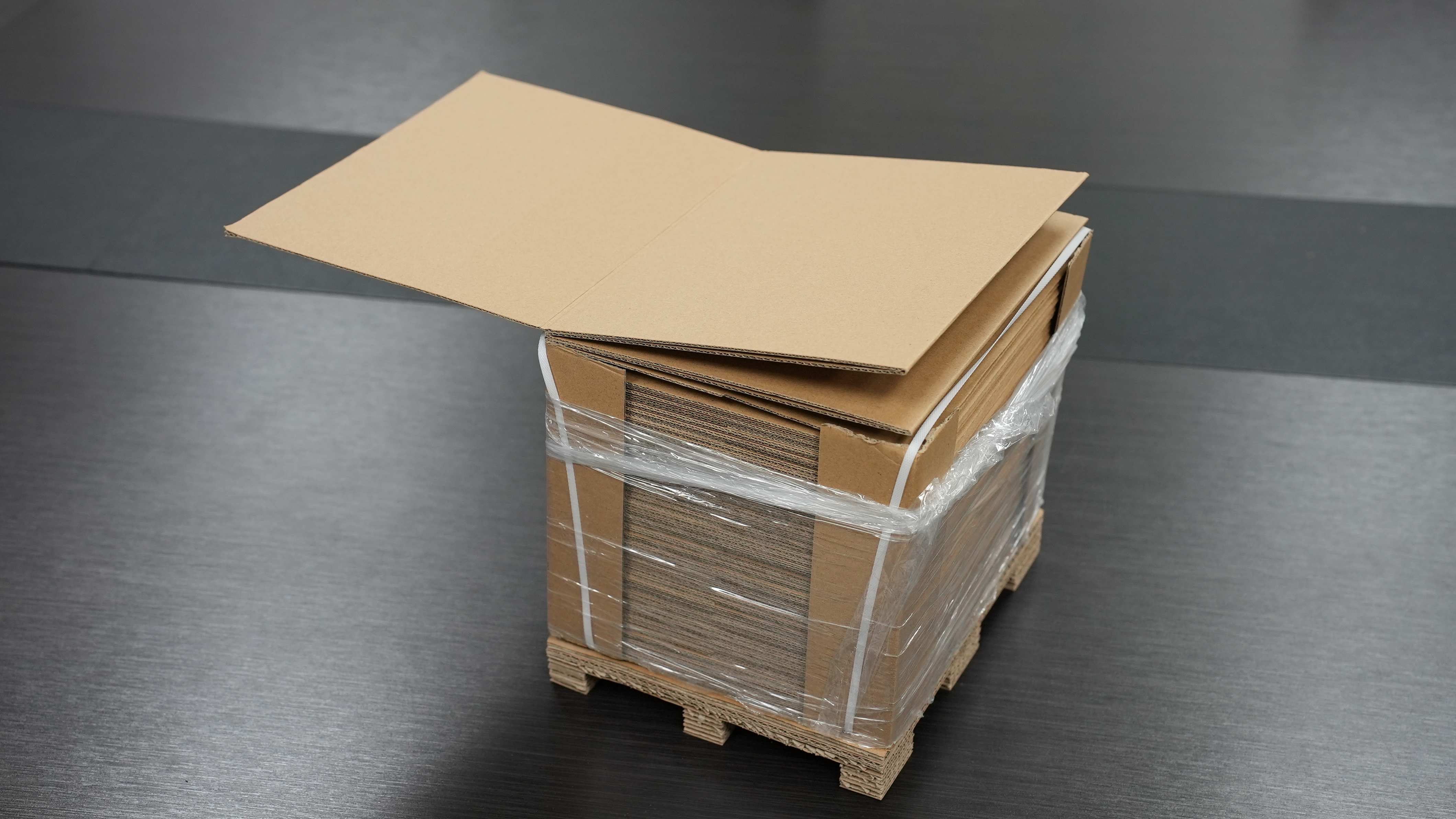
Choosing the right corrugated board starts with the failure mode of the product, not the box. A lightweight glass candle and a cast iron bracket can sit in the same shipping lane, yet they need very different flute profiles because the candle reacts to high-frequency vibration and the bracket mostly threatens the board from the inside out. Finer profiles like E and F pack more flutes per linear foot, which gives a stiffer, flatter surface that resists punctures and keeps labels from scuffing; larger profiles like A and C leave more air between the liners, turning the board itself into a shock absorber. Wall count then layers those profiles so the box can handle crush loads without giving up cushioning.
For products that crack or chip, a single-wall C-flute box can often do more than a double-wall B/C box if the real risk is vibration rather than stacking. Double-wall combinations such as EB or BC make sense when you need both a smooth printing face and a resilient core, or when the package will spend time under several layers of heavier cartons. The mistake is assuming that more wall count always equals safer arrival; three walls of the wrong flute can transmit road vibration straight through to a fragile ceramic edge, while a single wall with the right profile and well-designed interior dunnage absorbs the energy that actually reaches the product.
Matching begins with the product's weight, shape, and most fragile feature. A narrow neck on a bottle, a protruding switch on an instrument, or a fine threaded connector on a pump all demand clearance and controlled flex. Map the load path from the outer carton to the product through void fill, pads, or cradles, then choose the flute profile that either stiffens or softens that path. Because flute height and wall count also shift the box's compression strength and folding behavior on automated lines, the final choice is rarely about a single test value; it comes from testing the entire packed assembly the way it will actually be handled.
Feeding, Creasing, and Cutting Continuous Board at the Pack Station
At the pack station, the continuous board enters through a set of driven rollers that keep tension steady without pulling the sheet off its natural path. Operators often find that slight adjustments to the guide rails prevent edge damage before the board reaches the creasing unit.
Creasing happens right before the cut, using a rotary bar that presses a clean line across the grain. This gives the board a predictable fold point, which matters most when packers fold the finished wrapper around a product just seconds later.
The cutting blade then cycles in time with the feed rate, so the sheet length stays consistent even as line speed shifts. A quick visual check of the cut edge usually tells the crew whether the blade needs sharpening or the feed pressure needs a nudge.
Shaping Cushions, Pads, and Dividers from One Fanfold Sheet
Unfold the sheet and let the existing fold lines guide the first cuts. Instead of forcing the board into a shape it resists, run a straightedge along the creases and slice strips slightly wider than the item you need to protect. That extra half inch gives you room to fold without crushing corners.
For corner cushions, score a line across the strip with a dull blade or a bone folder, then bend it into an L or U shape rather than cutting all the way through. The unscored face holds tension while the scored face flexes, so the pad grips the edge of the product. Stack two or three layers with the folds running in opposite directions, and tack the ends with a small piece of tape if the pad needs to survive rough handling.
Dividers work best when you cut notches halfway through the strips and slide them together like a simple egg-crate grid. Measure the interior of the box first, then cut vertical and horizontal pieces from the same fanfold sheet so the thickness matches. Drop leftover slivers into any gaps to stop items from drifting during transit. Because everything comes from one sheet, the pieces tend to align cleanly without bulky seams.
Keeping High-Volume Pack Lines Moving with Automation-Ready Formats
High-volume pack lines tend to stall at the format changeover, not at the filler. When cartons, trays, or shrink bundles arrive in sizes that don’t match the downstream case packer, operators fall back on manual adjustments that eat into shift capacity. Automation-ready formats remove that friction by standardizing dimensional tolerances, crease placement, and stacking patterns before the material reaches the line. The result is fewer jams, less rework, and a steadier flow from primary packaging through palletizing.
The most practical shift is often in spec alignment rather than capital equipment. Packaging teams that lock in board caliper, flap geometry, and case dimensions for each SKU give robotic pickers and case erectors a predictable envelope to work with. That predictability matters most during peak runs, where a single miscut blank can create cascading micro-stops. Even small changes, like moving from mixed pallets to line-ready sequenced loads, help maintain the pace without adding headcount.
It also helps to treat format readiness as a shared metric between packaging development and plant operations. When a new product or promotion enters the schedule, a quick physical trial on the actual line catches interference points that a CAD layout misses. Over time, these trials build a library of proven formats, so future launches skip the usual break-in period and the line keeps its rhythm from the first shift.
Adapting Carton Dimensions in Minutes for Shifting Product Lines
Adjusting the carton footprint for a new product run rarely takes more than a few minutes because the guide rails, depth stops, and height sensors are tied to marked scales rather than loose bolts. Operators release a clamp, slide the rail to the printed number, and tighten it back down—no extra parts or recalibration needed.
When weekly schedules jump between narrow cosmetic cartons and wider automotive components, the quick-change markings remove most of the setup guesswork. Teams often keep a short list of programmed dimensions for each product family, so switching back to a previous size is a matter of matching numbers instead of measuring from scratch.
Because the settings are visible and repeatable, a second operator can verify the position at a glance and catch small drifts before they turn into jams or crushed corners. That makes it practical to run shorter batches without losing time to constant adjustments.
FAQ
Fanfold is a continuous, accordion-folded sheet of corrugated board that can be cut to any length on demand. Instead of stocking dozens of pre-cut sheet sizes, a converter or packaging line pulls only the amount needed. That removes the constraint of matching box dimensions to whatever happens to be on the shelf.
Pre-cut sheets often force you to carry many SKUs and still end up with awkward leftovers. Fanfold board lets the line produce the exact footprint for each order, so storage shrinks, changeovers become faster, and you are not paying for material that gets trimmed off and discarded.
E-commerce fulfillment, furniture, automotive parts, appliances, and fresh produce packing tend to benefit first. Any operation that ships a wide range of product sizes or needs protective void fill and layer pads can use the same fanfold stock instead of maintaining separate sheet inventories.
Yes. Many factories pair fanfold stock with a cutting and creasing station right on the packaging line. The operator enters the dimensions, the machine cuts and scores the board, and the box is formed immediately. That works well for made-to-order items and helps keep lines moving without waiting on a box supplier.
It depends on the mix of package sizes, but most operations see a noticeable drop in trim waste because the board is cut to the actual length required. Some facilities report material savings of 15 to 30 percent compared with trimming standard sheets, plus less time spent baling and handling offcuts.
Look for a partner that can adjust flute type, board grade, coating, perforation, and scoring to match your product weight and shipping conditions. Some suppliers also print logos or handling instructions directly on the board. The goal is to get the protective performance you need without buying more paper than necessary.
It can, provided the machine is designed for continuous board feeding. Many automated systems use a fanfold stack positioned at the infeed, then cut, fold, and seal around the product. The important part is matching the board caliper and flute to the machine’s cutter and forming tools so jams stay rare.
Ask about board consistency, lead times, and whether they can supply test rolls or sample runs before a full commitment. It also helps to visit the production floor or request process data on caliper variation and moisture content. A supplier that understands your line speed and packaging environment will be far more useful than one offering a generic product.
Conclusion
Fanfold corrugated board is steadily replacing stacks of pre-erected cartons in packaging operations because it removes the burden of storing multiple box sizes and the wasted space that comes with them. Instead of reserving pallet positions for fixed inventory, teams pull continuous fanfold sheets and cut carton blanks only when a pack line needs them. This shift allows carton dimensions to be adjusted in minutes when product lines change, so there is no longer a reason to hold SKU-specific boxes that may become obsolete. The approach also makes it easier to match flute profiles and wall counts to the fragility of each item. Light single-wall board handles low-risk goods without excess material, while stronger double-wall constructions give fragile or dense products the protection they actually require.
At the pack station, workers feed, crease, and cut the continuous board close to the point of use, reducing movement and setup time. A single fanfold sheet can quickly become cushions, pads, or dividers, which lowers the number of specialty packaging components a facility must source and store. For high-volume operations, automation-ready formats keep board flowing smoothly through equipment and help avoid misalignment or jams that slow down the line. Operators spend less time waiting for carton replenishment and less effort managing leftover inventory when schedules shift. The result is a packaging system that stays flexible, controls material waste, and supports fast changes on the factory floor without adding unnecessary complexity.
Contact Us
Contact Person: Mr. Ge Man
Email: [email protected]
Tel/WhatsApp: 8613710506492
Website: https://www.shitengzx.com