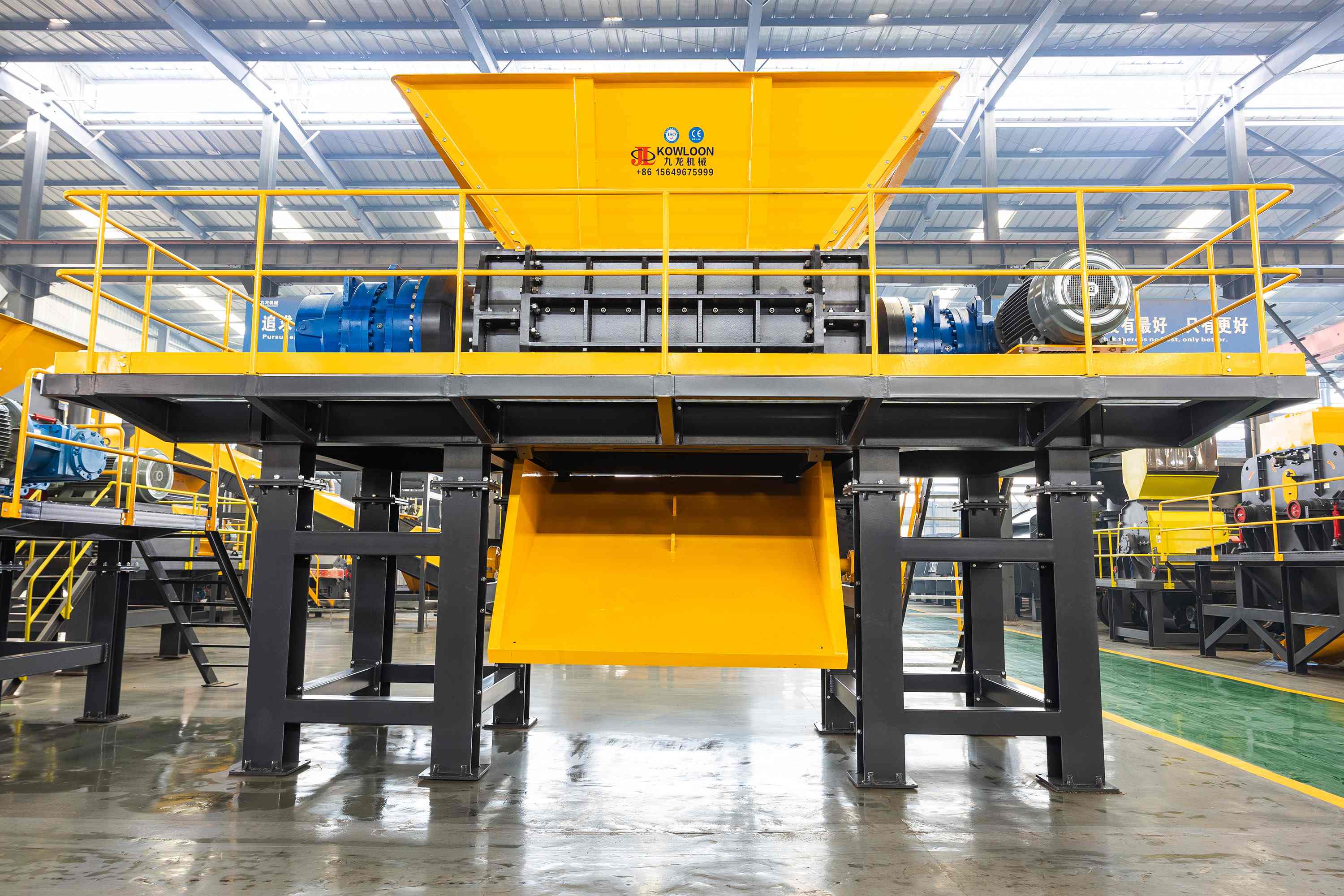

High Quality Double Shaft Shredder: What to Look for Before You Buy
2026-10-21
Buying a double shaft shredder is a significant investment, and choosing the wrong one can lead to costly downtime and poor performance. Before you commit, there are several critical factors to examine—blade quality, motor power, chamber design, and after-sales support, to name a few. With so many options on the market, how do you separate a workhorse from a headache? In this guide, we’ll walk you through what actually matters, drawing on real-world insights from Kowloon Machinery to help you make a confident, informed decision.
How the Cutting Chamber Design Affects Throughput and Jams
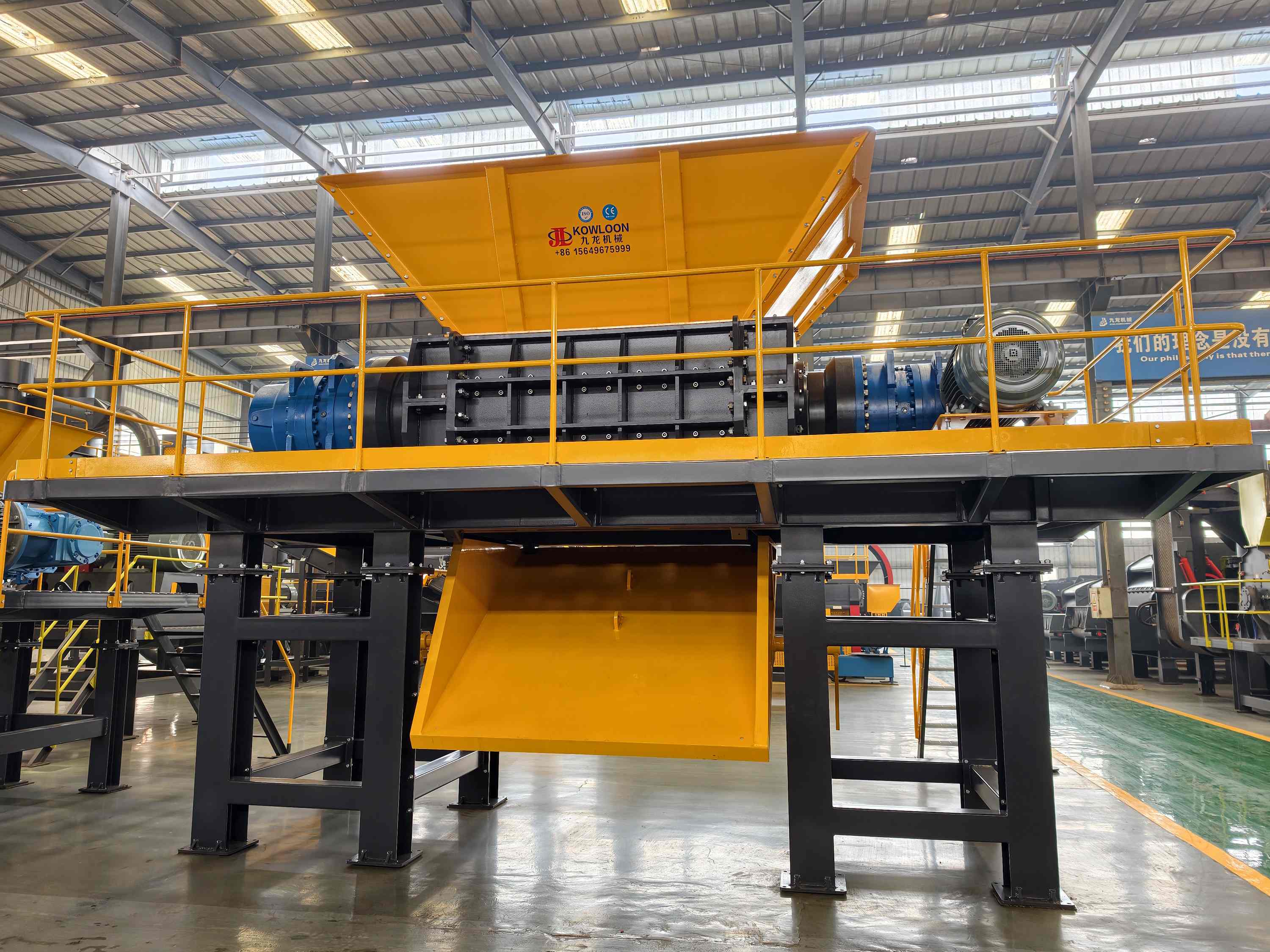
The shape of the cutting chamber quietly dictates how smoothly material moves through a shredder. A narrow chamber forces feed material into constant contact with the rotor, which can raise throughput on uniform scrap but turns into a liability when bulky or oddly shaped pieces enter. Those pieces wedge easily, and once the rotor stalls, clearing the jam often means pulling apart the machine. A wider chamber gives material more room to tumble and reorient, yet that same freedom can reduce bite if the rotor lacks enough aggressive hooks. So the real trade-off is not just size but geometry — how the walls guide material toward the cutters without creating dead corners where waste collects.
Chambers with steep, smooth walls tend to funnel material directly into the cutting zone, which works beautifully for film or thin plastics. But the moment a dense chunk or a folded carton arrives, that steep funnel becomes a trap. The material compresses instead of being pulled through, and the rotor’s teeth lose traction. On the other hand, a chamber that curves gently or includes a slight step near the rotor can break up compression zones, allowing the rotor to re-grip the material. The difference in jam frequency between these two designs is often striking, even when rotor speed and cutter count are identical.
Another overlooked factor is the clearance between the rotor tips and the chamber wall. Tight clearances shear material cleanly and boost throughput for thin items, but they leave no room for slight wear or thermal expansion. As knives dull, the gap effectively closes, and suddenly a machine that ran for months without a jam begins seizing on the same feed stock. A well-designed chamber anticipates this by either using adjustable bed knives or choosing a clearance that tolerates normal wear. That small allowance keeps throughput steady longer and spares operators the frustration of frequent, unexplained jams.
Blade Material and Hardness: Beyond Basic "Alloy Steel" Claims
Walk into any hardware store and you'll see the same vague label slapped across countless knife blades: "alloy steel." It sounds reassuringly technical, yet tells you almost nothing about how the edge will actually perform. Two blades can both be called alloy steel and behave completely differently under identical use, one chipping at the slightest twist while the other shrugs off hard contact. The difference lies not in the marketing phrase but in the specific composition and heat treatment that never make it onto the packaging.
Hardness, usually expressed as a Rockwell C rating, is often misread as a simple quality score where higher always equals better. A blade hardened to 62 HRC may hold its edge impressively long but become so brittle that a dropped knife snaps clean in half. Meanwhile, a softer 55 HRC blade will roll or dent rather than fracture, requiring frequent touch-ups but surviving years of rough kitchen abuse. The real skill is in matching hardness to the intended task: fillet knives benefit from lower hardness and easier steeling, while a dedicated woodworking chisel demands the higher end of the scale with careful edge geometry.
Beyond the numbers, subtle traces of vanadium, molybdenum, or nitrogen can transform a plain carbon steel into something that resists both wear and corrosion without sacrificing toughness. Some makers chase exotic powder metallurgy steels with impossibly fine grain structures, while others stick to simple high-carbon blends that sharpen on a river rock. Neither approach is wrong; the failure comes when a blade is marketed as premium solely because it contains the words "alloy steel." Ask instead what actual alloying elements are present, what hardness range the maker targeted, and how that combination behaves when the edge finally meets real work.
Drive Systems: Hydraulic vs. Electric and What It Means for Torque
Hydraulic drive systems build torque through pressurized fluid acting on a piston or vane, and that pressure can be held even when the output shaft is not rotating. This means a hydraulic motor delivers full torque at zero speed and can sustain heavy loads without burning out, making it ideal for presses, winches, and excavator swing drives. The torque curve stays relatively flat until flow limits the speed, so you get brute force exactly when you need it most.
Electric drives take a different path. An electric motor can also produce high torque from a standstill, but its continuous torque is limited by heat buildup in the windings and magnets. Peak torque lasts only seconds before the controller backs off to protect the motor. In many applications, a gearbox multiplies the motor torque, yet that adds weight, backlash, and efficiency losses. Still, the electric system wins on precision—torque can be adjusted in milliseconds and held within a fraction of a percent, which is why robotics and CNC machines rely on it.
The real difference shows up in how the two handle overload and duty cycle. Hydraulic circuits can stall indefinitely at full system pressure and recover instantly once the load moves. Electric systems need careful thermal monitoring and forced cooling if high torque is required for more than a short burst. So the choice is not about which technology is stronger, but what kind of torque profile the job demands: sustained low-speed grunt or fast, tightly controlled response.
Bearing and Seal Protection: The Overlooked Maintenance Multiplier
Most maintenance teams track bearing temperatures and vibration levels, but few connect the dots between those readings and the health of the seals protecting them. A single compromised seal can let in enough moisture or particle contamination to cut bearing life by half, yet seal inspection often gets treated as an afterthought until a failure forces downtime. The real multiplier effect shows up when you treat seal condition as a leading indicator rather than a lagging one.
Field data from rotating equipment audits reveals a consistent pattern: bearings that fail early rarely die from fatigue alone. The root cause is usually lubricant degradation or contamination, and both start at the seal interface. By shifting focus to seal integrity — checking lip wear, spring tension, and surface finish on the shaft — maintenance crews can extend mean time between repairs by two to three times without changing the bearing spec at all. That is the leverage most plants leave on the table.
The overlooked part is often the environment the seal works in. A well-chosen bearing running in dirty, wet, or washdown conditions will still fail if the seal cannot handle micro-movements or thermal cycling. Upgrading to a more resilient seal material, or simply adding a secondary exclusion device, frequently costs a fraction of one unplanned outage. The multiplier is not in the part itself — it is in the avoided consequences that never make the work order history.
Safety Features That Go Past Emergency Stops
An emergency stop is rarely the first line of defense—it's the last. The systems that actually keep people safe work before anyone reaches for that red button. Light curtains with muting logic can tell the difference between a box moving along a conveyor and a hand reaching into a cutting zone, while pressure-sensitive mats underfoot are tuned to ignore a dropped tool but react instantly to a misplaced step. Two-hand controls add another layer, demanding both hands stay on the triggers with anti-tie-down timing that defeats quick tape-and-string workarounds.
There’s also a quieter set of protections inside the motion controller itself. Safe torque off cuts power to the motor without killing the whole machine, so operators can clear a jam without a full restart. A setup mode can cap speed and force, letting someone inch a press into position with their hands near the tooling but with energy levels too low to cause real harm. Some drives even monitor their own braking resistors, flagging wear before a controlled stop turns into a coast.
What separates well-designed safety from checking boxes is how it treats the person in front of it. A good system doesn’t just halt—it says why. A yellow light, a message on a small display, a reset button that only arms when the zone is actually clear. When the reason for a stop is obvious, people are far less likely to bypass the guard or prop a switch open, which is where most serious injuries begin.
Customizable Screen Sizes and Their Role in Output Consistency
When designers and developers talk about adaptable layouts, they often focus on breakpoints and flexible grids. But the underlying reason to support a range of screen sizes goes deeper than fitting content into different viewports. A customizable screen size approach means the same core experience can hold its visual weight whether someone is on a compact tablet or a wide desktop monitor. That consistency doesn't happen by accident—it comes from treating dimensions as variables rather than fixed constraints.
The real value shows up in how elements respond to available space. Instead of forcing a single rigid layout to work everywhere, we can define proportional rules that adjust padding, font scaling, and column widths based on the actual screen. This keeps the intended hierarchy intact, so important information stays prominent and secondary details don't crowd the view. In practice, that means less time debugging layout drift and more confidence that what you build will look intentional across devices.
Another angle worth considering is that customizable screen sizes aren't simply about shrinking or stretching a layout. They open space for reordering content, simplifying navigation, and adjusting interaction patterns when the context calls for it. When handled well, users rarely notice the adaptation itself—they just experience a coherent interface that feels native to the screen they're holding or looking at. That quiet coherence is the heart of output consistency.
FAQ
It depends on the cutter configuration and torque. A well-built unit should chew through heavy plastics, rubber, wood waste, e-waste, even light metal like aluminum castings. If you're feeding something unusual—like fiberglass or bundled textiles—ask the manufacturer for a material test before committing.
Both matter, but the gearbox often fails first on cheaper machines. Look for a drive train designed with generous service factors, not just peak horsepower. Heat-treated helical gears paired with a robust coupling will outlast a bigger motor bolted to a flimsy reducer.
Yes. Blade thickness controls how aggressive the bite is, and hook height helps pull material into the cut. Too thick or too shallow can cause bridging or constant reversing. For mixed waste, a medium hook and around 40–50 mm thickness is a practical starting point, but get a sample run.
Beyond emergency stops and locked access doors, check for automatic load sensing that reverses the rotors when a jam occurs. Also look at how easy it is to isolate energy during blade changes—simple lockout points and accessible inspection windows reduce real-world accidents.
Not at all. A huge hopper without proper feed control invites overfeeding and overload cycling. A compact, well-angled hopper matched to your loading method—forklift, conveyor, or grab—usually gives smoother shredding and fewer blockages.
Ask about blade life in hours for your specific material, not just 'long wear.' Find out if the blades can be rebuilt or re-tipped, how many rotations you get before replacement, and whether changing a single blade takes minutes or half a shift. Cheap blades that take hours to swap kill productivity.
Treat it as a lab number. Feed size distribution, moisture, bulk density, and operator skill all change real output. Request a reference site running your material, or send a sample for testing. A 20–30% buffer above your daily requirement is wise.
It's not just plate thickness. Look for fully welded stress-relieved structures, not bolted-together panels that loosen under vibration. Check alignment surfaces—rotor seats, bearing housings, gearbox mounts—are machined after welding. That's what keeps cutters from colliding after a year of heavy use.
Conclusion
A shredder that earns the "high quality" label rarely does so on horsepower alone. The cutting chamber geometry is where throughput and jam resistance are decided: a well-designed chamber keeps material moving without letting bulky items wedge against the walls, while poor clearances turn every batch into a fight. Look beyond vague "alloy steel" marketing—ask for actual hardness ratings (HRC values) and whether the blades are through-hardened or just surface-treated, because edge retention determines how often you stop to sharpen or replace. Drive systems matter just as much. Hydraulic units typically deliver steadier torque under shock loads and reverse quickly when something gets caught, but they run hotter and need more maintenance. Electric drives are cleaner and often more energy efficient, yet they may struggle with the sudden spikes that come from mixed or tough feedstocks.
Maintenance costs hide in the bearings and seals. If the shredder lacks robust labyrinth or purged sealing around the shaft, fine particles will work their way in and cut bearing life dramatically. Ask about bearing isolation and whether the design allows for easy greasing without teardown. Safety should go beyond the standard emergency stop—look for trapped key interlocks, motion sensors that prevent access while rotors spin down, and reverse functions that clear jams without opening the chamber. Finally, screen size flexibility controls your end product. A machine that can swap screens quickly lets you dial in consistent chip or particle sizes for different downstream uses, instead of being locked into one output profile. High quality means the shredder adapts to your material stream, not the other way around.
Contact Us
Contact Person: Ray
Email: [email protected]
Tel/WhatsApp: +86 13733817580
Website: https://www.zzkowloon.com/