
Horse Riding Wear Manufacturer Reveals Key Factors for Choosing Quality Equestrian Apparel
2026-10-27
Finding the right riding wear can feel like navigating a maze of fabrics, fits, and questionable claims. But what actually separates gear that lasts through countless hours in the saddle from items that fall apart after a few washes? As a leading horse riding wear manufacturer, OpeEquestrian has spent years perfecting the details that matter most to riders—from moisture-wicking seams to reinforced knee patches. In this article, we pull back the curtain on the key factors you should evaluate before investing in your next piece of equestrian apparel, so you can ride with confidence and comfort every time.
Fabric That Works as Hard as You Do
Some fabrics quit the moment things get tough. This one doesn't. It stretches when you lunge, breathes when you sweat, and shrugs off snags that would wreck lesser material. Whether you're hauling gear across town or putting in back-to-back meetings, the weave stays smooth and keeps its shape instead of bagging out by noon.
The real test is how it feels at hour nine. No pinching, no sagging, no that sticky cling you get from cheaper synthetics. It moves with your body and recovers fast, so one wear turns into a full day without second thoughts. Tough enough for rough edges, soft enough to forget you're wearing it.
Fit Is Not Just About Comfort—It's About Safety
Wearing safety gear that doesn’t fit properly creates risks that comfort ratings rarely capture. A hard hat that slides over your eyes blocks the view of an overhead crane, while gloves too loose around the fingers make it harder to feel the difference between a secure grip and a slipping load. Those small gaps between body and equipment are where accidents start.
In many trade environments, the wrong fit turns routine movements into hazards. Sleeves that ride up expose forearms to sparks or chemical splashes, and boots with too much heel lift change your balance on ladders and grating. Rather than treating sizing as a preference, it needs to be part of the pre-task check—same as inspecting a lanyard or testing a gas monitor.
Getting the fit dialed in means involving the people who actually wear the gear, not just ordering from a size chart. A respirator that seals well on one face shape may leave gaps on another, and a fall harness that sits too low can cause serious injury even when the lanyard catches. When the equipment follows the worker’s movements without shifting or pinching, the real payoff is not a better comfort score—it’s getting everyone home without an incident.
Construction Details You Can Spot from Across the Arena
The roofline is the first thing that catches your eye from the upper bowl. Instead of a single flat span, most modern arenas use a system of primary trusses that carry the load to massive concrete buttresses at each end. You can see the depth of these trusses even from the opposite side—they're often painted a lighter color to make the structural rhythm more legible. The gap between the roof deck and the top of the seating bowl isn't just for ventilation; it's where the catwalks and rigging grids live, which tells you a lot about how much production weight the building was designed to handle.
Look at the joint lines in the precast concrete concourses or the angled steel columns supporting the upper tier. If they’re exposed and painted, it usually means the arena was built on a tighter budget, where hiding structure behind cladding wasn’t a priority. On the other hand, arenas with curved glass curtain walls often hide their bracing inside the mullions—so if you spot diagonal steel running behind the glass from across the street, that’s a sign of an older or more industrial design approach. Even the color of the roof underside can hint at acoustic treatments or fireproofing methods that aren't visible up close.
Why “Breathable” Alone Won’t Save Your Ride
A jacket that claims to be breathable can still leave you soaked on a hot ride. The word gets thrown around like a magic fix, but most membranes only move moisture when there's a real difference in temperature and humidity between your body and the outside air. Once you're stopped at a light or crawling through traffic, that gradient disappears — and so does any real cooling effect.
What actually keeps you comfortable is how air gets pulled through the garment. Zippered vents under the arms, across the chest, and along the back do more than any membrane can. Fit matters just as much: a jacket that's too tight traps heat, while a loose shell can flap and break the airflow. Look for a design that lets you open up quickly before the sweat soaks in.
Don't ignore the rest of the system, either. A base layer that wicks moisture off your skin and a midlayer that dries fast will make any outer shell feel better. Breathability is only one part of the equation — without real airflow and a smart layering setup, you're still going to cook in your gear.
The Silent Failure Points in Hardware and Fastenings
Most hardware doesn't fail with a bang. The real trouble starts long before a bolt snaps or a bracket lets go, often in ways that never show up on a torque wrench or a visual check. Micro-movement between clamped surfaces gradually wears away protective coatings, letting moisture and oxygen creep into threads. The result is a quiet form of galling and corrosion that locks parts together until the next maintenance cycle—when they either refuse to budge or shear off under routine load.
Another overlooked culprit sits inside the material itself. Hydrogen introduced during plating or from environmental exposure can migrate to high-stress areas just under the head of a fastener. There, it embrittles the grain structure without any visible warning. A fastener that looked perfect during assembly may fail weeks later at 60% of its rated load. Similarly, mismatched alloys between a bolt and the surrounding casting can set up a galvanic couple, turning the smaller part into a sacrificial anode while the larger component stays untouched.
Thread engagement and preload losses are equally silent. A joint torqued to spec in a clean, room-temperature workshop behaves differently after a few hundred thermal cycles or once paint and plating compress under the clamping force. Vibration doesn't always loosen a nut by spinning it off; more often it causes a gradual drop in preload until the joint opens and closes under service loads. By then, the damage is done—fretting marks, fatigue cracks, and a failure that gets blamed on the bolt when the real cause was never measured.
Brand Claims vs. Saddle-Ready Reality
Most saddle brands love to tell you their trees are “universal” or that the panels will “mould to any horse.” Spend ten minutes in a tack shop and you'll hear the same promises repeated across five different labels. But put that brand-new saddle on a high-withered Thoroughbred or a table-backed cob, and the gap between the marketing copy and the actual contact patch becomes obvious. The tree points dig, the panels bridge, and suddenly the guarantee of “saddle-ready” feels like a polite fiction.
Reality checks in fast once the girth is tightened. A saddle that looked balanced on the rack often shifts forward on a live back, or sits so far behind the shoulder that the rider is fighting the horse's motion from the first stride. Some makers compensate by over-flocking the panels, which only creates hard pressure points under the cantle. Others ship with a billet system that doesn't line up with the horse's natural girth groove, forcing you to add padding, risers, or a different girth entirely just to keep the saddle from rotating.
None of this means every brand overpromises. But the gap between showroom claims and saddle-ready reality is usually measured in small adjustments that the brochure never mentions: a wider channel here, a shorter point there, three rides to break in the seat, and a whole lot of time checking sweat patterns. If a company's pitch focuses on “innovative” materials rather than explaining how the tree is actually shaped for different backs, you can expect to do the fitting work yourself.
FAQ
Look for technical fabrics with a high nylon or polyester blend. They wick moisture, resist pilling, and keep their shape after repeated washes. Cotton may feel soft but it absorbs sweat and chafes once you're in the saddle for over an hour.
The shoulders need enough room to reach forward to the horse's ears, and the hem should stay down over your lower back in two-point. Pre-curved sleeves and a slight stretch panel under the arms make a bigger difference than going up a size.
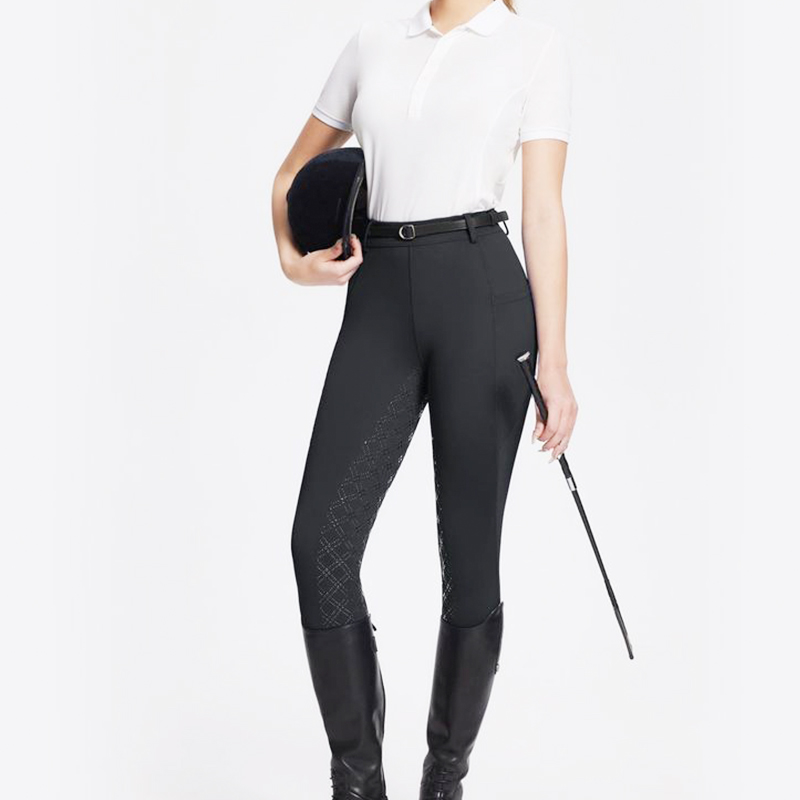
Often it's the grip system and seam placement. Full-seat silicone patterns that avoid inner knee seams prevent rubs, while flatlock stitching reduces pressure points. Cheaper options usually use a single panel of fabric that bunches behind the knee.
At minimum look for ASTM F1163/SEI or PAS015 with a CE mark. A helmet that meets multiple standards gives you flexibility if you compete internationally. Snell E2001 is also worth checking if you event.
Turn the garment inside out and inspect stress points like the crotch, back rise, and underarm. You want reinforced bartacks, not single straight stitches. Double-stitched seams with nylon thread feel slightly raised when you run a finger over them.
Yes. Manufacturers who invest in YKK or RIRI zippers and rubber-coated snaps usually don't cut corners on fabric either. A flimsy zipper that snags on a mesh lining is the first sign of a short lifespan.
The closure and reinforcement between ring and little finger. Reinforced rein fingers with a double layer of synthetic suede prevent holes after one season. A wide Velcro strap distributes pressure better than a narrow one.
Close all zippers, turn garments inside out, and wash cold on a gentle cycle. Skip fabric softener—it clogs the moisture-wicking pores and breaks down the silicone grip. Air dry rather than tumble dry to keep elastic fibers from degrading.
Conclusion
Choosing riding wear that actually holds up in the saddle means looking past marketing gloss and focusing on how the garment behaves when you're moving with the horse. The fabric needs to stretch and recover without bagging out after a long ride, while also resisting abrasion from tack and dirt. Fit is about more than looking tailored—loose material can snag on equipment, and overly tight seams can restrict your leg or compromise your seat. Details like reinforced stitching, double-stitched stress points, and clean seam finishes are easy to spot if you know where to look, and they often separate gear that lasts seasons from gear that falls apart after a few washes. Breathability matters, but a mesh panel alone won't help if the base fabric traps heat and moisture, so you need to check how the whole garment manages airflow and dries.
Hardware and fastenings are quiet failure points many riders overlook until a zipper gives way or a snap pops mid-ride. Quality equestrian apparel uses strong, rust-resistant zippers, secure snaps, and reinforced attachment points that don't dig into your skin. Don't assume a well-known brand automatically means saddle-ready performance—some labels lean on style rather than substance. Look for evidence of real-world testing, clear material specifications, and details that make sense for the discipline you ride. A manufacturer that openly explains fabric choices, fit priorities, and construction methods is giving you the information you need to judge whether the apparel will survive long hours in the barn and arena.
Contact Us
Contact Person: Keven Tong
Email: [email protected]
Tel/WhatsApp: +86 18666477707
Website: https://www.ope-technology.com