

How an Oil-Immersed Transformer Factory Delivers Reliable Power Solutions
2026-08-25
Most transformer failures start long before the first bolt is tightened. At Chang Song, reliability begins on the factory floor—where oil-immersed transformers are built, tested, and refined to keep power flowing long after installation. Here's a look inside the processes and decisions that turn routine manufacturing into a dependable power solution.
The Quiet Precision Behind Every Wound Coil
There is a moment when the wire meets the form that most people never see: a slight pause, an adjustment of tension, and then the first turn settles into place. That quiet beginning determines whether the finished coil will hold its shape under load, release energy evenly, or fail long before its rated life. It is less about the machine and more about the operator's feel for resistance, diameter, and the alloy's tendency to spring back.
Every subsequent layer relies on the one beneath it, so tiny variations in spacing or pressure accumulate quickly. A wound coil that looks symmetrical from the outside can still hide uneven internal stress. Skilled coil winders often run a fingertip along the wire just before it enters the guide, reading temperature and stiffness the way a machinist reads a cut. That tactile feedback, paired with careful setup of mandrel speed and traverse pitch, is what separates a coil that merely functions from one that behaves predictably over thousands of cycles.
Precision here is not a specification printed on a drawing; it is a habit of paying attention to what is easy to ignore. The quiet part of the process—checking the first coil against a shadow graph, rejecting a spool because the wire's temper feels slightly off, slowing the wind when the room temperature shifts—is what keeps rejects low without ever mentioning it. In the end, the coil's performance speaks for the discipline that went into winding it.
Why Oil Choice Decides Whether a Transformer Survives the First Decade
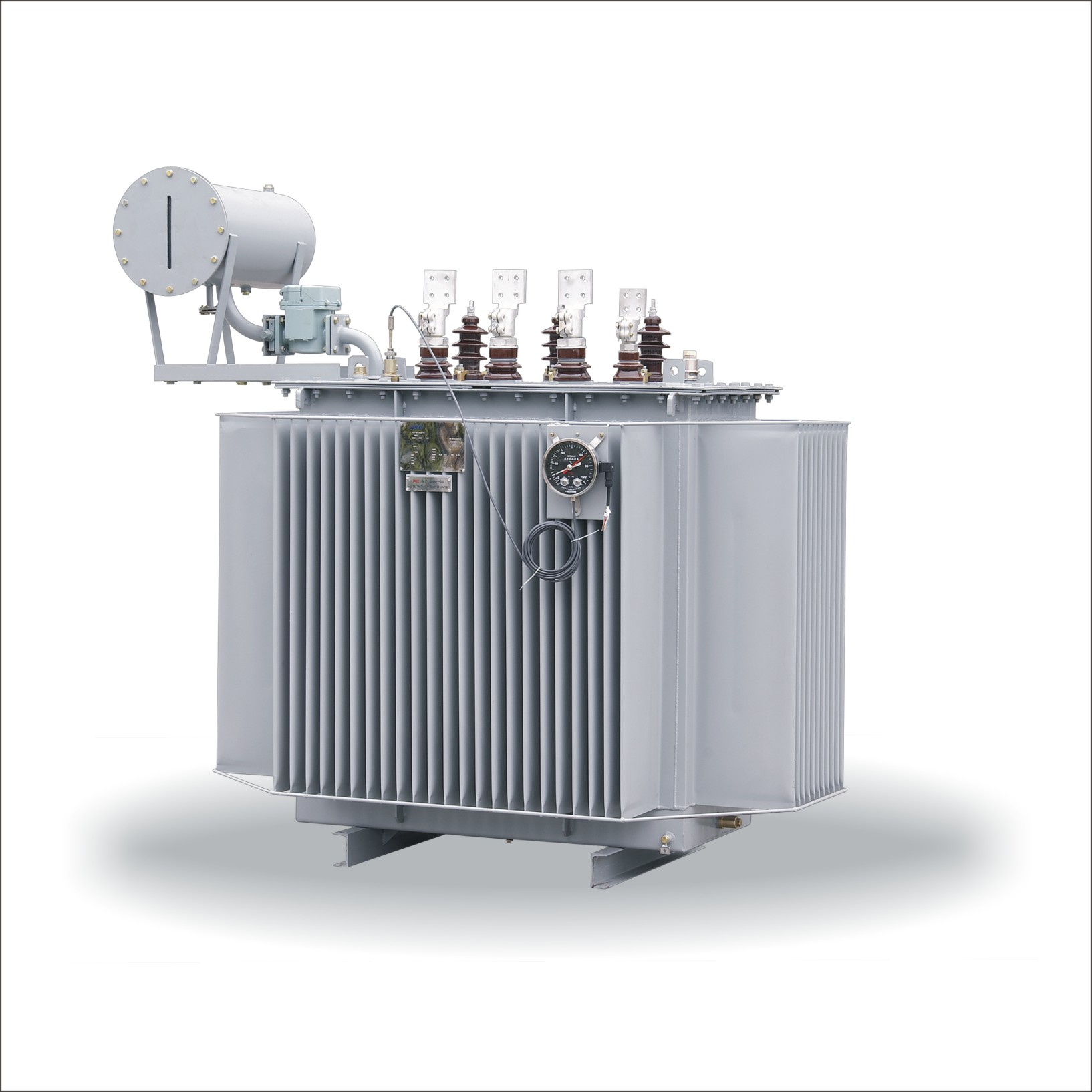
Most transformer failures in the first ten years aren't caused by electrical faults or manufacturing defects—they're caused by oil that quietly stops doing its job. The insulating fluid inside a transformer does more than prevent arcs. It carries heat away from the windings, preserves the paper insulation, and acts as an early warning system for internal problems. Pick the wrong oil, and you trade a decade of reliable service for a slow, invisible breakdown that starts long before the first alarm goes off.
The real difference shows up in how the oil handles moisture and oxygen. Standard mineral oil oxidizes under normal operating temperatures, forming sludge that blocks cooling channels and accelerates paper aging. In contrast, a well-chosen synthetic ester or high-grade inhibited mineral oil resists oxidation far longer, keeps water in solution instead of letting it attack the cellulose, and actually extends the life of the solid insulation. Transformers that die young often share the same fingerprint: oil that was specified by upfront cost, not by long-term chemical stability.
Field data from utility fleets makes the point plainly. Units filled with premium inhibited oil or natural esters routinely pass the ten-year mark with dissolved gas analysis that still reads clean, while conventionally filled units in the same load class start showing elevated hydrogen and acetylene by year six or seven. The choice isn't just about meeting a spec on day one—it's about whether the oil will keep its thermal and dielectric properties when the transformer is running hot, loaded beyond nameplate, and forgotten by everyone except the maintenance crew. That first decade is where the chemical foundation either holds or quietly crumbles.
Matching Core Steel to the Load That Actually Shows Up
Most core selection guides start with the nameplate rating and work backward. But real loads rarely sit at that number for long. A transformer feeding a mostly idle office floor on nights and weekends has a very different flux pattern than one pushed hard for six hours then resting. If you pick core steel solely for the worst-case kVA, you often end up with grain-oriented material that never sees the flux density that justifies its cost—or worse, a cheaper grade that overheats during the actual duty cycle.
The practical move is to log the load profile before ordering steel. Look at not just peak current, but duration, harmonic content, and how often the core approaches saturation. For intermittent loads with high inrush, a higher-silicon or laser-scribed grade can reduce losses during those brief spikes without oversizing the core. For continuous low-load operation, standard non-oriented steel might actually run cooler and cheaper than a premium grade that was chosen for a peak that happens twice a year.
Don't ignore the mechanical side either. Core steel that handles a specific load pattern often needs different clamping or coating to avoid magnetostriction noise at the actual operating point. Matching steel to the real load means accepting that the nameplate is a starting point, not the final word.
How We Compress a 30-Year Lifespan into a Three-Week Test Cycle
Most durability labs run real-time tests that outlive the product managers who commissioned them. We don't have that luxury. Instead, we take a three-week window and fill it with precisely calibrated abuse: thermal shocks from -40°C to 85°C every 40 minutes, continuous salt-fog exposure, and a six-axis vibration profile that replicates ten years of potholes in about 90 hours. The trick isn't just cranking up the dials. It's knowing which dial to crank and when the failure signature stops matching long-term field data.
We start by telemetering actual usage from hundreds of deployed units across different climates and road conditions. Then we build a rainflow-counted stress spectrum and run it through a damage accumulation model to find the equivalent accelerated profile. Every accelerated cycle is cross-checked against a handful of units that have been running in real time for over a decade. If the crack propagation or solder joint fatigue in our three-week test doesn't match the old-timers, we adjust the profile until it does. That's the only way the compression isn't just a marketing stunt.
Designing Around Your Substation’s Quirks, Not the Catalog
Every substation has its own personality—odd cable routes, legacy bus arrangements, clearance pinch points, soil that shifts with the seasons—and the moment you force a standard design onto it, you start paying in change orders and late-night callouts. Instead of treating the vendor catalog as gospel, walk the yard with a clipboard and a healthy disrespect for symmetry. Note where the ground grid already runs thick from past repairs, or how the morning sun hits the control house just enough to make thermal ratings drift. Those details rarely appear in a datasheet, but they decide whether your next breaker installation goes smoothly or turns into a six-month archaeology project.
Working with quirks means designing backwards from the constraints you actually have, not the ones the catalog assumes. If the existing structure has an odd bolt pattern, design the adapter plate to match it—don't grind new holes and hope for the best. If the cable tray takes a weird jog around an old transformer pad, route your conduits to follow that jog and label it clearly. The goal isn't to hide the eccentricities; it's to make them part of the plan so the next person who opens the drawings doesn't curse your name. A few extra hours on the front end sketching around a tight corner beats a full redesign when the prefabricated bus doesn't line up.
The real trick is leaving behind a documentation trail that acknowledges each quirk without turning it into a warning label. Add a short note about why a particular support was welded off-center, or why a control cable takes the long way around. That kind of honesty in the drawings and on the nameplate saves the next engineer from reinventing your workaround—and it lets the substation keep evolving without anyone pretending it was ever built from a clean sheet.
When the Grid Blinks: Support That Shows Up Before the Alarm Sounds
Most people only think about backup power when the lights are already out. But the real edge comes from systems that don't wait for the failure to announce itself. Predictive monitoring watches for subtle frequency dips, heat anomalies, and load imbalances long before a breaker trips. That quiet pre-emptive support means a facility manager can swap a failing capacitor at 2 p.m. on a Tuesday instead of racing through a dark hallway at 3 a.m. with a flashlight.
This is not about luxury redundancies or gold-plated generators. It's about a support layer that reads the grid's body language. Voltage sags from a distant substation, harmonic distortion from a nearby construction site, a transformer running 11 degrees hotter than last summer—these are all early whispers. Teams equipped with this intelligence don't react to alarms; they respond to trends. The support arrives as a scheduled maintenance ticket, a rerouted feed, or a tested transfer switch, all before anyone hears a beep.
In practice, that looks like a hospital keeping its MRI suite online because an automated script rerouted power around a stressed feeder. It looks like a data center shedding non-critical loads gracefully during a heatwave instead of scrambling during a brownout. When the grid blinks, the prepared site doesn't flinch. The support is already there—quiet, boring, and exactly what you want in an emergency that never gets to happen.
FAQ
A lot comes down to the internal bracing and the quality of the core steel. If the windings aren't clamped tightly, electromagnetic forces during a fault can slowly tear them apart. We use step-lap core joints and pre-compressed windings, then verify everything with impulse tests that mimic lightning strikes. That's where weak points show up before the unit leaves the floor.
The tank design matters more than people think. Instead of relying only on flat panels, we calculate the exact cooling surface needed for the expected load cycle, then add radiators or fans if the customer runs close to nameplate for long stretches. The oil's viscosity and flash point are checked batch by batch, not just assumed from the supplier's datasheet.
Yes, but it takes specific choices. We upgrade bushings to higher creepage distances, apply a zinc-rich primer and polyurethane topcoat to the tank, and sometimes specify a nitrogen blanket in the conservator to keep moisture out of the oil. For salt spray areas, stainless steel hardware on the terminal box makes a noticeable difference over ten years.
Buyers usually witness a series of tests: winding resistance, voltage ratio, no-load loss, short-circuit impedance, and induced overvoltage. We also run a partial discharge test under increased voltage, which catches insulation defects that a standard power frequency test can miss. If anything drifts outside tolerance, the unit is opened and corrected before retesting—no exceptions.
The oil isn't just a coolant; it's part of the insulation system. We check moisture content in parts per million, breakdown voltage, acidity, and dissolved gas content before filling under vacuum. If moisture gets trapped in the paper insulation, it accelerates aging dramatically. A proper vacuum filling process pulls air and water out of the windings first, then the oil floods in slowly.
We can reduce the footprint by using a more compact core design and side-mounted radiators, or go with a corrugated tank wall that eliminates separate radiators entirely. For noise, low-loss grain-oriented steel helps, but so do rubber isolation pads, tighter core clamping, and sound-absorbing panels around the tank. Sometimes just moving the cooling fans to a lower speed setting cuts several decibels.
We send a commissioning engineer for the initial oil processing, bushing mounting, and relay settings if requested. After energization, we track the first oil samples through a scheduled DGA program, so a slow-developing thermal fault shows up long before it causes an outage. That first year of data tells the customer exactly what normal looks like for their specific load pattern.
Conclusion
Reliability in an oil-immersed transformer doesn't start on the test floor; it begins with a winding machine operator who measures layer tension to the millimeter and treats every copper conductor like a load-bearing member. That quiet precision keeps hot spots from forming years later. Around those coils, the choice of insulating oil is never generic. Mineral, ester, or silicone blends each shift how heat escapes, how moisture is absorbed, and how oxidation attacks paper insulation. Matching the oil to the expected temperature swings and fault conditions is what lets a unit still breathe after its first decade, not just its first year. Just as important is the core steel. Instead of assuming a standard flux density, we ask what the load profile actually looks like at your substation—daily peaks, harmonics, unbalanced phases—and select a grade and grain orientation that won't be pushed into noisy saturation every afternoon.
Once built, each transformer goes through a compressed lifecycle simulation: three weeks of thermal cycling, overload pulses, short-circuit impedance checks, and partial discharge measurements that mimic thirty years of field stress. This isn't a pass/fail stamp; it's a tuning process. The factory also designs around the quirks of your site—clearance limits, cable entry points, odd bushing orientations, local noise regulations—rather than handing you a catalog drawing and hoping it fits. After installation, support doesn't wait for a trip alarm. Vibration trends, dissolved gas readings, and cooling system behavior are monitored so that a technician often arrives with a diagnosis before the control room even notices a drift. That's how a factory turns individual components into a power solution that outlasts the paperwork.
Contact Us
Contact Person: Tonglun Chen
Email: [email protected]
Tel/WhatsApp: 8618906642555
Website: https://www.cncsele.com