

N10276 Extruded Seamless Pipe Supplier for Reliable Industrial Solutions
2026-11-16
Corrosion, extreme heat, and pressure don't negotiate. If your process demands N10276 extruded seamless pipe, you already know that off-the-shelf material isn't enough. The real question is whether your supplier can deliver consistent, traceable product when schedules tighten. JILAIDA built its reputation around that reliability—supplying extruded seamless N10276 pipe engineered to handle aggressive chemical environments without surprises. In this article, we break down what actually matters when selecting a supplier and how to avoid costly compromises.
What Makes N10276 a Better Choice Than Standard Stainless for Seamless Pipe
N10276's alloying additions create a stable passive film even in harsh chloride-bearing media where standard austenitic stainless steels suffer pitting, crevice attack, or stress corrosion cracking. This makes seamless pipe far less prone to sudden failure in marine, chemical, and flue gas desulfurization service. The molybdenum and tungsten content specifically strengthens resistance to localized corrosion, while the nickel base keeps the material tough across a wide temperature range.
Unlike standard stainless grades that often require post-weld heat treatment or special filler metals to restore corrosion resistance at joints, N10276 seamless pipe eliminates weld seams altogether. That homogeneous wall structure removes weak points, simplifies installation, and holds up in wet chlorine, sulfuric acid, and mixed acid streams where ordinary stainless would quickly degrade. The upfront material cost is frequently offset by fewer shutdowns and replacements over the pipe's service life.
Extrusion vs. Welding: Why Seamless N10276 Pipe Holds Up Under Pressure
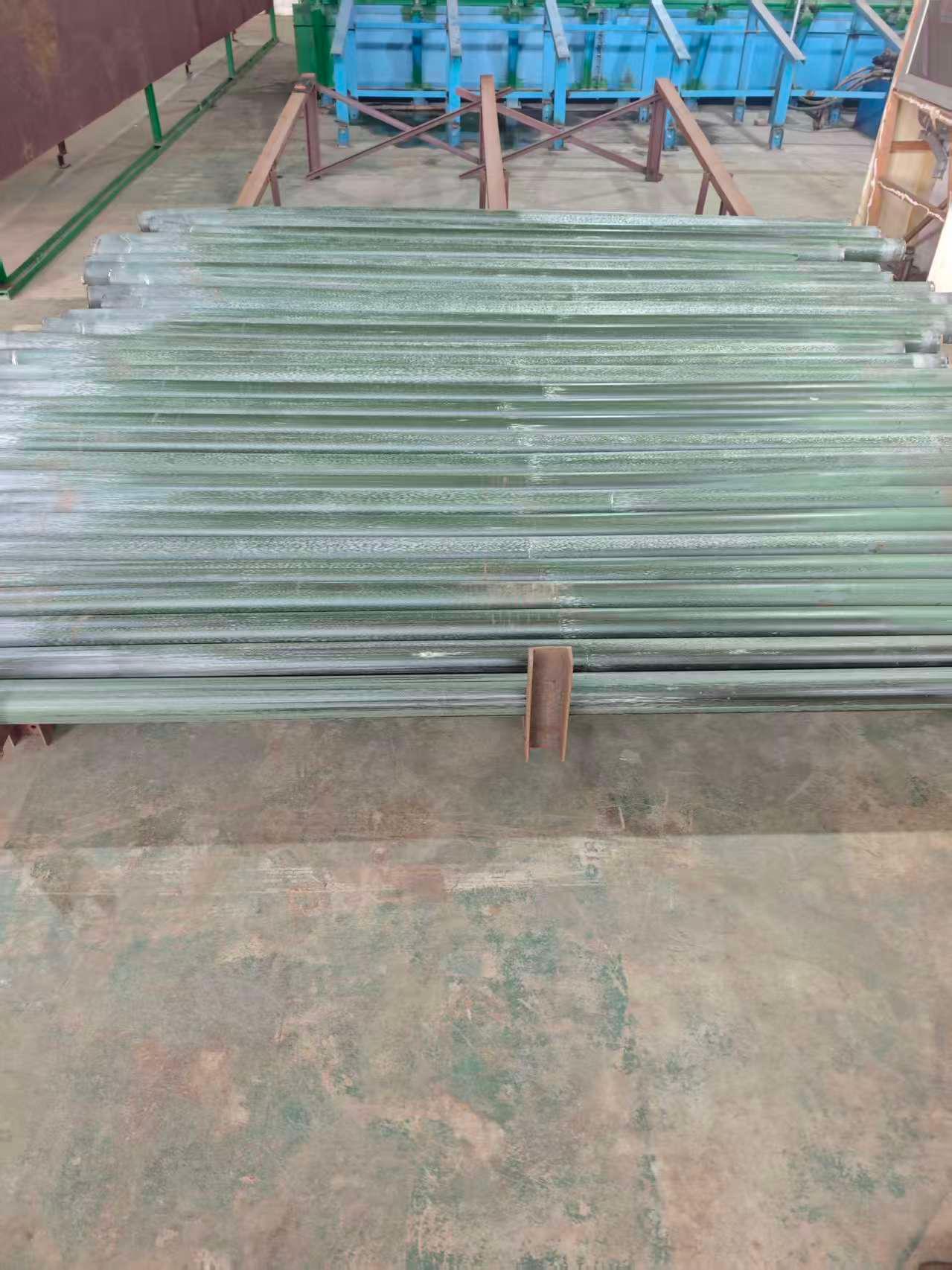
Seamless N10276 pipe starts as a solid billet that is heated and pierced or extruded into a hollow form, leaving behind a continuous grain structure with no joints. Welded pipe, by contrast, is fabricated from rolled plate or strip, then joined along a longitudinal or spiral seam. That seam introduces a boundary where base metal meets filler, and even with careful post-weld heat treatment, the microstructure, composition, and residual stress state differ from the surrounding material.
Under high internal pressure, the weakest point dictates failure. In welded N10276 pipe, the heat-affected zone adjacent to the weld often shows grain coarsening and reduced corrosion resistance compared to the unaffected base alloy. Microscopic defects like porosity, lack of fusion, or microcracks—rare but possible in any weld—become stress concentrators that can initiate cracks. Seamless pipe eliminates this variable entirely; its uniform wall thickness and consistent mechanical properties allow stress to distribute evenly around the circumference, directly improving burst strength and fatigue life.
N10276 is chosen for harsh acidic or chloride-bearing service, where a weld seam can act as a preferred site for localized attack. Compositional segregation in the weld pool or sensitization in the HAZ has been linked to accelerated pitting and stress corrosion cracking in real plant failures. By using seamless pipe, engineers avoid introducing these microstructural discontinuities altogether, which is why critical high-pressure equipment—downhole tools, reactor tubing, and subsea manifolds—still specifies seamless N10276 despite the higher cost and longer lead times.
Key Industrial Applications That Depend on N10276 Extruded Seamless Pipe
Across chemical processing plants, N10276 extruded seamless pipe earns its keep in reactors, heat exchangers, and piping systems that handle aggressive acids like sulfuric, hydrochloric, and phosphoric at elevated temperatures. Its nickel-chromium-molybdenum matrix shrugs off pitting, crevice corrosion, and stress cracking, which means fewer shutdowns and longer intervals between maintenance cycles. Engineers lean on this material when batch consistency and containment integrity cannot be compromised.
Pollution control systems, particularly flue gas desulfurization units in coal-fired power stations, depend on the same seamless construction to resist the corrosive slurry and condensate formed when scrubbing sulfur dioxide. The absence of weld seams removes weak points that often become initiation sites for localized attack. This makes the pipe a practical choice for absorber vessels, outlet ducting, and mist eliminator supports where leaks would carry heavy regulatory and operational penalties.
In pharmaceutical and food processing environments, the smooth internal surface of extruded seamless pipe simplifies cleaning and sterilization cycles while preventing product contamination. The alloy's resistance to chloride-bearing cleaning agents and steam-in-place procedures reduces the risk of rouge formation and metal ion leaching. For manufacturers chasing zero-defect batches under strict hygienic standards, this pipe offers a balance of durability and cleanability that welded alternatives struggle to match over repeated thermal cycling.
How a Specialized Supplier Reduces Risk in N10276 Pipe Procurement
Sourcing N10276 pipe through a supplier that focuses exclusively on high-performance alloys changes the equation before a purchase order is even issued. Instead of relying on a generalist distributor that treats C-276 as just another line item, a specialized partner verifies the heat chemistry against the UNS N10276 specification and cross-checks the physical properties against the actual production lot. This upfront discipline catches discrepancies that often surface later as weld defects or premature corrosion in chloride-heavy environments.
The risk reduction extends into documentation and traceability. A specialized supplier maintains full mill test reports, positive material identification records, and heat traceability from the original ingot to the cut piece. When a project requires ASME B31.3 or NACE MR0175 compliance, these records are not assembled on demand; they are already part of the standard package. That turns a typically reactive audit process into a straightforward verification step.
Inventory strategy also plays a role. Rather than carrying a broad but shallow stock, a focused supplier holds deeper inventories of N10276 in common schedules and diameters, often with in-house cutting and end-finishing. This reduces the lead-time gamble that forces buyers to accept substitute grades or non-conforming material under schedule pressure. Fewer handoffs and a shorter chain of custody mean fewer opportunities for mix-ups, and the supplier’s technical staff can flag issues like carbide precipitation risks before the pipe reaches the fabrication floor.
Verifying N10276 Pipe Quality: Tests and Certifications That Matter
A dependable N10276 pipe starts with a mill test report that goes beyond a simple stamp of approval. The chemical composition must fall within the tight ranges set by ASTM B622 or B619, particularly for nickel, chromium, molybdenum, and tungsten, since even small deviations can weaken corrosion resistance in aggressive chloride or acid services. Look for chromium between 14.5% and 16.5%, molybdenum from 15% to 17%, tungsten in the 3% to 4.5% range, and carbon held at 0.01% or below. Mechanical properties should also be confirmed against the standard: tensile strength of at least 100 ksi (690 MPa), yield strength of 41 ksi (283 MPa) or higher, and elongation no less than 40%. A hydrostatic test performed at the pressures specified for the pipe size and schedule gives additional assurance that the material can hold up under real operating conditions.
Non-destructive testing separates pipes that merely pass a visual check from those truly fit for critical service. Ultrasonic testing scans for internal laminations, inclusions, and wall thickness variations that would otherwise go unnoticed. For welded N10276 pipe, eddy current or liquid penetrant inspection of the weld seam helps catch surface-breaking defects before they become leak paths. Positive material identification using portable XRF or OES equipment is worth insisting on for every heat or lot, especially when the pipe will share a storage yard with lower-grade stainless or nickel alloys. In sour gas or high-temperature acidic environments, an intergranular corrosion test per ASTM G28 can also be requested to confirm that the alloy has not been sensitized during welding or forming.
The paperwork behind the pipe is just as important as the physical tests. A proper material test certificate should be traceable to a specific heat number and include the full chemical analysis, mechanical test results, dimensions, and any supplementary tests performed. EN 10204 Type 3.1 certification is common for standard orders, while Type 3.2 adds independent witnessing of the tests by a third-party inspection agency. If the pipe will be used in sour service, verify that the certificate references NACE MR0175 compliance. Keep a copy of the mill certificate and any PMI reports on file—they are your proof that the N10276 pipe meets the stated chemistry and performance levels, not just a promise from the distributor.
Long-Term Cost Benefits of Choosing N10276 Extruded Seamless Pipe Over Alternatives
When evaluating piping materials for aggressive chemical environments, the initial purchase price rarely tells the whole story. N10276 extruded seamless pipe, commonly known as Hastelloy C-276, delivers its true value over decades of service. The alloy's exceptional resistance to pitting, crevice corrosion, and stress corrosion cracking in oxidizing and reducing media means fewer unplanned shutdowns, less frequent replacement, and lower inspection and repair budgets compared to stainless steels or even many nickel alloys. These operational savings compound year after year, often offsetting the higher upfront material cost within the first few maintenance cycles.
Seamless construction eliminates the longitudinal weld seam, which is often the weakest point in corrosive service. Extruded N10276 pipe maintains uniform microstructure and mechanical properties throughout the wall thickness, reducing the risk of localized attack that can plague welded alternatives. For plants processing chlorides, sulfuric acid, or flue gas desulfurization slurries, this translates into longer intervals between turnarounds and a more predictable asset lifecycle. Over a 20- to 30-year operating horizon, the total cost of ownership frequently favors N10276 by a wide margin, particularly when factoring in labor, scaffolding, and lost production during pipe replacements.
Another long-term benefit lies in versatility and reduced inventory complexity. N10276 extruded seamless pipe can handle a broad range of corrosive chemistries without the need for multiple specialty alloys, simplifying procurement and sparing strategies. Its proven track record in chemical processing, pollution control, and offshore oil and gas means engineers can design with confidence, knowing that the material will not become a recurring failure point. When alternatives require coatings, linings, or cathodic protection that degrade over time, N10276 offers a self-contained, maintenance-light solution that keeps total lifecycle costs in check.
FAQ
N10276, often called C-276, holds up under both oxidizing and reducing conditions. Its molybdenum and tungsten content helps resist pitting and crevice corrosion, while the low carbon level minimizes carbide precipitation during welding. That combination is why plants handling sulfuric acid, chlorides, or flue gas desulfurization keep coming back to it.
Extruded seamless pipe eliminates the longitudinal weld seam, which is usually the first place corrosion or stress cracking shows up. The process also produces a uniform grain structure through the wall, so mechanical properties stay consistent even under high pressure or thermal cycling.
You'll find them in chemical processing, petrochemical refining, pharmaceutical production, and pollution control systems. They also appear in marine engineering and geothermal energy where salt-laden or acidic fluids demand more than standard stainless steel can offer.
A trustworthy supplier verifies the melt, checks dimensions throughout the length, and provides mill test reports against ASTM B622 or B829. Many also run ultrasonic or eddy current testing on every piece to catch subsurface flaws before the pipe leaves the warehouse.
Yes. Reputable suppliers can arrange non-standard diameters, wall thicknesses, and lengths to match existing equipment. Some also assist with heat treatment and finish options, depending on whether the pipe will be machined, bent, or welded later.
Ask about raw material origin, in-house testing capabilities, and past projects in your industry. A supplier that keeps full traceability from ingot to final pipe tends to reduce the risk of mixed grades or poor-quality extrusion.
It holds mechanical strength up to around 1250°F in many environments, though continuous use in highly oxidizing conditions may require lower limits. The seamless structure also helps resist creep and thermal fatigue better than welded alternatives.
Conclusion
When process conditions push standard stainless grades past their limits, N10276 brings a meaningful shift in corrosion resistance and thermal stability. Its nickel-molybdenum-chromium matrix handles aggressive acids, chlorides, and oxidizing media that would quickly pit or crack conventional 316 or even duplex alloys. Extruded seamless pipe adds another layer of dependability: without a longitudinal weld seam, there is no weak zone for stress corrosion or preferential attack, and the hot extrusion process refines the grain structure for consistent wall thickness and pressure retention. A supplier focused on this niche does more than stock pipe; they verify each heat through positive material identification, hydrostatic testing, and full documentation, so what arrives on site actually matches the specification.
Industries such as chemical processing, waste treatment, oil and gas sour service, and pharmaceutical manufacturing rely on this combination for critical lines where failure is not an option. While the upfront cost runs higher than welded standard stainless alternatives, the longer service intervals, reduced leak risks, and fewer unplanned shutdowns change the math in favor of N10276 extruded seamless pipe over the asset lifetime. The right supplier also maintains traceability from melt to final product, which simplifies audits and engineering reviews. Ultimately, choosing a knowledgeable partner for this material reduces procurement guesswork and keeps high-risk systems running longer without compromise.
Contact Us
Contact Person: Chenji Li
Email: 521 Zhonghui Road, Huishan Economic Development Zone
Tel/WhatsApp: +86 83112233
Website: https://www.jldnickelalloy.com/