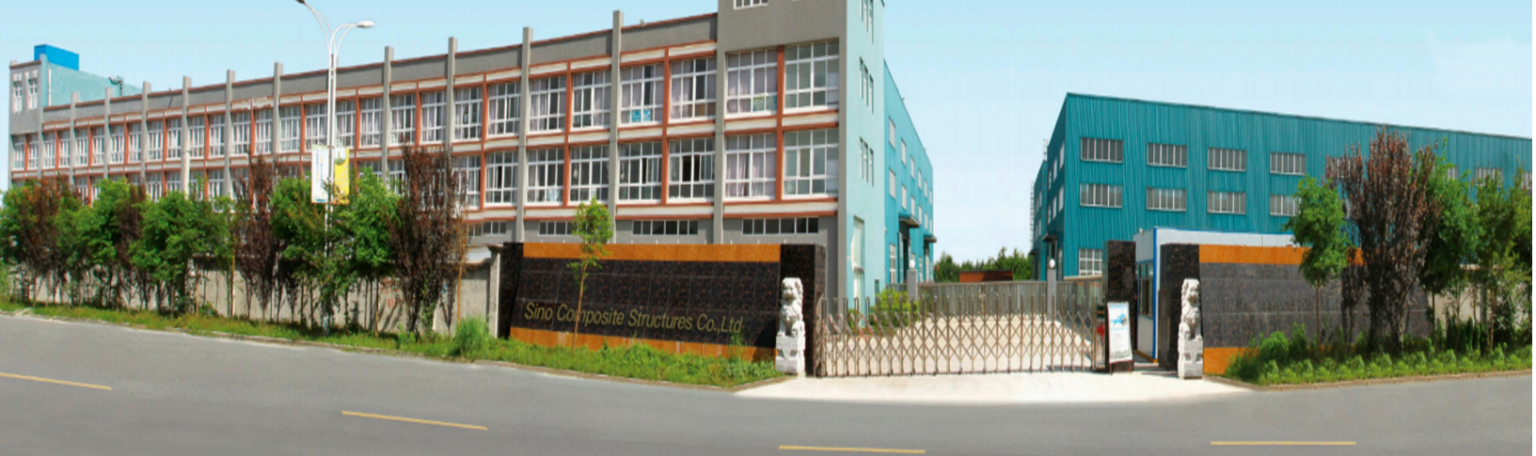

ODM FRP Platform System Explained for Engineers and Buyers
2026-09-02
If you've ever specified or sourced an FRP platform system, you already know the gap between catalog-standard and the reality of your project. ODM isn't just a buzzword—it's the difference between adapting your design to a product and having a product engineered around your design. In this guide, we break down how Sino Grating approaches ODM FRP platform systems, what engineers should look for in load, corrosion, and fabrication details, and how buyers can avoid the costly shortcuts that often hide behind so-called custom work.
Load Ratings Are Just the Starting Point for ODM FRP Platforms
While load ratings give engineers a baseline for safety, they rarely reflect how an FRP platform actually performs in the field. A platform rated for 5,000 lbs may still fail prematurely if the resin system isn't matched to chemical exposure, or if the fastening details create stress concentrations. Smart ODM partners start with load data, then push into deflection limits, impact resistance, and fatigue behavior under repeated loading.
The real value in an ODM approach comes from tailoring the platform beyond the datasheet. That means adjusting fiber architecture to control stiffness without adding weight, designing drainage surfaces that stay slip-resistant when wet or oily, and integrating mounting points that align with existing steel or concrete structures. These choices are rarely captured by a single load number, but they determine whether the platform is merely strong on paper or dependable in daily operation.
A load rating can even be misleading if the test conditions don't match the installation. Outdoor platforms face UV exposure, thermal cycling, and moisture ingress, all of which can degrade the matrix over time. A thoughtful ODM process validates the platform under realistic conditions, including edge bearing, concentrated wheel loads, and long-term creep. That's how you move from a passing load test to a platform that stays safe and dimensionally stable for a decade or more.
The Real Cost Difference Between Standard and Custom FRP Design
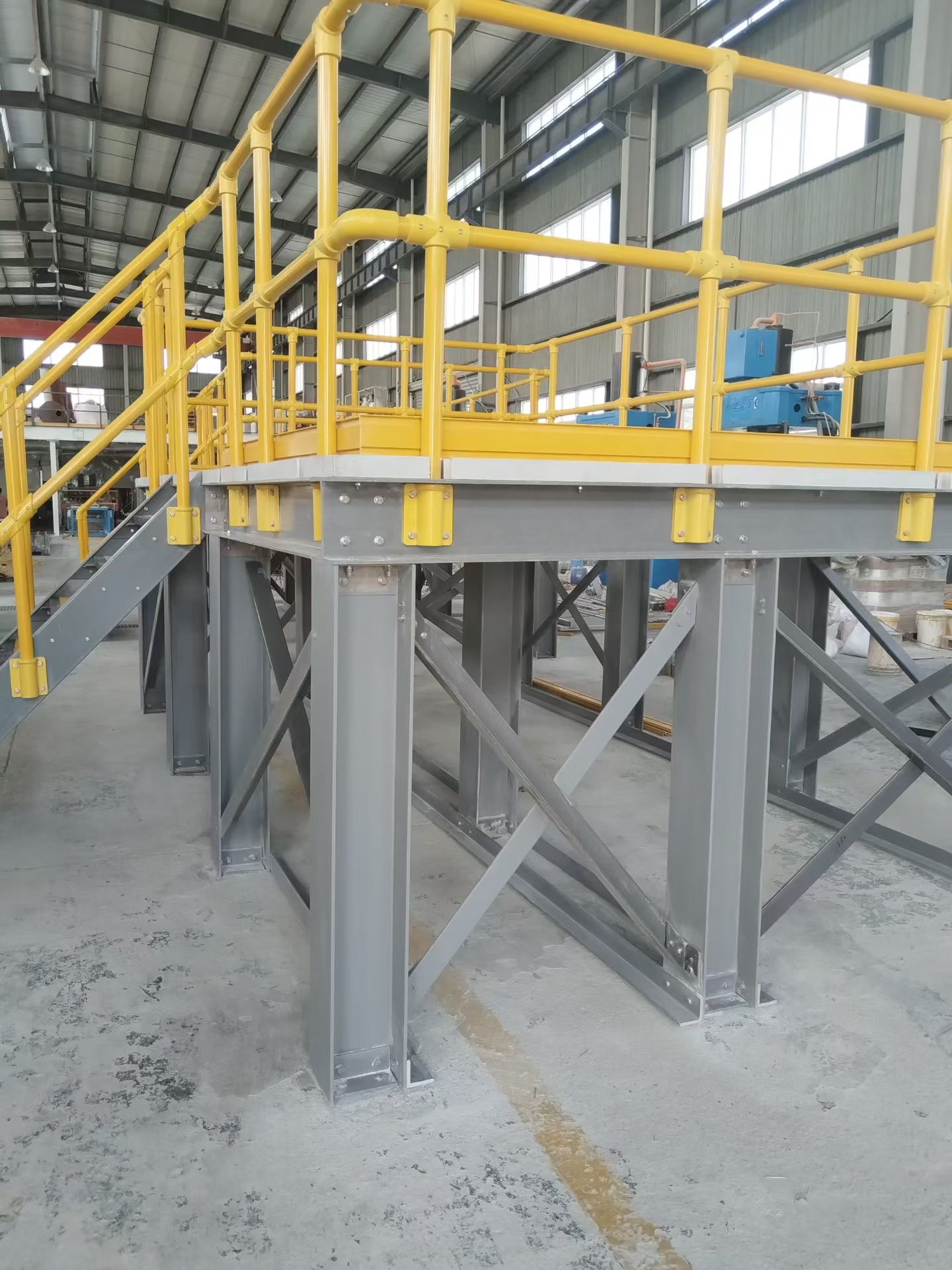
When comparing standard off-the-shelf FRP products with custom-designed solutions, the upfront price tag rarely tells the whole story. Standard options often appear cheaper because they're mass-produced and readily available, but they can hide significant expenses in the long run. You may need to modify your structure or accept performance compromises that lead to faster wear, more frequent replacements, or even safety risks. These hidden costs quickly add up, making the initial savings far less impressive than they first seemed.
Custom FRP design, on the other hand, starts with a higher engineering and tooling investment, but that cost is targeted precisely at your application. Every layer, resin choice, and fiber orientation is specified to match the actual load conditions, chemical exposure, and environmental factors you face. This precision means you avoid overbuilding unnecessary areas while still ensuring reliable performance where it matters most. Over a typical service life, a well-designed custom part often reduces maintenance downtime, extends replacement intervals, and eliminates the need for field modifications that plague standard products.
The real difference comes down to value per dollar spent, not just the purchase price. A standard FRP component might cost 30% less upfront but fail twice as fast or require expensive reinforcements after installation. By contrast, a custom solution that costs more initially can deliver lower total ownership costs through longer lifespan, fewer repairs, and better fit for your specific process. For anyone serious about long-term performance, the custom route frequently turns out to be the more economical choice despite the higher initial quote.
How Resin Selection Changes Corrosion Resistance and Fire Performance
Most corrosion failures in fiberglass equipment trace back to the resin matrix, not the glass reinforcement. A standard orthophthalic polyester handles mild acids and ambient temperatures, but push the pH below 2 or raise the temperature above 60°C and hydrolysis starts attacking the ester groups. Switching to an isophthalic or, better, a vinyl ester resin replaces many of those vulnerable linkages with more stable aromatic or methacrylate structures. This single change can shift a tank lining from needing replacement every two years to lasting a decade in sodium hypochlorite or dilute sulfuric acid service.
Fire performance does not follow the same ranking. A resin that resists aggressive solvents may still burn readily once ignited. Phenolic resins stand out because they form a carbonaceous char instead of melting and dripping, which keeps flame spread low and reduces smoke obscuration. Epoxy and vinyl ester systems can be flame-retarded with additives such as alumina trihydrate or brominated compounds, but the base chemistry still dictates the smoke toxicity and peak heat release. For example, a brominated vinyl ester might pass a 25 mm/min flame spread test yet produce dense, acidic smoke that complicates evacuation.
Designers often choose a resin for chemical resistance first, then try to fix fire issues with coatings or additives—a sequence that rarely ends well. In facilities where both corrosive fumes and fire codes apply, the practical route is to test small laminate panels under the specific chemical and thermal loads. A furan or phenolic blend may offer acceptable corrosion resistance in non-oxidizing acids and a much better fire profile than a heavily retarded polyester. The trade-off is usually brittleness and higher cost, so the final selection hinges on matching the resin's weak points to the actual service conditions rather than a generic "chemical resistant" label.
Field Assembly Details That Cut Installation Time for FRP Platforms
Standard FRP platform assemblies often arrive as loose beams and handrail posts that need layout and drilling on site. Pre-drilled and match-marked components eliminate that step. Each structural member gets a unique identification tag that corresponds to the shop drawing, so the crew can set pieces in order without measuring and guessing. This alone removes hours from the install.
Connection details matter just as much. Instead of through-bolting every joint, many FRP systems now use single-sided fasteners or slotted clip angles that allow for minor adjustment after the structure is level. Grated panels drop into pre-formed pockets on the support channels, held by quarter-turn cam locks rather than dozens of small clips. Handrail posts slip over pre-installed base sleeves and are secured with two bolts per post, not four. These reductions in part count directly speed up field labor.
Another overlooked detail is the sequencing of components. Packing that follows the build order—base frames first, then intermediate channels, then deck panels, then railing—lets crews unload right where each piece is used. When hardware kits are separated by zone and labeled to match the corresponding component tags, there is no sorting through a mixed pallet. These field-oriented assembly choices cut installation time significantly compared to older stick-built fiberglass platforms.
What a Buyer's Specification Sheet Should Capture Before Quoting
A buyer's specification sheet does more than list requirements; it sets the boundaries for a quote. Without clear details on material grade, dimensional tolerances, or finish quality, suppliers will either inflate the price to cover unknowns or submit a number that falls apart under scrutiny. The sheet should spell out exactly what is being bought—down to acceptable variation and the standard used to measure it.
Beyond the core dimensions and materials, capture the operational realities that affect cost. State the expected order quantities per release, the delivery schedule or lead-time constraints, and any packaging or labeling needs. If the part has to meet a regulatory standard or undergo specific testing, put that in writing before the first quote. Leaving these out invites assumptions that rarely favor the buyer.
Finally, include a drawing or CAD file with revision control, along with a target price or budget range if one exists. This keeps suppliers honest and filters out those who cannot handle the job. A well-built specification sheet turns quoting into a comparison of equals rather than a guessing game.
Balancing Strength, Weight, and Walking Comfort in ODM FRP Systems
Achieving a true balance in ODM FRP systems starts with rethinking laminate architecture. Rather than simply adding more glass or resin to hit a load rating, the design process zones the reinforcement where bending and shear stresses actually concentrate. This keeps the panel thinner in low-stress areas, shaving dead weight without sacrificing the capacity to handle heavy foot traffic or occasional equipment loads.
Walking comfort gets just as much attention as structural numbers. Excessive deflection or a springy feel underfoot can cause fatigue, even when the panel is technically strong enough. By tuning core thickness and rib spacing, we reduce noticeable bounce and vibration, so long shifts on walkways or platforms feel more stable and less punishing on the legs and back.
The final balance is verified through repeated load cycling and full-scale footfall testing, not just calculations. Panels that pass these trials maintain their shape, avoid localized soft spots, and keep that firm, secure sensation underfoot without the penalty of unnecessary weight or installation difficulty. That is the practical difference in an ODM FRP system built for real working conditions.
FAQ
It's a fiber-reinforced polymer platform that an original design manufacturer tailors to your specific layout, load requirements, and connection details. Unlike steel, it won't corrode or need repainting, and it's about 70% lighter than steel while offering comparable stiffness. The ODM part means the fabricator handles engineering, material selection, and fabrication so you get a system that fits without field modifications.
Galvanized steel eventually loses its zinc layer at cut edges and scratches, then rust takes over. FRP resists a wide range of acids, alkalis, salts, and solvents without any coating to maintain. You also avoid hot work permits because most FRP connections are bolted or bonded, not welded. Over a 20-year life cycle, FRP often beats galvanized steel on total cost when you factor in downtime for recoating and replacement.
Most manufacturers can engineer platforms for uniform live loads from 75 psf (3.6 kPa) up to 150 psf (7.2 kPa) or higher, with concentrated loads checked at the connection points. The final rating depends on the pultruded profile depth, span between supports, and safety factor chosen. Always ask for a stamped drawing with deflection limits—L/180 or L/240 are common for pedestrian access.
Standard polyester FRP has a flame spread rating of 25 or less per ASTM E-84 when formulated with fire retardants, which meets many building code requirements for interior finish. However, FRP softens at lower temperatures than steel, so structural fire resistance needs a specific engineering review. For outdoor platforms or chemical plants with low occupancy, FRP is widely accepted; for high-rise evacuation routes, you would need a hybrid design or additional protection.
Yes, that's where ODM adds the most value. The manufacturer can CNC-cut panels for irregular outlines, pre-drill holes for guardrail posts, and engineer connections that match your existing steel or concrete supports. Because FRP is easily cut and drilled in the shop, field labor drops significantly. Share your as-built dimensions and any clash points, and the fabricator will produce shop drawings for approval before production.
Much less than metal. No painting, no galvanic corrosion checks, no anode replacement. You may need to remove chemical buildup with a pressure washer and mild detergent, especially if the surface becomes slippery. Inspect bolted connections annually for proper torque, as polymer creep can cause slight relaxation. If you choose a gritted or concave top surface, slip resistance stays consistent even when wet.
The material cost per square foot is typically 10–30% higher than galvanized steel, but installation is faster because panels are lighter and don't require cranes or welding. You also save on ongoing maintenance and downtime. A buyer should compare total installed cost plus 10-year maintenance: FRP often breaks even within 5–7 years in corrosive settings, then saves money every year after.
The biggest one is only comparing price per square foot without checking the safety factor and deflection limits. Another is ignoring thermal expansion—FRP expands more than steel, so connections need slotted holes or flexible brackets. Also, forgetting to specify the exact chemical exposure can lead to the wrong resin system. Always request a resin compatibility chart and a reference list from the manufacturer.
Conclusion
Load ratings on an ODM FRP platform are only where the conversation begins. A 75 psf uniform load might sound standard, but if your crew rolls loaded carts across a mezzanine or drops tools from height, point loads and impact resistance matter more than the headline number. The real cost gap between an off-the-shelf FRP deck and a custom design often hides in those overlooked details—span adjustments, connection brackets, or cutouts for pipes. You can save upfront with a standard panel, but pay later in field modifications or compromised safety. Resin choice is the next silent decision. Isophthalic polyester handles mild chemical splash fine, but a bleach storage area or an acid washdown zone will eat through it in months. Vinyl ester costs roughly 20-30% more, yet it buys years of corrosion resistance and can meet ASTM E-84 Class 1 flame spread when fire performance is on the spec. Buyers who skip this conversation often discover the wrong resin only after the first quarterly inspection.
Field assembly is where ODM platforms earn their keep—or lose their schedule. Look for pre-drilled grating clips, modular handrail posts with captive fasteners, and pre-cut stair stringers. A well-designed system lets two workers set a 20-foot platform section in under an hour without a welder on site. That contrast directly with standard kits that require field drilling and touch-up coating. Before you send out a request for quote, your specification sheet should capture more than dimensions and load rating. Note the specific chemicals present, whether the area is food-grade or washdown, the fastener material (316 stainless vs. galvanized), and any deflection limits for walking comfort. A 1/8-inch deflection under foot feels solid; a 1/4-inch bounce makes workers uneasy all day. Balancing strength, weight, and comfort isn't a trick—thicker FRP panels add stiffness but also dead load, so the platform support steel may need upsizing. Good ODM suppliers will show you trade-off curves, not just a data sheet, so you can pick the sweet spot before the first beam is ordered. Missing these details up front is where most buying mistakes start.
Contact Us
Contact Person: Nicholas Zhu
Email: [email protected]
Tel/WhatsApp: 18921275456
Website: https://www.sino-grate.com