
OEM Swiss-Type Precision Parts Machining: Excellence in Custom Component Manufacturing
2026-05-23
In the world of precision manufacturing, the demand for custom components that meet exacting standards has never been greater. OEM Swiss-Type machining offers a solution that combines speed, accuracy, and versatility—turning raw materials into intricate parts with remarkable consistency. At WINNRUI CNC, we’ve refined this process to deliver excellence in every project, from prototyping to high-volume production. Discover how our approach to Swiss-Type machining can transform your most challenging designs into reality.
Mastering the Art of Tight Tolerances
Achieving tight tolerances isn’t just about having the right equipment—it’s a mindset that blends precision engineering with a deep understanding of material behavior. Every machinist knows that thermal expansion, tool wear, and fixturing errors can silently eat away at accuracy. The key lies in controlling what you can: maintaining a stable shop temperature, selecting cutting tools with the appropriate geometry, and using sharp, high-quality inserts made for the specific alloy. Even the order of operations matters; roughing out most of the material before final finishing helps relieve internal stresses, allowing the part to settle into its true geometry before those last few critical passes.
In-process measurement has become a non-negotiable part of the workflow. Waiting until the part is off the machine to check dimensions often leads to scrap, especially when holding tolerances tighter than ±0.0005 inches. Probing systems that run right inside the CNC allow for automatic offset adjustments, compensating for tool deflection or slight shifts in workpiece setup. But the real art comes from interpreting the data—knowing when a measured variation is a fluke, when it signals a dulling tool, or when the fixture itself is distorting under clamping pressure. Seasoned hands develop an instinct for these subtle clues, often catching problems before the micrometer confirms them.
Ultimately, mastering tight tolerances is about balancing ambition with practicality. Over-tolerancing can inflate costs and lead times without delivering any functional benefit, so a collaborative dialogue between design and manufacturing teams is essential. The best engineers know which features truly need micron-level precision and which can safely be opened up. This pragmatic approach, combined with a shop culture that values meticulous documentation and continuous improvement, transforms tolerance mastery from a stressful challenge into a sustainable competitive advantage.
From Blueprint to Precision Reality
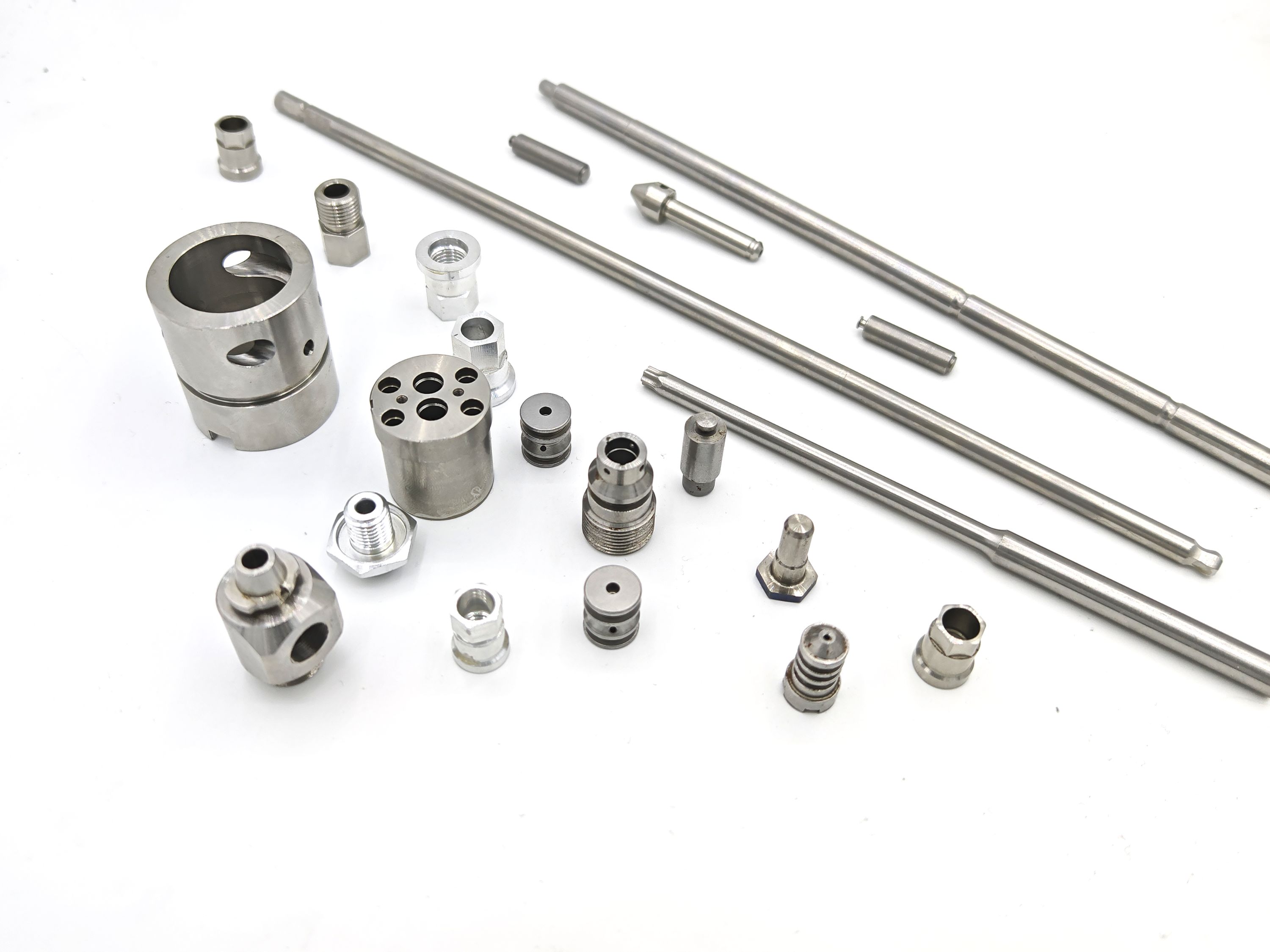
Bringing a concept into the physical world demands more than just accurate measurements—it calls for a seamless translation of intent into tangible form. Every line on the drawing has to resonate with the final product, ensuring that what was envisioned is exactly what gets built without compromise.
The journey from initial sketches to the finished article often uncovers hidden challenges. Material behavior, environmental factors, and assembly sequences can all disrupt the clean logic of a design. It’s in the careful negotiation of these elements that a blueprint truly comes alive, evolving from a static plan into a dynamic, faithful realization.
Achieving precision isn’t about rigid adherence to specifications alone; it’s about understanding the soul of the design. When every detail—from the choice of fasteners to the surface finish—reflects the original purpose, the result feels inevitable. That moment of alignment, where the built object mirrors the dream, is what transforms a simple plan into a masterpiece of exactness.
Materials That Meet Your Specs—Every Time
Finding materials that consistently align with your exact specifications shouldn't feel like a gamble. We operate with a mindset that every batch, every shipment, and every component must be a perfect match for your requirements—nothing less. It’s not about hoping for the best; it’s about knowing the outcome before the material even reaches your production line.
Our approach removes the guesswork from the equation. From the moment raw stock is sourced, we apply rigorous checks that go beyond standard certification. Think of it as a series of deliberate, well-practiced rituals—spectrometry, tensile testing, dimensional scoring—all executed by people who treat compliance as personal standard rather than a box to tick. This means you get lot after lot that performs identically, eliminating those time-wasting adjustments on your end.
What does this look like in practice? Imagine receiving stainless steel sheet that forms precisely the same way from piece to piece, or titanium tubing that welds without a single surprise. That consistency is built into our process, not left to chance. Every order comes with the quiet confidence that the specs you signed off on are the specs you’ll actually get—today, next month, and the order after that.
Where Complexity Meets Cost-Effectiveness
Navigating intricate processes doesn’t have to drain your resources. We’ve found that real efficiency hides in the tension between sophisticated challenges and lean budgets. By stripping away the unnecessary and focusing on what actually drives results, our approach turns tangled requirements into streamlined executions—delivering solutions that feel custom-built without the custom price tag.
Beyond Standard: Custom Solutions for Niche Demands
Off-the-shelf products rarely address the subtle complexities of specialized industries. A marine biologist tracking deep-sea currents doesn’t need the same dashboard as a logistics manager optimizing last-mile delivery. Without tailored tools, teams waste hours forcing generic software into roles it was never designed for, compromising both speed and accuracy. The real cost isn’t the subscription fee — it’s the silent drag on expertise.
True customization begins with listening before coding. It means dissecting a workflow until you understand why a field researcher relies on voice notes instead of forms, or why a microbrewery needs real-time fermentation data on a rugged handheld. These aren’t edge cases; they’re the unpolished edges of entire sectors waiting for someone to take them seriously. When a solution mirrors how people actually work, adoption stops being a struggle.
Our approach focuses on building from the ground up for the few, not dumbing down for the many. We craft interfaces that speak the language of a profession, automate niche data pipelines, and integrate with obscure but essential hardware. The result isn’t just a tool — it’s an extension of expertise that makes the standard alternatives feel like wearing a suit two sizes too large.
The Unseen Backbone of High-Performance Industries
Massive turbines spin without a whisper, data centers process petabytes without a glitch, and assembly lines churn out precision components hour after hour. What enables this seamless performance isn't the visible machinery but a hidden ecosystem of meticulous process control, advanced materials science, and predictive maintenance algorithms. These elements rarely make headlines, yet they form the critical layer that separates industry leaders from the rest.
At the core lies material innovation—not just stronger alloys, but substrates engineered at the atomic level to withstand extreme temperatures and corrosive environments. Simultaneously, real-time sensor networks feed digital twins that mirror physical assets, allowing engineers to simulate stress scenarios without ever halting production. This fusion of physical and virtual has quietly redefined reliability, pushing failure rates to near zero in sectors where downtime costs millions per minute.
Perhaps most overlooked is the human element behind these systems: the calibration experts, failure analysis teams, and logistics planners who operate in the background. Their deep tacit knowledge—built over decades of troubleshooting—creates an informal but highly effective resilience that no off-the-shelf software can replicate. It's this blend of cutting-edge technology and hard-won experience that truly underpins the high-output, fault-tolerant operations modern industries depend on.
FAQ
Swiss-type machining is a highly precise manufacturing method where the workpiece moves along the Z-axis while the cutting tool remains stationary, unlike conventional lathes where the tool moves. This design minimizes deflection, allowing for extremely tight tolerances and the production of small, intricate parts with complex features in a single operation.
A wide range of materials can be processed, including stainless steel, aluminum, brass, titanium, and various plastics like PEEK or Delrin. The choice depends on the part's intended application, required strength, corrosion resistance, or thermal properties, and our equipment is calibrated to handle both common and exotic alloys.
Industries that demand high precision and reliability, such as medical device manufacturing, aerospace, electronics, and automotive, benefit immensely. For instance, medical implants and surgical tools require flawless finishes and exact dimensions, while aerospace components must perform under extreme conditions—Swiss-type machining delivers that consistency.
It leverages guide bushings near the cutting point to support the material, virtually eliminating vibration and deflection. Combined with multi-axis control, live tooling, and in-process measurement feedback, we regularly achieve tolerances within microns, ensuring every part matches the digital model exactly without manual rework.
OEM collaboration means you get direct engineering support early in the design phase, which can optimize manufacturability and reduce costs. There's no middleman, so communication is faster, intellectual property is better protected, and changes can be implemented swiftly, leading to shorter lead times and a seamless transition from prototype to full production.
Absolutely. Swiss-type CNC lathes excel at producing parts with cross-drilled holes, slots, splines, and intricate external threads in a single setup. The synchronized movement of multiple axes and the availability of sub-spindles and back-working tools allow us to create features on both ends of a part without needing secondary operations, preserving alignment and surface integrity.
Conclusion
Swiss-type machining has long stood at the forefront of precision manufacturing, but when it comes to OEM custom components, the discipline reaches an entirely new level. Mastering tight tolerances is not simply a matter of advanced equipment—it's a mindset where every micron counts. From the moment a blueprint lands on the engineer's desk, the transformation from concept to tangible reality hinges on deep material knowledge and process control. Whether it's exotic alloys, medical-grade stainless steels, or high-performance plastics, the right substrate is matched to the part's end-use demands, ensuring performance without compromise. This fluency in materials, combined with the inherent accuracy of sliding headstock lathes, allows for the creation of features so minute and geometries so intricate that they redefine what's considered machinable.
Yet true excellence lies in balancing extreme complexity with cost-effectiveness—a feat the Swiss-type platform handles by consolidating multiple operations into a single, unattended cycle. For niche industries—from implantable medical devices to aerospace fuel systems—off-the-shelf solutions fall short. Custom approaches, born from iterative collaboration, transform unique requirements into reliable, repeatable production. These precision parts often become the unseen backbone of high-performance systems, quietly enabling breakthrough technologies without fanfare. In a landscape where quality is non-negotiable and lead times are compressed, OEM Swiss machining delivers not just components, but confidence, forming the silent infrastructure behind tomorrow's innovations.
Contact Us
Contact Person: Tim
Email: [email protected]
Tel/WhatsApp: +86 15522553731
Website: https://www.winnrui-cnc.com/