

OEM Vacuum Circuit Breakers: Key Benefits and Selection Tips for Industrial Power Systems
2026-06-12
Industrial power systems demand components that deliver unshakable reliability under the harshest conditions. Among these, OEM vacuum circuit breakers stand out as a cornerstone for safe, maintenance-friendly arc interruption. But not all breakers are created equal—selecting the right one hinges on nuanced performance factors that can make or break system integrity. At Lugao, we’ve seen how the right choice can slash downtime and extend asset life, while a misstep leads to costly outages. Whether you’re engineering a new facility or retrofitting aging switchgear, understanding the key benefits and selection tactics for vacuum circuit breakers is where smart design begins. Dive into what sets high-performance breakers apart and how they fortify your power infrastructure from the ground up.
The Silent Guardians: How Vacuum Breakers Protect Your Industrial Power
In the heart of every industrial facility, electricity flows like lifeblood, powering motors, drives, and control systems that keep operations humming. Yet this power must be tamed—abruptly interrupted during faults or safely disconnected for maintenance—without unleashing the destructive arc that can annihilate equipment and endanger lives. Vacuum breakers step into this role as unsung sentinels, using a deceptively simple principle: by separating contacts inside a near-perfect vacuum, they extinguish arcs almost instantly, preventing the ionized gas from sustaining a plasma channel that would otherwise erode contacts and cause catastrophic failures.
What sets vacuum breakers apart in safeguarding industrial power is their rugged reliability under relentless duty cycles. Unlike older technologies that rely on oil or sulfur hexafluoride, vacuum interrupters don’t leak, degrade, or require constant babysitting. Their sealed-for-life construction means no messy refills, no greenhouse gas worries, and a whisper-quiet operation that belies their brutal task. When a motor stalls or a transformer faults, these devices react in milliseconds, clearing the fault and then silently resetting, ready for the next challenge. This resilience is why you’ll find them in steel mills, chemical plants, and mining operations—environments where downtime isn’t just expensive, it’s unthinkable.
But the true genius of vacuum breakers lies in their adaptability to modern industrial demands. From medium-voltage switchgear to containerized substations, they handle frequent switching of capacitive or inductive loads without breaking a sweat, keeping power factor correction systems and large drives spinning efficiently. Their compact size and minimal maintenance allow engineers to pack more capability into smaller footprints, a blessing in crowded electrical rooms. And because vacuum arc extinguishing produces no residues, there’s no contamination of adjacent equipment, ensuring that years after installation, the breaker still performs as crisply as day one—a quiet promise that your industrial heartbeat will not skip a beat.
More Than Volts and Amps: Decoding True Breaker Performance
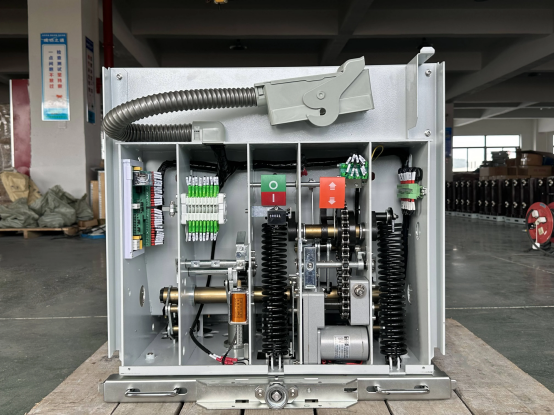
It is tempting to judge a circuit breaker solely by its voltage and current ratings, but these numbers only scratch the surface. In practice, performance hinges on how reliably the device interrupts fault currents, withstands mechanical and thermal stresses, and maintains calibration after repeated operations. Rated voltage and amperage merely define the breaker's operating envelope—not its resilience or speed under extreme conditions. A breaker that looks perfect on paper might fail to clear a high-magnitude short circuit, turning a minor fault into a catastrophic failure.
True breaker performance lives in the details that datasheets often relegate to footnotes. For instance, interrupting capacity reveals how much fault current the device can safely quench without welding contacts or rupturing the enclosure. Equally critical is the let-through energy, which measures the thermal and magnetic stress that downstream equipment must endure during a fault. Response time matters too: a breaker that operates a few milliseconds faster can mean the difference between a tripped branch circuit and a plant-wide shutdown. Even the material composition of the arc chute and the design of the toggle mechanism shape long-term reliability in ways that voltage and current ratings simply cannot capture.
In demanding environments—from data centers to manufacturing floors—ignoring these hidden performance factors leads to nuisance tripping, equipment damage, and safety hazards. Engineers who focus exclusively on volts and amps often end up oversizing breakers or adding unnecessary protection layers, inflating system costs without improving resilience. A deeper understanding of breaker dynamics allows for precise coordination, where each device selectively isolates faults and leaves healthy circuits undisturbed. Ultimately, the quality of protection depends not on the nominal label, but on how the breaker behaves when microseconds matter and available fault energy far exceeds the steady-state rating.
Zero Compromises: Reliability Lessons from Decades of Field Use
Real-world reliability isn’t born in a clean lab—it’s forged through decades of stubborn problems, surprise failures, and the quiet fixes that come from actually listening to what the field is telling you. Every unexpected shutdown, every component that wore out far too soon, every near-miss that got brushed aside has a lesson tucked inside. Those who’ve been in the trenches know that skipping a routine check or waving off a subtle signal can cascade into something much bigger. The rules aren’t written in a manual; they’re earned through long nights, honest post-mortems, and a refusal to settle for “good enough.”
One thing that consistently separates systems that last from those that don’t is an almost obsessive attention to the mundane. It’s never the glamorous stuff—it’s the gaskets, the vibration patterns nobody charts, the firmware edge cases that only appear after twelve months of continuous runtime. Veteran engineers learn to distrust assumptions and instead build in generous margins, not because a calculation told them to, but because they’ve seen how reality bites back. They double-check torque values when nobody’s looking, they swap out parts well before the predicted wear curve says they must, and they document every anomaly as if it’s the clue that prevents the next outage. Over time, this careful, almost paranoid approach stops being a burden—it becomes instinct.
The hardest lesson, though, might be that reliability culture can’t be installed with a new policy or a flashy monitoring dashboard. It seeps in when teams feel safe enough to say “I don’t know,” when leadership treats every incident as a chance to learn rather than to blame, and when the design review meeting spends as much time on the 0.1% scenarios as on the happy-path specs. Decades of field use teach you that compromise shows up silently—a rushed test, a supplier substitution that’s “almost the same,” a decision to let a known risk slide for just one more quarter. Zero compromises doesn’t mean flawless; it means that when the stakes are high, nobody takes the easy way out, because they’ve all seen where that road leads.
Partnering with the Right OEM: Avoiding Common Pitfalls
Too many businesses rush into OEM partnerships without digging into the manufacturer’s actual production history. It’s not enough to glance at a glossy brochure or a few sample units—you need to see how they handle real volume, how consistent their quality is under pressure, and how they react when things go wrong. Visit their facilities if possible, talk to their existing clients (not just the ones they hand-picked for references), and watch for red flags like frequent delays, high staff turnover, or reluctance to share process controls. A partner who’s transparent about their challenges is often more reliable than one who promises perfection without sweating the details.
The contract stage is where a lot of promising deals unravel. Don’t let the OEM lock you into vague terms around design ownership, minimum order quantities that don’t match your growth stage, or penalty clauses that only protect their side. Get everything in writing about who owns the molds, how IP is protected, and what happens to your tooling if the relationship ends. It’s also worth building in a trial period or small-batch production clause before committing to large volumes—this gives you a real-world check on their capabilities without gambling your entire inventory. The goal is a deal that works for both sides, not one that leaves you with empty shelves and a pile of legal headaches.
Set It and (Almost) Forget It: The Low-Maintenance Edge
The real magic kicks in once the initial setup is done. This is where the mundane fades into the background, and the system just hums along quietly. You're not babysitting processes or constantly tweaking settings; it's more like trusting a well-trained pilot to handle the autopilot while you focus on other things. The minor adjustments that do pop up are so infrequent they become almost like second nature—a quick glance every few weeks, not a daily chore.
There's a quiet satisfaction in watching something run smoothly with almost no input from your side. It frees up mental bandwidth that would otherwise be eaten by routine check-ins and minor troubleshooting. Instead of feeling tethered to a task list, you get to enjoy the results without the ongoing hassle. It’s the difference between owning a high-maintenance exotic car that needs constant attention and a reliable daily driver that just works, trip after trip.
Of course, 'almost' is the operative word here. It’s not about total neglect, but about designing a setup where the upkeep is so minimal it barely registers. A quick seasonal review, a periodic software update that happens automatically in the background, or a rare part replacement that's more preventative than reactionary. That’s the sweet spot: when the effort-to-outcome ratio tilts so heavily in your favor that the maintenance feels like an afterthought, not a job.
Smart Integration: Vacuum Breakers in the Age of IoT
Gone are the days when vacuum breakers were just passive safety valves tucked away in utility closets. In the age of IoT, these critical components have gained a digital voice, silently reporting their status and health to building management systems. A small embedded sensor can now monitor pressure differentials, valve position, and even minute leakage, transmitting data wirelessly to a central platform. This quiet revolution means that instead of waiting for a catastrophic backflow event or a routine manual inspection, facility teams can keep a perpetual finger on the pulse of their plumbing infrastructure.
The real magic lies in the layers of intelligence layered over that raw data. Machine learning algorithms can analyze patterns to predict when a seal might fail or debris might impede the valve's operation, triggering maintenance alerts long before any visible symptom appears. Imagine a brewery where a vacuum breaker on a fermentation tank starts to show erratic pressure recovery times; the system can flag it for replacement during the next planned downtime, avoiding a ruined batch. This predictive capability transforms vacuum breakers from simple mechanical devices into proactive guardians of process integrity.
Integration with broader IoT ecosystems also unlocks new efficiencies across the entire water supply network. Municipal water utilities can aggregate data from thousands of connected vacuum breakers across a city, identifying pressure anomalies that might signal main breaks or unauthorized use. In smart buildings, these devices can communicate with automated valves, pumps, and water heaters to orchestrate a harmonious flow, minimizing waste and energy consumption. It’s a subtle but profound shift—plumbing components that once simply sat and endured now actively participate in the intelligence of the built environment, making our infrastructure not just smarter, but more resilient.
FAQ
Vacuum circuit breakers offer exceptional reliability and require minimal upkeep because their arc-quenching happens in a sealed vacuum, eliminating exposure to air and contaminants. This design also delivers faster interruption and reduces fire risk, which is critical in harsh industrial environments.
For mining, you'd prioritize robustness and resistance to dust and vibration. Look for breakers with high mechanical endurance ratings and sealed mechanisms. It’s also vital to confirm the interrupting capacity matches your fault levels, and consider whether the OEM can provide tailored control interfaces.
The interruption process is contained entirely within the vacuum interrupter, preventing external arc flashes. This drastically lowers the chance of injury or equipment damage. Additionally, they are compact and can be installed in enclosed switchgear, further separating operators from live parts.
There's no need to monitor oil quality or replace arc chutes. Vacuum interrupters maintain stable performance over many operations, so the only routine checks typically involve mechanical components and contact wear—which can often be done without disassembly.
Yes, many OEMs design retrofit solutions that fit existing cubicles with minimal modifications. It’s important to share your existing panel drawings with the manufacturer so they can adapt mounting, busbar connections, and control wiring to match the legacy system.
The vacuum interrupter is the core component where current interruption occurs. Its sealed nature prevents oxidation and contamination of the contacts, which means very little wear over time. This directly translates to an extended service life, often exceeding 30 years with proper care.
Extreme temperatures can impact the mechanical parts and the vacuum integrity. OEMs usually specify an operating range, and for very cold or hot environments, special lubricants or heaters might be added. It’s essential to discuss site conditions early in the selection process.
One misconception is that they are only suitable for low-current scenarios. Modern vacuum interrupters handle high fault currents efficiently, and advances in contact materials have made them dominant in many medium-voltage industrial networks due to their compact size and dependability.
Conclusion
Vacuum circuit breakers serve as the silent backbone of industrial power systems, quietly ensuring that faults are cleared before they cascade into costly downtime. Their arc-quenching technology in a sealed vacuum environment not only protects critical equipment but also virtually eliminates the fire and explosion risks associated with older air or oil breakers. The protection goes far beyond simple overcurrent interruption; modern designs handle high-frequency switching, capacitor banks, and transformer inrush with precision. True performance is measured not just in voltage and current ratings, but in how consistently a breaker behaves across thousands of operations, maintaining dielectric strength and mechanical integrity without degradation. Decades of field data confirm that when properly specified, these units deliver uncompromising reliability in the harshest environments, from arctic cold to tropical humidity, making them the go-to choice for engineers who refuse to gamble on safety.
Selecting an OEM partner, however, demands more than comparing data sheets. The real pitfall lies in overlooking long-term support—spare parts availability, technical expertise, and the flexibility to tailor breakers to your specific network topology. A nameplate might boast similar specs, but differences in contact material, sealing processes, or factory testing can drastically affect service life. The best breakers today also embrace the IoT shift, embedding sensors that stream temperature, partial discharge, and mechanical condition data to central dashboards. This smart integration shifts maintenance from reactive to predictive, keeping crews away from energized compartments while extending intervals between physical inspections. Add to that the low-maintenance design—spring mechanisms that function without lubrication for decades, and interrupters that never need arc chute cleaning—and you get a solution that truly runs in the background. The initial choice becomes an investment in peace of mind, where the breaker does its job so unobtrusively that you almost forget it’s there.
Contact Us
Contact Person: Doreen
Email: [email protected]
Tel/WhatsApp: 8618057712366
Website: https://www.liugaopower.com/