

Piezo Inkjet Printer Company Unveils Next-Gen Printing Technology for Diverse Industries
2026-05-21
In a bold leap forward for industrial printing, Danmajet has just pulled back the curtain on a next-generation piezo inkjet technology that promises to reshape everything from packaging to electronics. It’s not every day that a printer company makes you rethink the limits of ink on a surface—but this time, they might just have done that.
A new horizon for industrial inkjet innovation
Industrial inkjet is stepping beyond its traditional roles, venturing into areas once thought impossible. Where screens and rollers once dominated, now precision droplet placement opens up dynamic possibilities—from printing on contoured automotive parts to embedding electronics directly onto flexible substrates. This shift isn't just about speed or cost; it's about reimagining what a manufacturing line can do when deposition becomes digital, non-contact, and infinitely adaptable.
The true breakthrough lies in fluid and system integration. Inks are no longer mere colorants but functional materials—conductive, dielectric, biological, even edible. Printheads with thousands of nozzles fire in synchronized bursts, controlled by real-time feedback loops that compensate for misalignment or viscosity shifts mid-run. The result is a process that learns and adjusts, turning what used to be a serial production constraint into a parallel, data-driven dialogue between machine and medium.
What sets this new horizon apart is its fusion of disciplines. Chemists, software engineers, and mechatronics experts collaborate to build platforms that can switch from prototyping to mass production in the same day. A single press might jet a protective coating onto a smartphone lens in the morning and pattern a biosensor array by afternoon. It's a quiet revolution—less about louder claims and more about the hum of a printer rewriting the rulebook on manufacturing agility.
How precision printing is reshaping manufacturing workflows
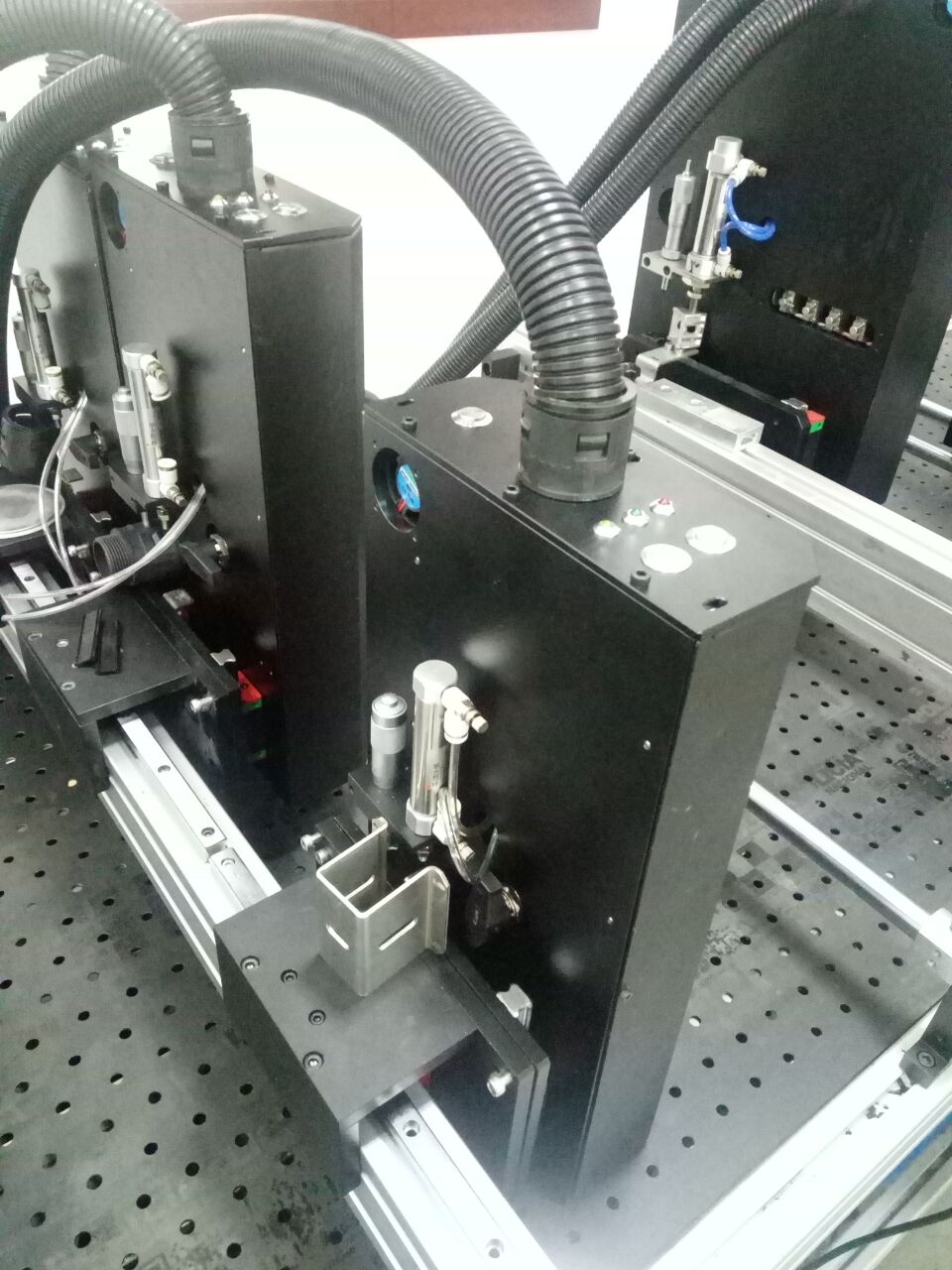
Precision printing technologies are quietly upending traditions that have governed factory floors for decades. Instead of relying on multiple setups, tooling changes, and lengthy supply chains, manufacturers are now folding additive processes directly into their core production lines. This shift means a single machine can pivot from prototyping to end-use parts within hours, removing the friction that once separated design iteration from final output. The result isn’t just faster turnaround—it’s a fundamental rethinking of how products move from concept to customer.
At the heart of this transformation is the ability to fuse materials with exacting control, building geometries that subtractive methods struggle to replicate. Conformal cooling channels, lightweight lattices, and integrated electronics are no longer constrained by traditional machining limits. Engineers can deploy these features without inflating costs or stretching lead times, which encourages more ambitious designs. On the floor, workflows condense: post-processing steps shrink, inventory of spare parts diminishes, and the dependency on specialized labor softens.
Perhaps the most overlooked change is how precision printing recalibrates risk. Short runs of custom components become economically viable, letting manufacturers test market reactions before scaling up. When tooling overhead vanishes, the penalty for iteration drops, so teams experiment more freely. This freedom feeds back into smarter workflows—ones built around real demand signals rather than forecasted batches. Over time, companies aren’t just adopting a new machine; they’re rewiring their entire operational logic around responsiveness and precision.
Breakthrough versatility for materials and substrates
Imagine a single platform that can handle metals, ceramics, polymers, and composites with equal ease, adapting on the fly to the unique demands of each material. This is the reality we've engineered—a system that doesn't just switch between materials but optimizes every parameter in real time, from thermal management to deposition kinetics. The result is a tool that feels less like a machine and more like an extension of the material itself, unlocking geometries and combinations that were previously off-limits.
Traditional systems force you to choose between material capability and process stability, often compromising one for the other. Our approach eliminates that trade-off entirely. By rethinking how energy is delivered to the substrate and how the build environment is controlled, we've created a window of processability that is wider than ever before. Delicate foils, thick plates, reflective alloys, and brittle ceramics all respond predictably, opening up hybrid manufacturing workflows that blend materials in ways that reduce weight, increase strength, or add functionality without extra steps.
For industries ranging from aerospace to medical devices, this means fewer machines on the factory floor, shorter process chains, and the freedom to design parts that were once deemed impossible to produce. Whether you're printing a copper heat exchanger with intricate internal channels or layering a ceramic coating onto a flexible polymer substrate, the system maintains consistent quality across the entire build area. It's a level of versatility that moves beyond mere compatibility—it transforms how you think about what can be made.
Elevating quality standards in commercial print applications
Every commercial print project demands a level of precision that goes beyond basic production. It’s not just about putting ink on paper; it’s about ensuring every detail—from color accuracy to substrate selection—aligns with the brand’s identity and the campaign’s intent. This means adopting rigorous pre-press checkpoints and maintaining a relentless focus on consistency across all pieces, whether it’s a high-volume direct mailer or a short-run luxury brochure. By embedding quality at every stage, we minimize rework and make sure the final output reflects the value of the message it carries.
True elevation comes from rethinking standard tolerances. Instead of accepting industry defaults, we push boundaries with advanced spectrophotometry and automated inline inspection systems that catch variances invisible to the naked eye. Multi-step color management, combined with real-time density adjustments, ensures that the first print matches the last—even across different machines and substrates. This obsessive approach eliminates banding, misregistration, and gloss mismatches, delivering a tactile and visual experience that commands attention in a crowded marketplace.
The shift toward elevated standards also involves a cultural change within the production environment. Operators are empowered to question the norm, and cross-functional teams regularly review samples not just for defects but for opportunities to refine. We treat every job as a prototype for the next, using data from each run to fine-tune processes continuously. The result is a cycle of improvement that turns everyday commercial printing into a craft—one where quality isn’t a checkmark but an ongoing conversation between the equipment, the materials, and the people who bring them together.
Smart integration with automated production lines
Modern factories are moving beyond basic automation, embedding intelligence directly into the heartbeat of production. Sensors and adaptive algorithms now allow assembly lines to self-correct in real time, adjusting speeds or rerouting tasks when a bottleneck surfaces. This isn’t about replacing human oversight but augmenting it—operators get instant alerts with context, not just alarms, so they can make decisions faster and with greater confidence.
The real shift comes from how these systems learn. Instead of rigid programming, integrated smart modules continuously gather data from every weld, every pick-and-place operation, and every quality check. Over time, they spot patterns that even seasoned engineers might miss—like a subtle drift in torque values that signals imminent tool wear. This means maintenance happens exactly when needed, not on a fixed schedule, dramatically cutting downtime and scrap.
What sets this apart is the seamless connection between the production floor and higher-level planning. When a line integrates smartly, it doesn’t just execute orders; it feeds back into scheduling and inventory systems. A sudden rush order on one product can automatically pull the necessary components from the warehouse and adjust downstream processes without human intervention. It’s this kind of fluid adaptability that turns a traditional automated line into a responsive, cost-efficient ecosystem.
The future of on-demand digital printing across sectors
On-demand digital printing is quickly reshaping how industries approach production, moving from a niche service to a core operational strategy. Its evolution is fueled by advances in print head technology, faster data processing, and sophisticated variable data software. This combination allows businesses to produce high-quality, customized materials in record time, eliminating the rigid constraints of traditional offset runs. As a result, sectors like packaging, fashion, and publishing are adopting these agile workflows to meet the growing consumer demand for personalization and immediate fulfillment.
The flexibility of digital printing opens new avenues for sectors that require rapid prototyping and localized production. Automotive and aerospace companies now leverage it for short-run parts manuals and training collateral, while healthcare providers use it for patient-specific guides and labeling. Real-time inventory reduction is another crucial shift, as firms can print exact quantities exactly when needed, dramatically cutting warehousing costs and material waste. This on-demand model doesn't just streamline logistics; it enables micro-segmentation of markets, where products and their accompanying print materials can be adapted on the fly to regional trends or cultural nuances.
Looking ahead, the convergence of digital printing with data analytics and internet-connected devices will blur the lines between physical and digital experiences. Packaging will carry unique, trackable codes that interact with smartphones, giving brands instant feedback loops and enabling interactive consumer engagement. In construction and interior design, on-demand printing of wallpapers, floor graphics, and even ceramic tiles customized per project will become standard. As the technology matures, expect faster print speeds and improved material compatibility, making digital printing the default choice for a circular economy where resource efficiency and product longevity go hand in hand with mass customization.
FAQ
The versatility of the latest piezo inkjet systems makes them particularly valuable for electronics manufacturing, textile production, decorative laminates, packaging, and biomedical applications. Each sector can take advantage of the precise droplet control and wide ink compatibility to achieve unique results.
The new printhead incorporates a refined actuator structure that delivers higher firing frequencies and more uniform droplet ejection. It also handles a broader range of viscosities and chemistries, reducing nozzle clogging and enabling consistent output even with challenging functional fluids.
Ink formulation is critical—the printer is designed to work with custom-tailored fluids, from conductive nanoparticle inks to UV-curable varnishes. The engineering team collaborates closely with ink suppliers to optimize jetting behavior, adhesion, and functional performance on various substrates.
The modular design allows for relatively seamless integration. Most facilities can retrofit the print engine into current conveyors and curing systems with minimal disruption, and the open software architecture simplifies communication with factory automation protocols.
Typical gains include resolving features down to 20 micrometers while maintaining line speeds above 75 meters per minute. That balance of fine detail and high throughput opens up new possibilities for mass customization without sacrificing productivity.
It's built for production environments. The printheads have extended service intervals, the ink delivery system includes real-time degassing and recirculation, and the overall construction uses industrial-grade components rated for continuous operation in demanding conditions.
By enabling additive deposition directly onto substrates, the process reduces material waste compared to subtractive methods. Additionally, water-based and low-VOC ink options are supported, and the precise digital control minimizes consumable usage, contributing to a smaller environmental footprint.
The company provides comprehensive onboarding, including on-site application testing, operator training programs, and remote diagnostics. A dedicated engineering team works with clients from initial feasibility studies through full-scale ramp-up to ensure a smooth transition.
Conclusion
A groundbreaking advancement in industrial printing has been announced by a leading piezo inkjet company, introducing a next-generation platform designed to meet the evolving demands of modern manufacturing. This innovation transcends traditional boundaries, enabling exceptionally precise droplet control that reshapes workflows across sectors like electronics, textiles, and packaging. By harnessing advanced piezoelectric technology, the system achieves micron-level accuracy and consistent repeatability, even at high speeds, directly enhancing production efficiency. Manufacturers can now print on an unprecedented range of materials and substrates—from delicate films and curved surfaces to rigid composites—without compromising quality. This versatility unlocks new possibilities for functional printing, including conductive traces, protective coatings, and decorative finishes, all within a single, streamlined process.
Beyond its core printing capabilities, the system seamlessly integrates with automated production lines, featuring real-time monitoring and adaptive controls that minimize downtime and waste. Quality standards in commercial print applications are elevated through closed-loop feedback systems that ensure color fidelity and sharp detail, meeting the rigorous demands of signage, labeling, and high-end packaging. Looking ahead, this technology lays the foundation for truly on-demand digital manufacturing, enabling rapid prototyping and customized short runs without the cost and time of traditional setups. As industries pivot toward more agile, sustainable operations, this next-gen solution offers a scalable pathway to reduce inventory, lower energy consumption, and accelerate time-to-market. It represents not just an upgrade, but a fundamental shift in how businesses approach printing—turning it from a finishing step into a core, value-adding component of smart factories.
Contact Us
Contact Person: Jacky
Email: [email protected]
Tel/WhatsApp: 086 15000607053
Website: https://www.danmajet.com