
Plastic Pipe Machine Company: Engineering Excellence for Durable Pipeline Solutions
2026-08-18
Plastic pipes carry the world's water, but the machines that make them rarely get the credit they deserve. Until you meet a machine engineered to last as long as the pipelines it produces. Yongte has spent years perfecting that balance — turning raw polymer into infrastructure that defies failure. In this article, we unpack the engineering principles behind their durable pipeline solutions, and why they're changing expectations across the industry.
Extrusion Systems Built Around Real-World Stress
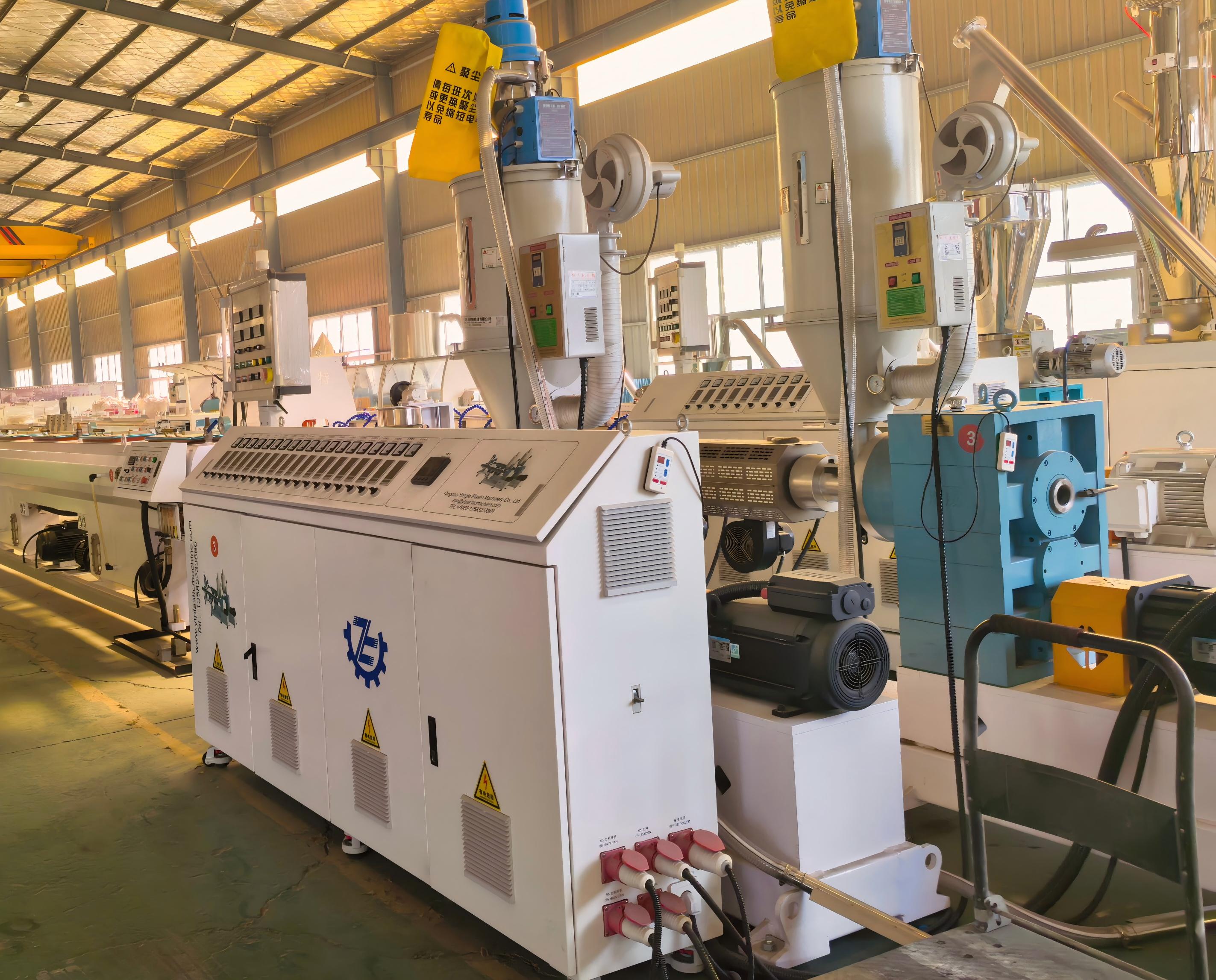
Most extrusion machinery is designed for ideal conditions, but real production floors rarely offer those. Heat fluctuations, inconsistent raw material feed, and sudden pressure spikes are everyday realities, not exceptions. Systems built around real-world stress start with reinforced barrel walls and screw geometries that tolerate viscosity shifts without stalling or degrading the melt. Instead of chasing theoretical throughput curves, these designs prioritize stable output under load, using dynamic torque monitoring and adaptive temperature zones to absorb shocks that would crack standard liners or strip gearbox teeth.
The difference shows up in maintenance logs and scrap rates. A machine that handles transient overloads without tripping alarms keeps downstream tooling in rhythm, reducing micro-stops that erode hourly margins. Operators notice fewer emergency adjustments and less purging waste because the system isn't constantly fighting its own limits. That kind of resilience comes from oversizing critical wear surfaces, choosing direct-drive motors with higher stall margins, and programming control loops that anticipate pressure build-up rather than simply reacting to it.
Ultimately, an extrusion line built around stress doesn't just survive rough production days—it turns them into ordinary shifts. The return isn't just longer barrel life; it's the elimination of the hidden costs that come from running equipment at the edge of its comfort zone. When material variations stop being a crisis, planning becomes simpler, quality stops swinging, and the whole plant breathes easier.
Tight Tolerances That Translate to Longer Service Life
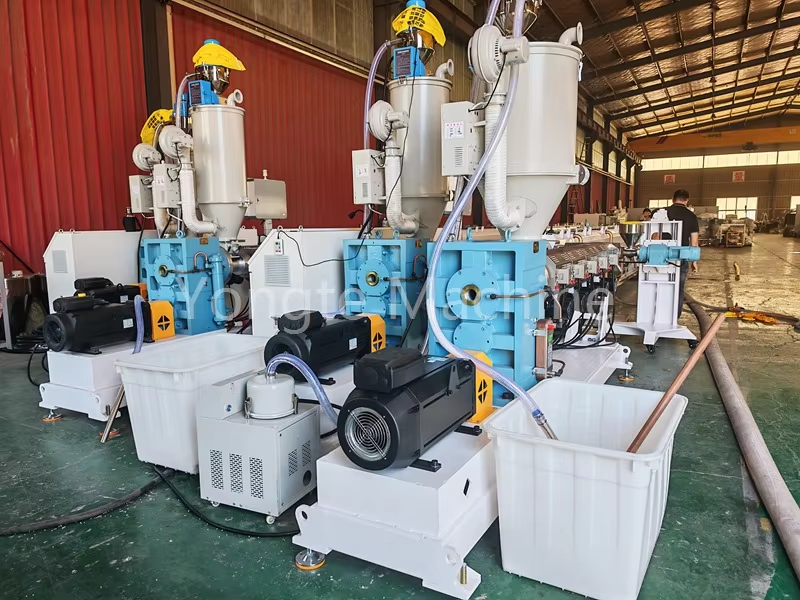
Precision machining often gets reduced to numbers on a drawing, but those numbers quietly determine how long a component will survive. When mating surfaces are held to tight tolerances, load distributes evenly across the contact area instead of concentrating on a few high spots. That might sound like a small detail until you've watched a bearing race develop spalling because a shaft was a few microns out of round.
Tight tolerances also cut down on the small movements that accelerate wear. A shaft that fits its housing with minimal clearance won't hammer under reversing loads, and a seal that sits in a precisely bored pocket is less likely to let contaminants in. Over thousands of hours, these tiny advantages compound into fewer rebuilds and less unplanned downtime.
Of course, chasing tight tolerances for their own sake adds cost without benefit. The real skill lies in identifying the few dimensions that actually control service life and holding those exceptionally close while leaving non-critical features with sensible allowances. Done right, the result is a part that may look ordinary on the outside but lasts noticeably longer in the field.
Modular Designs for Shifting Production Demands
Production lines built around fixed machinery often struggle when order volumes swing or product variants multiply. Modular designs flip that logic: instead of treating equipment as permanent, they break cells into standardized, movable units that can be added, removed, or rearranged without tearing up the floor. A plant running three shifts of one model might slide in an extra station to handle a sudden spike, then shift that same station to a different line once demand cools. This kind of flexibility keeps capital tied to actual output rather than guesswork.
The real advantage shows up during product changeovers. Rather than commissioning a bespoke line every time a customer tweaks a design, modular systems let engineers swap out only the affected segment—say, a new dispense head or a different conveyor curve—while the rest keeps running. Downtime shrinks from weeks to days, and the learning curve stays flat because operators already know the base modules. It also means older equipment can be repurposed instead of scrapped, which matters when margins get tight.
Scalability works the same way. Early-stage production might use a compact U-shaped layout with just three modules, then expand to a longer line as orders grow, without changing the core logic or control architecture. Because interfaces are standardized, new modules plug in like peripherals on a computer, and diagnostics become simpler: a fault points to a specific unit, not a tangle of custom wiring. Over time, the plant accumulates a library of modules that can be mixed and matched, turning production capacity into a reusable asset rather than a one-off build.
Process Control That Cuts Scrap and Rework
On the floor, the best scrap reduction starts when a machine operator notices a subtle change in sound or vibration and makes a correction before the first bad part reaches inspection. That kind of early intervention depends on clear process limits and tools that display deviations in real time, not after a batch has already run. When the operator trusts the measurement system, adjustments happen in minutes instead of shifts, and the bin for rejects stays empty.
Standardizing the sequence of operations removes much of the guesswork that leads to rework. Instead of relying on tribal knowledge, teams document the exact settings, tool changes, and handling steps that have proven stable. Combine that with short interval checks, and a drift of a few thousandths gets caught while the line is still running. The result is less sorting at the end and fewer hidden defects that downstream processes have to fix or scrap.
A strong feedback loop turns every near miss into a process improvement rather than another pile of nonconforming material. When a rework cluster appears, the cause often traces back to something like a worn fixture or a supplier variation that wasn't visible until parts were assembled. Closing that loop with a simple corrective action—changing a sensor position, tightening a torque spec, or adding a pre-use check—prevents recurrence and keeps the operation from paying twice for the same problem.
Material Versatility Without Sacrificing Output
Most machines ask you to choose between material range and final quality. This one doesn't. Swap between rigid, flexible, and composite filaments mid-project without recalibrating temperatures, retraction, or bed adhesion. The feed path keeps pressure consistent, so a matte PLA part and a carbon-fiber nylon part come off with the same dimensional accuracy.
That consistency shows up in layer bonding too. Softer TPU doesn't jam or bulge at corners, and abrasive blends don't chew through the nozzle after a few spools. You can prototype in cheap material and run the final part in something tougher, without dialing in a whole new profile each time.
After-Sales Engineering That Stays on the Line
When a machine ships, our involvement doesn't end at the loading dock. A dedicated support team stays connected to the equipment's performance long after installation, monitoring real-time signals and responding before minor hiccups become downtime.
That continuity means the people who designed and built the system remain reachable to the operators who run it. Field notes, calibration data, and wear patterns feed back into engineering reviews, so every service call sharpens the next iteration rather than simply patching a symptom.
This is after-sales work treated as part of the product lifecycle, not a separate department. The line keeps moving because the people behind it never really step away.
FAQ
Our extrusion lines handle PVC, PE, PPR, and HDPE, covering diameters from 16 mm up to 630 mm depending on the configuration.
We integrate multi-layer co-extrusion and precise temperature control into every line, which improves wall uniformity and stress crack resistance.
Yes, the screw and barrel geometry can be adjusted for various formulations, including calcium carbonate fillers and post-industrial regrind, without sacrificing output stability.
We provide remote diagnostics, on-site commissioning, and operator training, plus a two-year warranty on gearboxes and screws.
The latest machines use servo-driven haul-offs and insulated barrel heaters, cutting energy consumption by roughly 18 to 25 percent in typical PVC pipe production.
Each line runs a trial batch with the customer's specified material, and we verify wall thickness, ovality, and output rate against the agreed parameters.
Absolutely, we can supply mixing, extrusion, vacuum calibration, cooling, cutting, and stacking equipment, along with plant layout and utility planning.
Our vacuum calibration tanks use quick-change sleeves and adjustable water flow, which reduces start-up scrap and improves surface finish on high-speed lines.
Conclusion
At Plastic Pipe Machine Company, every extrusion line is engineered around the kinds of stress pipes actually face in the field—pressure surges, temperature swings, and long-term fatigue. Rather than chasing theoretical specs, the team builds machinery that holds tolerances tight enough to extend service life well beyond standard expectations. That focus on dimensional stability means fewer premature failures and more confidence in buried or exposed pipeline networks. The company's modular approach also gives manufacturers room to adapt when product mixes or output demands shift, whether they're running high-volume standard pipe or short runs of custom profiles.
What sets the operation apart is how deeply process control is integrated into daily production. Real-time feedback loops keep wall thickness and melt consistency within narrow bands, cutting scrap and rework that quietly eat into margins. The same machines handle a wide range of polymers—from rigid PVC to high-density polyethylene and specialty compounds—without forcing operators to sacrifice throughput. And when a line needs attention, after-sales engineering support stays involved, troubleshooting alongside plant staff rather than disappearing after installation. The result is durable, dependable pipe extrusion equipment that performs as well on year ten as it does on day one.
Contact Us
Contact Person: Ms Qin
Email: [email protected]
Tel/WhatsApp: 8613583233866
Website: https://www.yongteplast.com