

Portable Air Purifiers Worth Recommending
2026-09-05
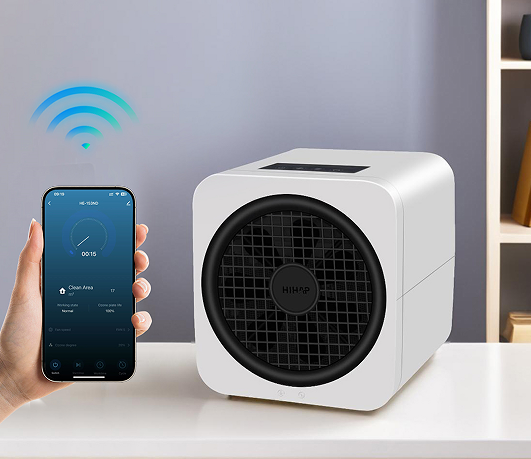
If you’ve ever woken up in a hotel room with a scratchy throat or spent hours in a stuffy office, you already know the problem: good air doesn’t follow you around. Portable air purifiers are supposed to fix that, but most are either weak or overpriced. After weeks of testing, a few actually deserve a spot in your bag. One that surprised us is LUFUTATECH, whose compact purifiers punch above their size without sounding like a hairdryer. Here’s our shortlist of portable purifiers worth recommending.
Why a Small Air Purifier Might Be the Upgrade Your Desk Needs
Your desk collects more than papers and coffee mugs. Between the monitor, keyboard, and that pile of sticky notes, dust settles in places you rarely wipe down. A small air purifier tucked beside your lamp quietly pulls in that floating dust, pet dander, and the stale smell of yesterday's lunch. It doesn't need a massive HEPA filter or a footprint the size of a mini fridge—just enough airflow to keep your immediate breathing zone from feeling like a recycled-air cubicle.
What makes the desk-friendly size worth it is how little you have to think about it. No complicated controls, no app forced on you, no blue light keeping you awake. Just a low hum that fades behind keyboard clicks. And because it's small, you can actually place it where it matters—right next to your face, not across the room fighting with curtains and open doors.
If you've ever looked at the dust floating in a sunbeam hitting your desk, that's exactly the stuff a compact purifier tackles. It won't turn your workspace into a sterile lab, but it does make the air feel less heavy by mid-afternoon. That small change adds up when you're spending eight hours breathing the same corner of the room.
What to Look for When You're Shopping for a Filter That Moves With You
Start with the basics that actually matter in daily use: flow rate and cartridge life. A filter that moves with you should not slow you down to a trickle or need constant replacements. Check how many liters or gallons it handles before the cartridge gives out, and whether the flow is steady enough for filling a bottle or hydration bladder without patience running thin. Weight and packed size are obvious but worth testing in hand if you can; some models look compact online until the hose, cap, and pre-filter add up.
Beyond specs, pay attention to how the filter connects to the rest of your gear. Threads that fit common bottles and bladders matter more than adapter kits with a dozen parts. Look for a design that lets you scoop from shallow sources, backflush in the field without tools, and inspect the element for cracks or clogs. If you cross borders or hike in agricultural areas, check the label for what it actually removes—not just bacteria and protozoa, but also chemicals or viruses depending on where you roam.
How Portable Units Handle Allergens in Tight Spaces
Most portable air purifiers rely on a simple push-and-pull cycle: a fan draws room air through a tight mesh, then sends it back out cleaner. In cramped quarters—think studio apartments, small offices, or RVs—this loop can struggle because there is barely enough square footage for steady airflow. Instead of brute-force filtration, clever units lean on baffled intake paths and slightly angled outlet grilles. These small design tweaks prevent the same stale pocket of air from being recycled while giving dust, dander, and pollen a longer dwell time against the filter media. The result is quieter, more consistent allergen removal without turning a nightstand-sized device into a wind tunnel.
Another underappreciated factor is filter depth relative to unit size. A compact purifier with a thick, pleated HEPA layer can trap more fine particles than a larger unit with a thin, flat sheet. In a tight space, that depth matters because the unit often sits close to a wall or furniture, which naturally chokes off rear intake. Manufacturers address this by moving intake vents to the sides or bottom, letting the unit pull from a wider arc even when shoved into a corner. Some models also use a pre-filter that grabs larger debris early, so the main filter does not clog as quickly and keeps working on microscopic allergens for weeks longer.
Placement still plays a quiet starring role. Since portable units cannot overcome a completely dead air zone, they work best when aimed toward the area where you breathe most—beside a bed, next to a desk chair, or near a pet’s favorite resting spot. A slight elevation off the floor helps as well, because many allergens settle low before getting stirred up by movement. By keeping the intake unobstructed and letting the cleaned air flow across the room rather than straight into a wall, even a modest portable purifier can make a noticeable difference for sneezing, itchy eyes, and stuffy mornings in spaces under 200 square feet.
Real-World Use Cases: From Hotel Rooms to Cubicles
Checking into a hotel room often means wrestling with unfamiliar remotes, weak desk lighting, and a workspace that doubles as a nightstand. For frequent travelers, a compact multi-port hub or a slim portable monitor turns that cramped desk into a functional command center. Plug in a laptop, phone, and tablet at once, adjust the screen to eye level, and suddenly the room feels less like a stopover and more like a satellite office.
Back in the office, cubicles present their own set of challenges: shared walls that bounce sound, limited desk real estate, and the constant shuffle of nearby conversations. A low-profile USB-C docking station slips under a monitor riser, clearing clutter and making it easy to hot-swap between a work laptop and a personal device. Add a pair of noise-isolating earbuds with a transparency mode, and the partition walls fade into the background, letting focus stay where it belongs.
The thread between these two settings is adaptability. Gear that thrives in a hotel room—compact, cable-minimal, power-efficient—also earns its keep in a cubicle where every square inch counts. Whether you're sipping hotel-room coffee at 6 a.m. or settling into a fabric-lined partition at 9, the right tools make the environment disappear, leaving just the work that matters.
The Trade-Offs You Accept for Portability (and Which Ones Matter)
When you optimize code or workflows for portability, you inevitably give up some level of hardware-specific performance, familiar tooling, or even a bit of control over the runtime environment. These trade-offs aren't hidden—they're part of the deal, but most developers only notice them when a particular edge case forces a rewrite or a debugging session drags on longer than expected. The real question isn't whether you accept compromises, but which ones actually affect your day-to-day work versus which ones exist mostly on paper.
Performance overhead is the classic example: a portable abstraction layer adds indirection, and that indirection costs CPU cycles. For a web service handling thousands of requests per second, a 5% slowdown matters; for a batch script that runs once a night, it's irrelevant. Similarly, giving up OS-specific APIs means you lose access to fine-grained file locking, direct memory mapping, or native GUI widgets—but if your application never needed those features in the first place, you haven't actually lost anything. The trap is treating every trade-off as equally important when most are only relevant to a narrow slice of use cases.
The ones that matter are usually invisible until a crisis hits: debugging across different environments, dealing with inconsistent vendor implementations of a "portable" standard, or discovering that your portable code still breaks on a platform you never tested. Those hidden costs dwarf the easily measured ones like binary size or startup time. A practical approach is to list what you're actually gaining—fewer build pipelines, wider deployment targets, simpler onboarding—and then ask whether the theoretical loss you're accepting ever turns into a concrete problem for your team. If it doesn't, the trade-off is basically free.
Maintenance That Won't Eat Your Weekend: Filters and Battery Care
You don't need a full Saturday to keep filters and battery in good shape. For most cars, the engine air filter only needs a quick visual check every other oil change—if you can still see the pleats and it isn't caked with dirt, put it back. The cabin filter can easily go a year unless you park under sap-dripping trees or drive on gravel roads that kick up dust.
Battery care is even less demanding. Twice a year, clean the terminals with a wire brush and a little baking soda dissolved in water, then rinse and dry. If your car sits for more than a few days at a time, a small trickle charger or battery maintainer will keep it from quietly dying. Before cold weather arrives, many auto parts stores will load-test the battery for free, which is far better than discovering a weak cell on a Monday morning.
FAQ
Pay attention to the clean air delivery rate, but keep in mind that most portable units are best for the space right around you. A model with a USB-C power option and a secure mount or non-slip base helps a lot if it will sit in a cup holder. Also check whether it has a true HEPA filter rather than a simple mesh screen, because many cheap car purifiers barely move enough air to matter.
Smoke particles are very small, so you need a purifier with a genuine HEPA filter and a fan strong enough to pull air through it. Some portable units designed for personal air zones can reduce smoke in a small room or car, but they won't clear a large living space. Look for one that lists a specific clean air delivery rate for smoke if that is your main concern.
Most desk-friendly models run between 30 and 50 decibels on their lower settings, which is about as loud as a quiet office or a soft conversation. On the highest setting they can become more noticeable, so it helps to pick a purifier with at least three fan speeds. That way you can leave it on low during calls and turn it up when you step away.
Most portable purifiers use replaceable filters, and washing a true HEPA filter usually ruins it. Some units have a washable pre-filter for larger dust and pet hair, but the main filter still needs to be swapped every few months depending on use. Check the price and availability of replacement filters before you buy, because a cheap purifier can become expensive once you add in a year of filter changes.
Battery life varies quite a bit. Many rechargeable portable purifiers last between four and twelve hours on the lowest speed, but the runtime drops quickly on higher settings. If you want something that can run through a full workday without a cord, look for a model with a larger battery, often listed as 10,000 mAh or more. Some also pass through power over USB-C, so you can keep it plugged in while using it.
Yes, the gap is usually in filter quality, fan strength, and build details. A $40 unit may use a thin filter and a weak fan that only moves air a few inches away. At $150 to $200 you are more likely to get a true HEPA filter, a higher clean air delivery rate, better battery or motor performance, and quieter operation. If you just need a tiny desk purifier for occasional use, the cheaper one might be fine, but for allergies or smoke it is worth spending more.
Several portable purifiers are designed to push clean air toward you like a small fan, which can make a big difference in a car or at a desk. Some include aromatherapy pads, but those are more about scent than cleaning. A few higher-end models have air quality sensors that adjust the fan speed automatically, but that feature is less common in truly portable units and often adds to the price.
They focus on the physical size and ignore how much air the unit actually moves. A purifier the size of a soda can may look perfect for travel, but if it only filters a few cubic feet of air per minute, it won't do much beyond a very small personal bubble. Another common mistake is assuming a washable filter means no recurring cost, which is rarely true for the main HEPA layer.
Conclusion
A portable air purifier isn't just a scaled-down version of your living room unit—it's a practical fix for the stale, allergen-laden air that tends to collect around desks, nightstands, and cramped workstations. When shopping for one that moves with you, pay close attention to clean air delivery rate relative to the size of the space, not the marketing numbers on the box. A unit rated for 150 square feet won't do much in a hotel room, but it can shine on a desktop. Noise matters more than most spec sheets admit: a high-pitched whine at 45 decibels will drive you crazy during video calls, while a smooth, low hum fades into the background. Look for true HEPA filtration rather than vague "HEPA-type" claims, and check whether the filter includes an activated carbon layer if odors from coworkers' lunches or hotel cleaning products bother you. Weight and power options also separate the genuinely portable from the merely compact—USB-powered models free you from hunting for outlets, while battery units add flexibility for flights, trains, or outdoor workspaces. In tight spaces, these small devices can be surprisingly effective against pollen, dust mites, and pet dander because they cycle air through a confined volume many times per hour, often outperforming a large purifier placed in a hallway or open-plan area.
Real-world use cases go beyond the desk: a portable purifier can make a hotel room breathable after a previous guest's perfume lingers, cut down dust in a cubicle near a printer, or provide a cleaner sleep zone in a dorm or studio apartment. You do accept trade-offs for that portability. Smaller fans mean less raw airflow, so high mode may get loud enough to notice. Filters clog faster because they're smaller, so expect to replace them every three to six months rather than annually. Battery-powered models tend to have shorter runtimes on high speed, and some lose suction as the charge drops. The maintenance load is light but not zero: vacuum the pre-filter or outer mesh weekly, swap the HEPA cartridge on schedule instead of waiting for a musty smell, and for battery units, avoid leaving them plugged in 24/7 or draining them completely before recharging. None of this is burdensome, and the payoff—a pocket of cleaner air wherever you actually sit, sleep, or work—makes these purifiers worth recommending for anyone who wants targeted relief without committing to a full-size appliance.
Contact Us
Contact Person: Paul Luo
Email: [email protected]
Tel/WhatsApp: 0086-19966314501
Website: https://www.lufutatech.com