

Post Tension Anchor Vendor Tips for Selecting the Right Supplier
2026-11-16
A post tension anchor can look flawless on a data sheet and still fail where it matters—under sustained stress, in aggressive soil conditions, or when delivery slips just as a pour is scheduled. That’s why the right vendor choice is less about the lowest bid and more about the quiet indicators of long-term reliability. Below we unpack the supplier traits that consistently surface in successful projects, from raw material traceability to response time under schedule pressure. As you evaluate candidates, watch how manufacturers like Supreme Machinery handle these details—it often tells you more than a technical brochure ever will.
Verify Actual Manufacturing Capability, Not Just Marketing Claims
A glossy website and a confident sales team can make any factory sound like a world-class operation, but the real question is what happens on the floor when nobody is watching. Before placing an order, push beyond the polished pitch and ask for concrete evidence: recent audit reports, live video walkthroughs of the production line, and a list of current clients with contact references. Many suppliers claim ISO certifications or advanced equipment, yet a surprising number cannot demonstrate consistent output under real demand. Dig into their defect rates, on-time delivery history, and how they handle rush orders or material substitutions. If they hesitate to share this data or give vague answers, treat that as a red flag.
A more reliable approach is to visit the facility yourself, or hire a third-party inspector who can assess machinery condition, workforce skill, and quality control processes without the sales filter. Watch how operators handle raw materials, whether gauges are calibrated, and how finished goods are packed and stored. Ask about their in-house testing capabilities and what happens when a batch fails inspection. A manufacturer with genuine capability will welcome scrutiny and explain their limitations honestly, while one relying on marketing will deflect or overpromise. Pay attention to small details: a clean, organized floor with clear work instructions usually reflects deeper discipline than a flashy showroom.
Finally, compare what they claim against what they can actually prove with documentation and repeatable results. Request samples from a production run, not a hand-picked prototype, and test them under your own conditions. Check whether their quoted lead times match their historical performance, and whether their pricing aligns with the materials and processes they describe. A supplier that consistently demonstrates real manufacturing strength will have no problem providing batch records, quality certificates, and process capability studies. Trust is earned through verified output, not brochures.
Ask About Past Failures and How the Supplier Handled Them
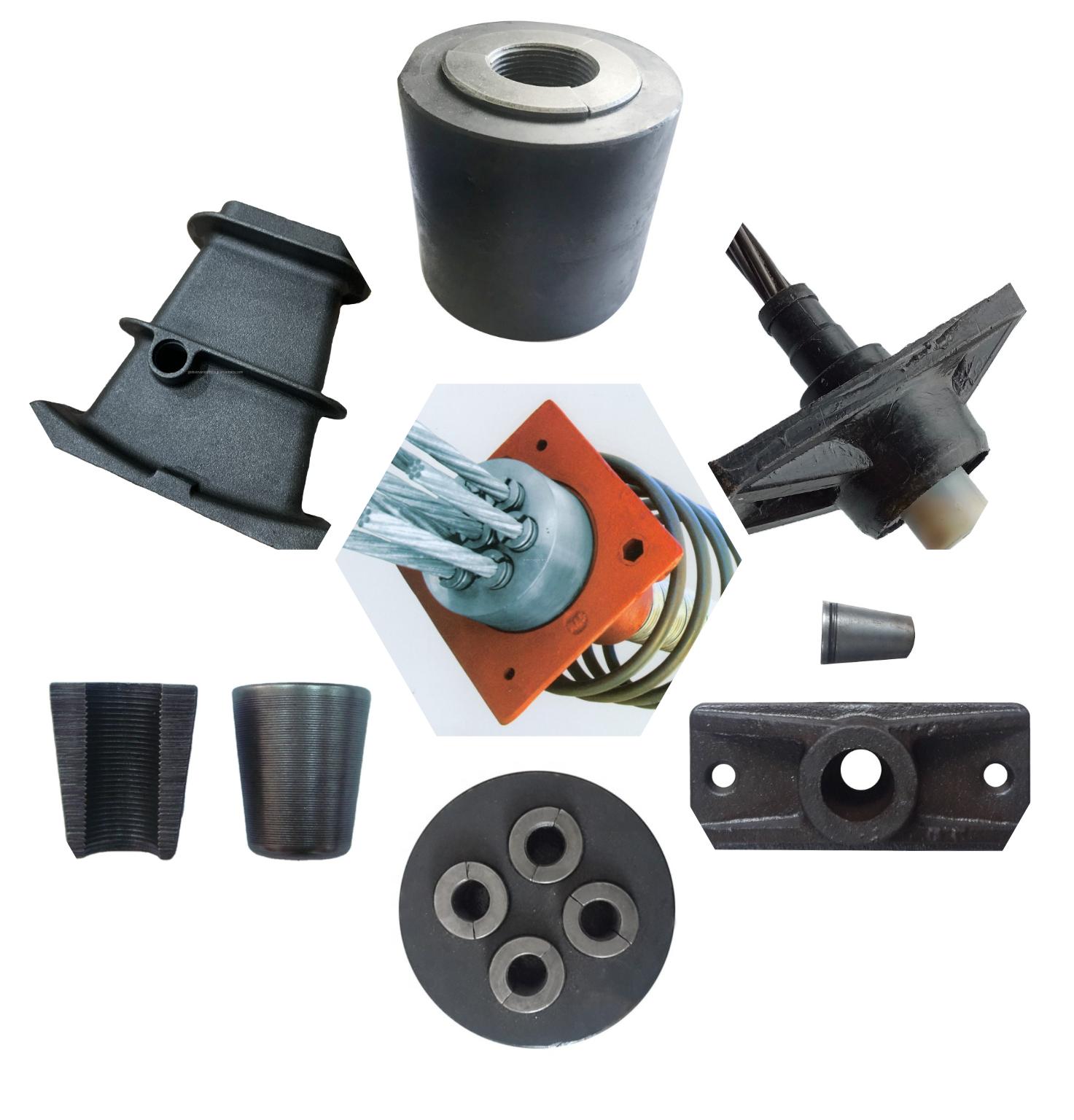
A supplier's track record rarely stays spotless once you dig deep. What matters isn't whether something broke or a deadline slipped, but whether they owned the problem quickly and fixed the root cause. Before signing anything, ask for a specific example of a shipment that went wrong, a batch that failed inspection, or a key component that arrived late. Then listen for the details: did they notify the customer right away? Did they cover the replacement costs without being pushed? A supplier that can walk you through the mess, the timeline, and the corrective action is far more valuable than one that claims nothing ever goes wrong.
The way they describe past failures also reveals how they treat blame. Watch for language that shifts responsibility to the shipping company, the raw material vendor, or even the customer's unclear specs. That's a red flag. Strong suppliers tend to say things like "we misread the tolerance on that part" or "our quality check missed a critical dimension." They'll explain what changed afterward: maybe a new inspection gate, a backup logistics partner, or a reworked supplier scorecard. Ask whether the same failure could happen again, and see if their answer matches the depth of their corrective action. If they get defensive or vague, that's your answer.
Compare Corrosion Protection Methods for Long-Term Durability
When weighing corrosion protection for long-term durability, hot-dip galvanizing and high-performance organic coatings often sit at opposite ends of the maintenance spectrum. Galvanizing forms a metallurgically bonded zinc layer that corrodes preferentially, keeping underlying steel intact even after scratches or minor damage. In many atmospheric and soil exposures, it can remain serviceable for 30 to 70 years without attention. Organic systems such as epoxy or polyurethane rely on a continuous barrier; once moisture or oxygen finds a pinhole, underfilm corrosion can spread quickly, forcing touch-ups within a decade or two unless a meticulously applied multi-coat system is used.
For buried or submerged assets, cathodic protection changes the comparison entirely. Impressed current or sacrificial anodes can extend the life of steel well beyond what coatings alone deliver, but they demand reliable power, monitoring, and periodic anode replacement. Stainless steel offers a different path: its passive chromium oxide film repairs itself in the presence of oxygen, so scratches do not automatically become corrosion sites. In chloride-heavy environments, however, even 316 stainless can pit, and the higher upfront cost only pays off if the service life exceeds several decades.
A growing number of long-life specifications combine methods rather than picking a single winner. Duplex systems—galvanizing followed by a topcoat—typically outlast either method alone, as the zinc protects coating breaches and the coating slows zinc consumption. For aluminum components, anodizing boosts surface hardness and corrosion resistance but performs poorly in alkaline or high-acid settings unless sealed and maintained. Ultimately, long-term durability hinges less on the absolute ranking of a method and more on matching the protection strategy to the exposure, geometry, and realistic maintenance budget.
Check Field Support Availability Before You Face a Problem
Most teams wait until equipment is down before wondering if anyone will actually show up. That's the worst time to learn that your support contract covers only weekdays, or that the nearest technician is six hours away. Checking availability in advance means calling the provider, asking hard questions about response times, and requesting a list of local service partners. If they hesitate to give straight answers, that's already a sign.
Don't settle for a generic "24/7 support" line. Ask how many field engineers cover your postal code, what their average travel time is, and whether they keep common spare parts nearby or ship everything from a central warehouse. A provider with real local presence will often offer a trial visit or a walkthrough of their dispatch process. Those who only have a call center will dodge the specifics.
Doing this before a failure also lets you build a direct contact with someone on the ground. When a machine goes down at 2 a.m., you're not calling a random ticket system—you already know the person who can authorize a truck roll. That familiarity often cuts hours off your recovery time.
Look Beyond Standard Certificates to Testing Consistency
A certificate hanging on the wall tells you a product passed a test at one point in time. It rarely reveals how often the manufacturer repeats that test, under what conditions, or whether the results drift between batches. Digging into testing consistency means asking for batch-level data, not just a one-time compliance report. Some suppliers run spot checks every shift; others only test when a customer insists. The difference shows up months later in your own production line.
Look at the raw numbers behind the certificate. A supplier that tests viscosity, tensile strength, or particle size on every lot and records the variation is giving you a much clearer picture than one that leans on an annual third-party audit. Ask for control charts or historical test logs. If they hesitate or offer only a summary sheet, that’s a signal. Consistency isn’t about never failing—it’s about catching small shifts before they become big problems.
Field performance often tracks testing frequency more closely than it tracks the certificate itself. Two suppliers can hold identical ISO paperwork, yet one delivers material that behaves predictably across a dozen orders while the other fluctuates with humidity and shift changes. The reliable one usually has tighter internal testing loops and isn’t afraid to share the data. So when you compare vendors, move past the framed document and ask a simple question: “Can I see your last thirty test results, not just the one that earned you the certificate?”
Demand Transparency on Raw Material Sourcing and Traceability
A growing number of buyers no longer accept vague assurances about where materials originate. They want to see the actual path of a raw material, from the specific mine, farm, or recycling facility to the final product. When a company withholds that level of detail, curious customers start to assume the worst—whether it involves conflict minerals, unsustainable harvesting, or forced labor. In several industries, regulatory pressure is also mounting, making source disclosure a legal obligation rather than a voluntary marketing point. Those that treat traceability as a core operational discipline, not a compliance chore, are finding it easier to respond to both official inquiries and public scrutiny.
Effective traceability requires more than a paper certificate. It calls for batch-level tracking, regular supplier audits, and often digital tools that record every transfer of custody. Some manufacturers now publish interactive maps showing the exact locations of their raw material suppliers, along with the date of the last on-site check. This kind of radical openness feels uncomfortable at first, because it exposes gaps in the chain. Yet that discomfort is precisely what pushes procurement teams to replace shadowy intermediaries with direct relationships. When a company can trace a single ingredient back through three or four tiers of subcontractors, it not only proves due diligence but also uncovers inefficiencies and hidden costs.
The brands that lead on transparency are not necessarily the biggest or the richest. They are the ones willing to say 'we don't know yet' while they build better visibility. That honesty builds a different kind of customer loyalty—one rooted in verified facts rather than polished storytelling. Over time, a documented chain of custody also reduces the cost of disruptions, because teams can pinpoint exactly which batch is affected instead of issuing broad recalls. Investors and insurers are starting to ask the same questions as activists: who supplied this material, and how do you know? Answering with confidence requires a living traceability system that improves with every shipment, not a static report published once a year.
FAQ
Ask them to walk you through the load transfer calculations for your specific concrete strength and anchor configuration. A capable supplier will discuss edge distance effects, bursting reinforcement requirements, and how their anchor design handles local zone stresses. Request copies of their PTI or equivalent test reports for static and fatigue loading, and see if they have an in-house lab or use accredited third-party testing.
Don't settle for a verbal promise. Ask for documented delivery performance from their last three projects, especially during peak demand periods. Find out what sizes and configurations they stock as standard inventory, and what their actual lead time is for rush orders. A supplier with a regional warehouse and local inventory often beats one shipping from overseas when delays hit.
Usually not. Low prices often come from substituting lower-grade steel, skipping heat treatment, or reducing corrosion protection. Request material certifications and third-party chemical and mechanical test reports for the exact batch you'll receive. Compare the weight, hardness, and dimensional tolerances against known reputable brands. A cheap anchor that fails in creep or fatigue can cost far more in repairs and downtime.
It's critical. Post tensioning problems often show up during installation: strand slippage, anchor set issues, concrete cracking around the anchor. A good vendor will send an experienced field engineer to your site, provide hands-on training for your crews, and respond to trouble calls within 24 hours. Ask for examples of how they handled past field failures and whether they maintain a dedicated support line.
Visit the factory if possible. Watch how they track heat numbers from incoming steel to finished anchors, whether they perform ultrasonic or magnetic particle inspection on critical parts, and how they calibrate gauges. Ask to see their nonconformance log and how they handle rejected parts. A clean QC manual means little if the shop floor doesn't follow it.
Give them a hypothetical problem: a curved bridge deck with limited anchor access or a small-radius tendon profile. A flexible supplier will come back within a few days with a modified design, corresponding calculations, and a willingness to prototype. If they insist you stick to their standard catalog or take weeks to respond, they may not support you when the unexpected happens on site.
Absolutely. At minimum, require product liability insurance, ISO 9001 certification, and proof that their anchors meet ASTM A416, EN 13391, or the relevant standard for your region. For projects in areas with local approval lists, confirm the supplier's system is prequalified or permitted. Don't accept certificates from a sister company or outdated documents.
Consider material traceability from raw steel to finished anchor, clear labeling and packaging that reduces mix-ups on site, and batch-to-batch consistency. Also evaluate whether the supplier is willing to sign a long-term performance warranty and how they handle disputes—do they offer third-party arbitration or mediation? These details reveal how much they stand behind their product after payment clears.
Conclusion
Selecting a post tension anchor vendor goes well beyond flipping through a brochure or checking off standard certificates. You need to walk the production floor or at least get a detailed video tour, because marketing language can make any shop look competent. Ask to see the actual strands being stressed, the anchor heads being machined, and the wedge grips being tested. More importantly, bring up their past failures. Every manufacturer has had a batch that didn't meet spec or a project where something cracked. The ones worth your time will explain exactly what happened, what they changed, and how they compensated the contractor. If they dodge the question or blame everyone else, that's your red flag. Corrosion protection is another area where short-term savings turn into long-term lawsuits. Compare how each vendor handles galvanizing, epoxy coating, or plastic sheathing, and ask for salt spray test data or field performance from projects in similar environments.
Field support can make or break a post tensioning job, and most problems don't show up until the strands are being pulled. Find out if the vendor has engineers who will actually come to your site, train your crew, or troubleshoot a wedge slipping issue at 6 a.m. Don't settle for a phone number that goes to voicemail. Testing consistency matters more than a single ISO certificate on the wall. Request records from recent production runs, not just a one-time qualification test. Look for variation in wedge hardness, anchor seat tolerances, and elongation properties across multiple batches. Finally, demand full transparency on raw material sourcing. If the vendor can't tell you which steel mill produced the bar or strand, or won't provide heat numbers and traceability documents, walk away. Traceability isn't just paperwork; it's the only way to isolate a bad heat before it becomes a structural failure.
Contact Us
Contact Person: Paul
Email: [email protected]
Tel/WhatsApp: 8615067447509
Website: https://www.spironcasting.com