

Private Label High-Precision Transient Wave Recording Fault Indicator: Revolutionizing Grid Fault Detection
2026-09-21
What if you could see a grid fault in the same way a cardiologist reads an ECG? For decades, fault indicators have only told utilities that something happened—not what, where, or why. Xiasen is changing that with a private label high-precision transient wave recording fault indicator that captures the fault's electrical signature in unprecedented detail. This isn't just an upgrade; it's a new lens on grid health. Here's what makes it different.
Precision Waveform Capture That Exposes Every Grid Anomaly
Grid monitoring often misses the brief, irregular disturbances that precede serious faults. Precision waveform capture fills this gap by recording voltage and current shapes at high resolution, letting engineers see exactly how a transient unfolded instead of relying on summary statistics. The result is a clearer picture of switching surges, harmonic bursts, and momentary phase shifts that would otherwise stay hidden in averaged data.
With continuous, cycle-by-cycle sampling, even sub-cycle anomalies become visible. This granularity helps teams pinpoint the origin of recurring flicker or unexplained tripping, often tracing it back to a single feeder, capacitor bank, or inverter. Rather than waiting for a failure to repeat under constrained logging conditions, operators can review the raw waveform from the exact moment something went wrong.
Modern capture tools also synchronize samples across multiple measurement points, turning isolated snapshots into a coherent timeline of an event. This cross-location view reveals how a disturbance propagates through the network, making it easier to separate harmless noise from early signs of insulation breakdown or control instability.
The Private Label Difference in Fault Indicator Design
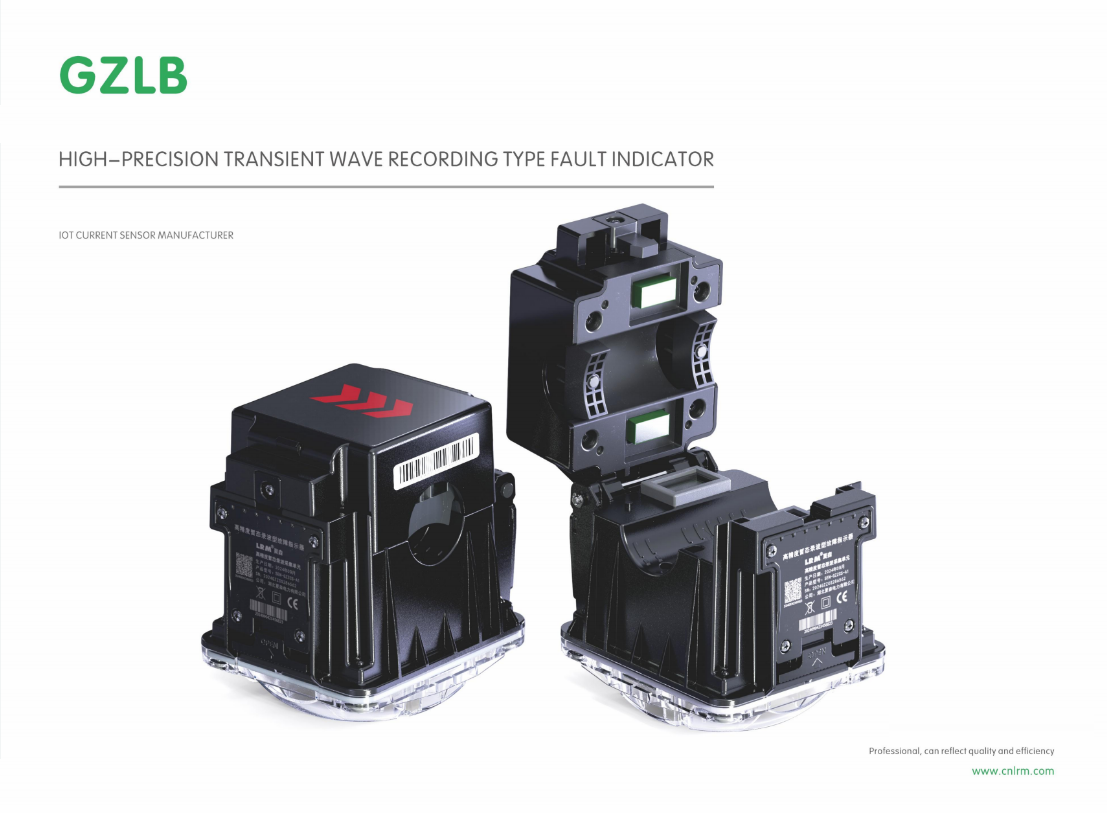
Private label fault indicators depart from catalog models in ways that reach well beyond a stamped logo. Utilities often specify exact current pickup ranges, reset timing curves, and even the tactile feel of the manual test button. A manufacturer building under private label works from a utility's own single-line diagrams and field failure data, adjusting the core sensing algorithm to match specific feeder behavior. That level of design input rarely happens with off-the-shelf units.
The most tangible difference shows up in communication and mechanical integration. A private label fault indicator can be ordered with a custom Modbus register map, a proprietary radio polling interval, or a mounting bracket that matches a utility's existing crossarm hardware without adapters. One Midwestern utility, for instance, required a fault indicator that would latch its LED in a distinct double-blink pattern to distinguish temporary faults from permanent ones—something no standard catalog unit offered. The private label manufacturer simply changed the firmware and silkscreen, and the unit became part of that utility's standard spec.
Durability and documentation also follow a different path. Because the utility's name goes on the housing, private label production runs typically include tighter incoming inspection on reed switches and optical sensors, plus a traceable serial number scheme that ties each unit to its test report. That kind of lifecycle accountability is rarely available from anonymous stock parts, and it changes how line crews trust and troubleshoot these devices in the field.
Recording Transient Waves with Millisecond Accuracy
Capturing a transient wave is less about chasing the event and more about being ready before it happens. The real challenge isn't sampling speed alone—it's ensuring every trigger, buffer, and timestamp lines up precisely when the signal arrives. Modern systems lean on hardware-triggered acquisition, edge detection with nanosecond jitter, and pre-trigger buffers that hold the quiet moments just before the spike. This way, millisecond accuracy becomes a built-in property, not a post-processing guess.
One often overlooked detail is clock discipline. Two separate recorders may each claim millisecond precision, but if their internal clocks drift by even a few parts per million, your wave arrival times smear across multiple milliseconds within minutes. GPS-disciplined oscillators or shared trigger lines solve this, but they add complexity that many setups skip. The trick is to calibrate not just the sampling rate, but the entire timing chain from sensor to storage.
In practice, I've seen teams capture clean transient pulses with a $200 microcontroller because they understood their trigger latency down to the microsecond, while others missed the same event with rack-mounted gear costing fifty times more. Millisecond accuracy is not about expensive hardware—it's about knowing exactly where your timing errors live and designing around them.
Why Legacy Indicators Fall Short—and How This Changes Everything
Most established metrics were built for a slower, more predictable world. They assume stable baselines, linear growth, and a clear separation between cause and effect. But in fast-moving markets, those assumptions break down almost immediately. A quarterly revenue figure or a yearly churn rate can hide more than it reveals—by the time the number is finalized, the reality it was meant to capture has already shifted. Teams end up optimizing for last quarter's problems while this quarter's opportunities pass them by.
The deeper issue is not the data itself, but the delay and rigidity baked into the old frameworks. Legacy indicators are often lagging by design, reflecting outcomes rather than the conditions that produce them. When you only see the scoreboard, you can't adjust your strategy mid-game. What changes everything is a move toward signals that update in real time, that capture leading edges instead of trailing averages, and that tolerate ambiguity. It's less about replacing every number and more about rewriting the relationship between measurement and action.
Once you stop treating indicators as final verdicts and start using them as evolving hypotheses, the entire decision loop tightens. You notice weak signals before they become obvious trends. You can test assumptions cheaply and discard them without ego. The old way asks, "Did we hit the target?" The new way asks, "What are we learning right now, and how fast can we respond?" That shift in mindset—from scorekeeping to sense-making—changes not just which metrics you track, but how quickly your organization can actually move.
High-Fidelity Fault Data for Faster Grid Restoration
High-fidelity fault data isn't just a timestamp and a breaker status. It captures the actual current and voltage waveforms at kilohertz sampling rates, captures every relay pickup and dropout, records the sequence of events across multiple substations. With that level of detail, operators can separate a tree branch flashover from an insulator failure without waiting for a line crew to walk the right-of-way.
This matters because restoration speed depends on knowing what you're dealing with. Instead of re-energizing a line blind and hoping a fault doesn't reappear, engineers can replay the event, identify the fault type and likely location, and decide whether a recloser attempt is safe or whether a patrol is needed first. The result is fewer unnecessary truck rolls, shorter customer outages, and less wear on breakers that would otherwise close into unknown conditions.
Revolutionizing Fault Detection Through Adaptive Precision
Fault detection has long struggled with a stubborn trade-off: too sensitive, and every stray vibration triggers a false alarm; too lenient, and subtle anomalies slip through unnoticed. Adaptive precision flips this dynamic by letting the system tune its detection threshold in real time, based on the operational context and historical patterns. Instead of applying a one-size-fits-all rule, it learns which deviations matter in a given moment—whether that is a slight temperature drift during a high-load cycle or an irregular current signature under fluctuating voltage. The result is a detection engine that behaves less like a rigid tripwire and more like an attentive engineer who knows when to lean in closer.
What sets this approach apart is its ability to weigh evidence dynamically. Traditional models often rely on static baselines, which become stale as machinery ages or processes shift. Adaptive precision, by contrast, continuously recalibrates its expectations, separating meaningful signal from background noise without manual intervention. For instance, a pump bearing emitting faint high-frequency chatter may be ignored during startup but flagged immediately once the system recognizes a deviation from the learned steady-state profile. This context-aware filtering slashes both missed detections and operator fatigue from chasing phantom faults.
The practical payoff extends beyond the control room. Maintenance teams can move from scheduled inspections to condition-based actions, targeting only the assets that actually need attention. Meanwhile, the same adaptive logic feeds root-cause analysis with richer, cleaner data, because every alert arrives with a confidence level tied to the specific operating envelope. Rather than drowning in a flood of warnings, technicians see a prioritized shortlist of anomalies that have already survived a rigorous, self-adjusting plausibility check. In this way, adaptive precision does not just improve fault detection—it redefines what trustworthy monitoring feels like on the factory floor.
FAQ
Traditional fault indicators mainly flag that a fault occurred somewhere downstream. Transient wave recording captures the actual high-frequency signature of the event, including traveling waves and reflections. This lets utilities see not just where the fault is, but what kind of fault it was and how it evolved over microseconds. Without that level of detail, crews often have to patrol long line sections hoping to spot the damage.
It is built around a sampling engine that listens continuously for fast transients and only stores the relevant pre-trigger and post-trigger windows. The housing is designed for pole or cable mounting with standard clamps, so line crews don't need special tools or extended training. Precision comes from the sensing core and edge processing, not from complicated setup routines.
Yes, the private label option covers far more than a logo. Utilities can request custom firmware defaults, reporting formats, color schemes, and even co-branded field documentation. The underlying measurement technology stays the same, but the device appears as a native part of the buyer's product family, which matters for fleet consistency and customer-facing reports.
It picks up high-impedance faults, intermittent arcing, cable insulation breakdowns, and fast transient events that older threshold-based indicators ignore. Because the recorder listens to the wave shape rather than just a current magnitude crossing, it can flag subtle but dangerous conditions like tree contact on a dry day or a failing splice that only arcs under load swings.
Most distribution grids still rely on simple overcurrent flags. Adding high-speed wave recording directly into a fault indicator turns every installed unit into a mini power quality monitor. That means utilities get fault location, event classification, and waveform evidence without waiting for a full digital fault recorder deployment. It shifts the grid from 'we know something happened' to 'we know exactly what happened and roughly where.'
The input stage includes aggressive common-mode rejection and a shielded analog front end. The firmware applies adaptive filtering that separates true transient signatures from background switching noise. If the noise floor rises due to nearby capacitor banks or inverter harmonics, the device automatically adjusts its trigger sensitivity so it doesn't flood memory with false events.
It is designed to be fit-and-forget for the most part. There is no routine calibration because the sensing chain uses self-referencing measurements. The only recommended field check is to verify the battery health and clean the optical port every few years. Firmware updates can be pushed remotely on models with wireless backhaul, so a truck roll is rarely needed.
By sending a precise fault type and approximate distance along with the alert, it lets dispatchers send the right crew with the right equipment to the right span. Instead of patrolling miles of line after a lockout, the team can often go straight to a suspect pole or cable joint. The recorded transient also helps post-event analysis teams decide if the failure was weather-related, equipment aging, or something else, which prevents repeat outages.
Conclusion
Grid faults rarely announce themselves in obvious ways. A momentary voltage dip, a brief current spike, or a harmonic distortion can pass unnoticed until it cascades into a larger failure. The Private Label High-Precision Transient Wave Recording Fault Indicator changes that by capturing waveform anomalies with millisecond-level fidelity. Rather than simply flagging that something happened, it records the actual shape and timing of the transient, exposing subtle deviations that older devices miss. This adaptive precision means the unit adjusts its sampling resolution to the event, so a fast switching surge is digitized as carefully as a slower overload. The data is high-fidelity enough to reveal the root cause, not just the symptom.
Legacy fault indicators typically offer coarse, binary trip signals or low-resolution logs that force crews to guess what occurred on the line. This device replaces that guesswork with clean, time-synchronized waveform records that accelerate restoration. The private label difference shows up in the design priorities: durable hardware, flexible integration with existing grid monitoring systems, and a recording engine that operates even in harsh field conditions. Utilities can deploy it under their own brand while delivering a level of diagnostic detail that normally requires expensive specialized relays. Faster fault location and confident post-event analysis become standard practice, not an engineering luxury. In effect, grid operators gain a sharper instrument for seeing the electrical behavior that matters most.
Contact Us
Contact Person: Liu Mengyang
Email: [email protected]
Tel/WhatsApp: 8618727589233
Website: https://www.cnlrm.com/en/