

Professional Private 5G Networks: Redefining Enterprise Connectivity with Ultra-Reliable, Low-Latency Solutions
2026-06-03
Imagine a world where your enterprise network never flinches under peak demand, where latency is virtually non-existent, and every device from the warehouse floor to the CEO’s tablet stays seamlessly connected. That’s not a distant dream—it’s the reality of professional private 5G. By bringing carrier-grade reliability and ultra-responsiveness directly to your operations, these networks unlock a new class of industrial automation, immersive collaboration, and real-time edge intelligence. Companies like IPLOOK are making this leap simpler and more adaptable than ever, stripping away the complexity so you can focus on what you do best: outpace the competition with connectivity that never lets you down. In this post, we’ll explore why yesterday’s Wi-Fi and legacy wireless simply can’t keep up, and how private 5G is resetting the bar for what’s possible—today.
The Shift Toward Dedicated Cellular Infrastructure
Businesses are increasingly moving away from shared public networks toward private, purpose-built cellular setups. This isn’t just about getting a stronger signal—it’s about control. Dedicated infrastructure means organizations can tailor coverage, prioritize critical traffic, and tighten security in ways public networks simply can’t match. Manufacturing floors, logistics hubs, and remote mining sites are among the early adopters, where even a few seconds of latency can disrupt operations or compromise safety.
The push is also fueled by the growing complexity of device ecosystems. With IoT sensors, autonomous vehicles, and augmented-reality tools all demanding bandwidth, off-the-shelf connectivity often falls short. A dedicated setup lets teams fine-tune network slices for specific use cases, whether that’s ultra-reliable low-latency links for robotic controls or high-capacity streams for video analytics. The result is a network that behaves more like a utility designed for the task at hand rather than a one-size-fits-all service.
This shift isn’t purely technical—it reflects a deeper change in how companies view connectivity. Instead of treating it as a commodity they rent, more organizations see it as a strategic asset they can own and optimize. Early hurdles like spectrum access and integration complexity are easing, making the dedicated model attainable beyond large enterprises. As the technology matures, the line between enterprise IT and carrier-grade infrastructure continues to blur, reshaping expectations for what a private network should deliver.
Architectural Foundations of Private 5G Deployments
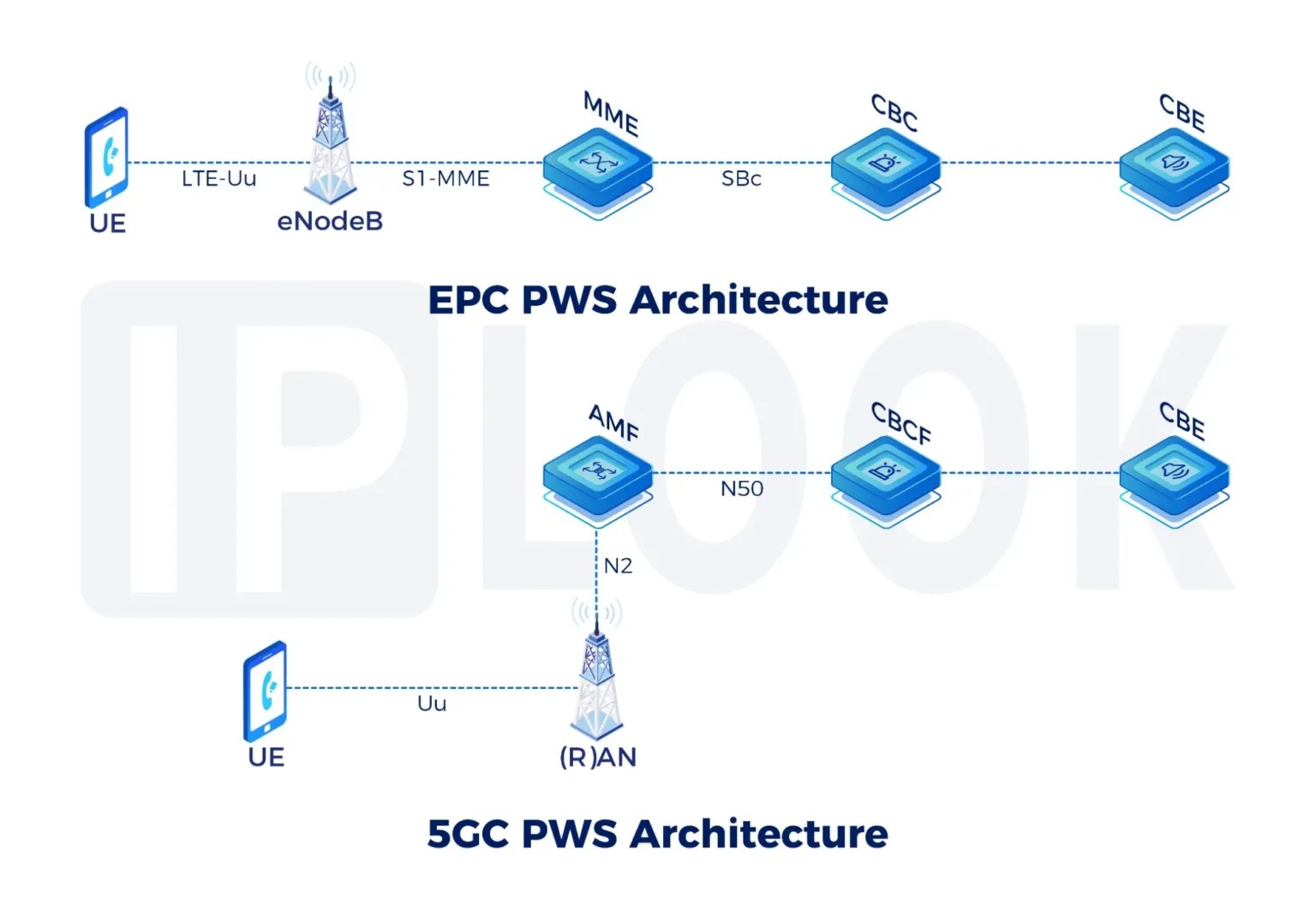
A private 5G network is built on a simplified, high-performance core that runs locally, often on a single server or small cluster. Unlike public networks that need to handle millions of subscribers, the private core is designed for a finite set of devices and applications. It typically collapses the control and user planes into a compact architecture, enabling ultra-low latency and deterministic behavior for industrial workloads. This local breakout capability means data never has to leave the premises, safeguarding sensitive information and reducing reliance on external connectivity.
The radio access network in these deployments is equally streamlined. Small cells and compact radio units are strategically placed to blanket a facility with consistent, interference-minimized coverage. Because the environment is controlled, technologies like beamforming and carrier aggregation can be tuned for peak efficiency in that specific layout. Many private setups also support network slicing at the RAN level, so different traffic classes—such as real-time control signals and bulk data uploads—can be partitioned onto separate logical networks without physical separation.
Security and management are baked into the foundation, not bolted on later. With a dedicated core, organizations can enforce granular access policies, authenticate devices via SIM or certificate, and monitor traffic at every hop. Integration with existing enterprise IT systems is straightforward because the architecture is open and API-driven, allowing for seamless orchestration alongside Wi-Fi and wired networks. This architectural clarity makes private 5G a natural extension of an organization's infrastructure, rather than a separate silo.
Spectrum Options and Their Strategic Implications
Choosing the right spectrum is more than a technical decision—it shapes a company’s long-term market position, cost structure, and ability to innovate. Licensed bands offer exclusive access and predictable performance, making them ideal for services that demand high reliability, but they come with steep auction fees and rigid usage rules. Unlicensed spectrum like Wi-Fi provides flexibility and low barriers to entry, yet congestion and interference can undermine quality, especially in dense environments. The strategic challenge lies in aligning spectrum choices with the business model, whether that means prioritizing coverage, capacity, or speed of deployment.
The rise of new sharing frameworks is upending traditional spectrum strategies. Approaches like Citizens Broadband Radio Service in the U.S. introduce tiers of access, allowing operators to tap underutilized bands without massive upfront investment. This can level the playing field, enabling smaller players and vertical industries to build private networks that rival those of incumbents. However, success demands a deep understanding of coexistence mechanisms and a willingness to navigate regulatory complexity. Firms must weigh the cost savings against the uncertainty of dynamic allocation, especially when mission-critical services are at stake.
Strategic implications vary widely by sector and ambition. For a national carrier, securing prime low-band spectrum means ensuring voice and IoT coverage across rural areas, locking in a long-term infrastructure advantage. An industrial company might leverage shared mid-band spectrum for a campus network, gaining the low latency needed for automation without the burden of a nationwide license. Meanwhile, a disruptor using unlicensed spectrum can rapidly pilot new services, but scaling globally may run into fragmented regulations. Ultimately, spectrum strategy is no longer a one-time procurement exercise—it’s an ongoing calculus of risk, cost, and competitive agility that directly influences a firm’s ability to execute its digital roadmap.
Achieving Predictable Performance in Demanding Environments
When systems operate under heavy or variable loads, performance often becomes erratic, frustrating users and wasting resources. The key to taming this variability lies in understanding the underlying bottlenecks—whether they're tied to I/O, memory allocation, or thread scheduling—and designing mechanisms that consistently handle worst-case scenarios. By focusing on minimal variance rather than average throughput alone, engineers can build applications that feel responsive even when the pressure is on.
One effective approach is to avoid dynamic behaviors that degrade under stress. For instance, relying on unbounded queues or lazy memory reclamation might work fine in light traffic but collapses when demands spike. Instead, predictable systems embrace bounded concurrency, pre-allocated resources, and backpressure strategies that prevent cascading failures. These design principles ensure that latency stays within acceptable ranges regardless of external conditions.
Experimentation and measurement are vital, as subtle interactions often surprise even seasoned developers. Profiling tools and stress tests that simulate real-world spikes help uncover hidden contention points. Once identified, targeted optimizations—like lock-free algorithms or cache-aware data structures—can flatten out performance graphs, delivering consistent, reliable behavior that users can count on.
Security and Data Sovereignty in Closed Networks
The architecture of closed networks elevates data sovereignty beyond mere regulatory checkboxes. Unlike open, cloud-reliant setups, these systems keep sensitive information within a defined perimeter—often on-premises or within a tightly controlled virtual boundary—ensuring that data residency and jurisdictional control rest firmly with the owning entity. This eliminates the ambiguity of where data physically resides during processing or transit, a common pain point in multinational operations that must navigate conflicting legal frameworks.
Security in such environments is not an afterthought but a foundational design principle. By default, closed networks minimize external touchpoints, drastically reducing the attack surface for threats like unauthorized access, man-in-the-middle interceptions, or supply chain compromises. Identity management becomes precise, authentication layers can be applied without relying on third-party vendors, and audit trails stay fully internal. It’s a setup where compliance with rigorous standards—think GDPR, HIPAA, or military-grade requirements—is baked into the network’s DNA rather than retrofitted later.
Operationally, maintaining sovereignty in a closed network demands a different mindset. Teams must own their encryption strategies, key management, and integrity checks without leaning on external certificate authorities. This self-reliance fosters resilience: if external infrastructure fails or geopolitical shifts restrict cross-border data flow, the closed network’s integrity remains uncompromised. The result is a durable, high-trust ecosystem where data ownership is absolute, and security posture adapts directly to the organization’s threat model—free from the homogenized risks of public or shared platforms.
Operational Models and Integration with Existing Systems
The shift toward modern operational models demands a careful rethinking of how workflows are structured, rather than simply layering new tools onto aging foundations. Many organizations find that their existing systems—despite their quirks—hold institutional knowledge that can’t be discarded overnight. A phased integration approach, where core processes are mapped to both current and future states, allows teams to preserve what works while gradually introducing new capabilities. This means assessing whether a rip-and-replace strategy is truly necessary, or if a coexistence model can deliver the desired outcomes with less disruption. Often, the most resilient setups emerge from hybrid designs that let legacy and contemporary systems share data through well-defined interfaces, with an emphasis on backward compatibility and incremental modernization.
Integration isn't purely a technical puzzle; it's also about aligning teams around a shared operational tempo. When a new system joins the mix, the way people interact with it—and with each other—needs to evolve. Instead of enforcing rigid protocols, organizations can benefit from mapping integration touchpoints to natural business rhythms. For instance, synchronizing data flows with existing reporting cycles or decision milestones helps embed the new tool into daily routines rather than making it feel like an add-on. Middleware and API layers do the heavy lifting, but their real value comes from being configured to match the actual, sometimes messy, ways work gets done. It's this attunement to operational cadence that separates a frictionless integration from a constant source of friction.
Long-term sustainability hinges on designing integration patterns that can absorb change without collapsing. Rather than hard-wiring point-to-point connections, more flexible patterns like event-driven architectures or lightweight message queues let systems evolve at their own pace. This approach acknowledges that the current operational model will keep shifting—new acquisitions, regulatory shifts, or market pivots can all redraw the landscape. By treating integration as a living layer that is constantly refined based on real-world usage data, organizations avoid the trap of building brittle bridges that break under the weight of future demands. The goal is a seamless fabric where existing assets and new investments reinforce each other, creating an operational model that feels less like a fragile patchwork and more like a coherent, evolving system.
FAQ
A private 5G network is a dedicated, localized cellular deployment where the enterprise owns and controls the entire infrastructure—core, RAN, and spectrum (licensed, shared, or unlicensed). Unlike public services that serve millions of users with shared resources, this setup gives a business full authority over coverage, security policies, performance parameters, and data isolation, ensuring no traffic ever leaves the premise unless explicitly routed out.
While Wi-Fi 6E offers high speeds, it still competes for unlicensed spectrum and can suffer from interference in dense environments. Private 5G uses dedicated or prioritised spectrum with seamless mobility, deterministic scheduling, and native quality-of-service controls. It supports far more simultaneous connections at consistent latency and can cover large outdoor areas without the handoff glitches common in Wi-Fi.
It relies on redundant architectures, built‑in packet duplication, and syncronized transmission slots that virtually eliminate packet loss. Coupled with edge computing and local breakout, decisions are made microseconds away from the control point, removing dependency on distant cloud links. This design sustains five‑nines availability even when machinery, AGVs, or remote‑controlled tools demand zero disruption.
Absolutely. Achievable end-to-end latencies under 10 milliseconds, and often below 5 ms with a local core, enable closed‑loop motion control, augmented reality overlays on moving assembly lines, and haptic feedback for remote surgery training. It turns wireless connectivity into a deterministic fieldbus replacement, not just a convenience layer.
They want to escape the compromise of fitting their operational technology into a carrier’s generic service map. Owning the network lets them tailor coverage in hard‑to‑reach places, decide precisely how data is segmented, and enforce zero‑trust security from the SIM upward—all while sidestepping recurring data plan costs for massive sensor deployments.
Manufacturing plants with heavy robotics, logistics hubs that automate container tracking, mining sites relying on remote‑operated vehicles, and large campus venues like hospitals and universities. In each, the benefit comes from the convergence of high‑density sensor backhaul, video analytics, and worker safety systems on a single, manageable fabric.
Yes. Spectrum rights vary by country and can involve lengthy license applications. Integrating existing legacy OT protocols like PROFINET or Modbus with 5G requires careful edge translation. There’s also a steep learning curve for IT teams to manage a full 3GPP core, and device ecosystem maturity still lags behind Wi‑Fi in some niche use cases.
Slicing allows a single physical network to host multiple virtual networks with independent performance guarantees. For instance, a factory can run a low‑latency slice for safety‑critical robot commands, a high‑bandwidth slice for video quality inspection, and a best‑effort slice for guest internet—all isolated yet managed through one set of hardware, drastically simplifying network operations.
Conclusion
The shift toward dedicated cellular infrastructure marks a fundamental rethinking of how enterprises approach connectivity, moving away from best-effort public networks to environments where performance is never left to chance. This evolution is rooted in architectural foundations that treat coverage, capacity, and control as design parameters rather than afterthoughts—small cells, local core networks, and edge computing nodes combine to form a fabric tailored to specific operational rhythms. Spectrum choices become strategic levers: whether leveraging globally harmonized bands like n77/n78, dipping into shared access frameworks such as CBRS, or acquiring local licenses, organizations can align airwave assets with both immediate needs and long-term scalability. In demanding settings—factories with autonomous guided vehicles, ports orchestrating cranes, or mines operating remote machinery—this translates into predictable latency and jitter, where a packet’s journey is engineered, not gambled.
Security and data sovereignty inherently tighten when traffic never leaves the premises: encryption, authentication, and policy enforcement become native to the network’s DNA, not bolted-on overlays, drastically shrinking the attack surface. Operational models further distinguish private 5G from legacy Wi-Fi or carrier-managed services, as IT and OT teams converge to manage a shared resource that integrates with existing industrial protocols, MES, and ERP systems through standardized APIs without compromising real-time determinism. The result is not merely faster connectivity but a redefined digital foundation—where ultra-reliable, low-latency solutions become invisible infrastructure, empowering enterprises to innovate without connectivity anxiety, knowing that the network will never be the reason a process halts, a robot missteps, or a critical insight arrives too late.
Contact Us
Contact Person: Shimmy
Email: [email protected]
Tel/WhatsApp: 85253392231
Website: https://www.iplook.com