

Professional Sandwich Panel Production Line: Essential Insights for Manufacturers
2026-08-09
In fast-paced manufacturing, choosing the right sandwich panel line can make or break your output. Yet many overlook the hidden factors that separate a high-performance setup from constant downtime. Backed by deep process know-how, YI ZHOU TECHNOLOGY reveals what truly matters—from roller design to insulation pouring precision. Let’s strip away the marketing hype and delve into the insights that smart manufacturers use to stay ahead.
Choosing the Right Core Material for Thermal and Acoustic Performance
The performance of any composite panel or sandwich structure hinges on what’s inside—the core. When thermal efficiency matters, closed-cell foams like polyisocyanurate or extruded polystyrene offer high R-values per inch and resist moisture absorption, which preserves their insulative properties over time. For sound control, materials with an open-cell structure, such as melamine foam or mineral wool, absorb rather than reflect sound waves, dampening noise across a wide frequency range. The challenge lies in finding a single material that balances both without compromising structural integrity.
It’s tempting to default to the lightest or most affordable option, but thermal and acoustic needs don’t always align. A cork-based core, for instance, naturally dampens vibration and provides decent thermal resistance, yet it may not meet fire codes in certain applications. Fiberglass cores excel in managing temperature fluctuations but can be less effective at blocking low-frequency rumble unless combined with mass-loaded layers. Understanding the specific frequency of unwanted sound and the climate conditions the panel will face helps narrow down candidates that perform well in both areas.
Hybrid cores are gaining traction as a way to avoid compromise. By layering a viscoelastic damping sheet between stiff, thermally resistant foam, you can stifle vibration while retaining insulation. Some manufacturers are engineering cores with gradations—transitioning from a closed-cell surface for thermal protection to an open-cell interior for sound absorption. Testing small assemblies under real-world conditions often reveals that the best choice isn’t the one with the highest lab numbers, but the material that holds up together when heat and noise hit from both sides.
Balancing Throughput and Quality in High-Speed Lamination
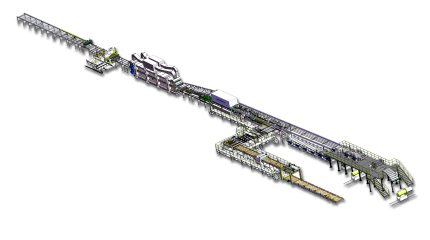
In high-speed lamination, the push for more output often collides with the need for consistent quality. Every extra meter per minute can introduce subtle defects—bubbles, uneven bonding, or edge lifting—that later cause rejects. The real art is not just accelerating the line but synchronizing heat, pressure, and tension so precisely that quality becomes a natural byproduct of speed, rather than something sacrificed to it.
Operators quickly learn that raw speed without adaptive controls is a recipe for waste. Modern lines use closed-loop systems that monitor web tension, roller temperatures, and adhesive flow in real time, making micro-adjustments before flaws appear. This dynamic balancing act turns what used to be a trade-off into a stable operating window where both metrics improve together.
Ultimately, sustaining this balance requires a culture that tracks not just output rates but also first-pass yield and material utilization. When teams see how small process tweaks—like a two-degree temperature shift or a tenth of a millimeter gap change—ripple through both throughput and quality, they move from chasing numbers to owning the entire outcome.
Avoiding Costly Errors in Panel Thickness Calibration
Miscalibrating panel thickness can quietly cascade into structural failures or costly material waste. One frequent pitfall is neglecting to verify the calibration block’s condition—surface wear or minor dents can shift readings enough to invalidate an entire batch. Equally dangerous is placing blind trust in a single measurement point; thickness often varies across a panel, and assuming uniformity invites later rejections at inspection.
A more reliable habit is to map out a grid of test points before calibration and to check those same spots with a secondary gauge whenever deviations creep beyond a narrow threshold. Remember that temperature shifts and handling during setup can introduce drift, so bracketing the calibration session with quick baseline checks on a known reference helps catch anomalies early.
Many errors simply stem from rushed setups—taking an extra ten minutes to warm up instruments and let panels acclimate to the environment pays off in far fewer false rejections down the line. The goal isn’t just a number on a screen, but a traceable, repeatable process that anyone on the floor can trust.
Mastering Roll-Forming Precision for Perfect Surface Flatness
Achieving flawless surface flatness in roll-formed components demands meticulous control over every stage of the process. It begins with precise material selection and strip conditioning, where uniform thickness and consistent mechanical properties prevent localized deformation. The roll tooling design must distribute stress evenly, avoiding overworking any single area. Subtle variations in roll alignment or pressure can cascade into visible waves or edge ripples, so regular calibration and real-time monitoring are indispensable.
Tooling maintenance often goes overlooked, yet worn or improperly finished rolls are a primary culprit behind gradual flatness degradation. Micro-defects on roll surfaces imprint directly onto the profile, requiring polished, mirror-like finishes for critical applications. Additionally, controlling the strip tension and guiding it smoothly into each forming pass minimizes elastic springback and residual stresses. Fine-tuning the roll gap and adjusting the forming angle based on material feedback helps maintain dimensional stability, particularly when working with high-strength steels or thin gauges.
Advanced inline measurement systems now allow for immediate detection of shape deviations, enabling closed-loop corrections before the part is cut to length. Beyond gauge checks, laser profiling and optical scanning map the entire surface to identify low spots or twist. Integrating these insights with adaptive roll adjustment—whether mechanical or servo-driven—ensures that each meter of product meets stringent flatness tolerances. The shift from reactive quality checks to proactive process control transforms flatness from a recurring headache into a manageable parameter, ultimately elevating both yield and customer satisfaction.
Leveraging Smart Controls to Reduce Waste and Energy Use
Smart controls are reshaping how buildings manage energy, moving beyond basic timers to systems that learn and adapt. By monitoring occupancy, weather, and usage patterns in real time, these controls fine-tune heating, cooling, and lighting to match actual needs. Instead of conditioning empty spaces or over-lighting hallways, they dial back output precisely when and where it’s not needed, trimming waste without anyone noticing a difference in comfort.
The real magic happens in the way smart controls connect previously isolated equipment. A sensor detecting an unoccupied conference room can signal the HVAC to ease back, dim the lights, and even power down idle AV gear—all within seconds. This orchestration eliminates the slow, manual adjustments that often lead to energy slipping through the cracks. Over time, the system’s data reveals patterns—like a floor that’s always empty on Fridays—allowing facilities teams to bake in permanent savings without constant human oversight.
Beyond the immediate savings, these controls help extend the life of equipment by avoiding unnecessary run time and reducing wear. They also make it simpler to participate in demand-response programs, where a building can briefly reduce power draw during grid peaks without occupant disruption. By turning energy efficiency into an automatic, background process, smart controls let organizations focus on their core work while quietly cutting both their utility bills and environmental footprint.
Adapting Your Line to New Materials and Sustainability Demands
Moving toward greener production isn't just about swapping one fabric for another—it often means rethinking your entire approach to design and manufacturing. New bio-based textiles, recycled synthetics, and regenerative fibers each require different handling, cutting, and finishing techniques. Factories accustomed to conventional materials may struggle with issues like inconsistent yarn tension or dye uptake variation, which can slow down prototyping and raise rejection rates. Designers who dig into these material quirks early can tweak patterns and construction methods before full-scale runs, avoiding costly reworks later.
Sustainability demands also push brands to look beyond the product itself. Switching to a lower-impact material is a good step, but real progress comes from embracing circular thinking—designing items that can be repaired, taken apart, or returned for recycling. This shifts how you plan collections: instead of chasing trends and churning out short-lived styles, you invest in fewer, more durable pieces that use mono-materials or easily separable trims. The bigger challenge is getting suppliers to collaborate transparently, sharing bill-of-materials data and lifecycle analysis so you can pinpoint where change has the most leverage—and where claims of “better” actually hold up.
FAQ
Efficiency goes deeper than rapid throughput. It's about synchronized movement between the decoilers, pre-heaters, and the double-belt press. When these units communicate seamlessly—often through a central PLC—you minimize idle time, reduce edge trim waste, and keep the chemical reaction stable, which leads to consistent panel density and fewer rejects.
Delamination often traces back to substrate preparation, not the foam itself. If the metal faces aren't heated precisely to the formulation's activation window, the adhesive bond weakens. Also, a poorly maintained chemical mixing head can create uneven distribution of isocyanate and polyol, leading to soft spots that separate under thermal stress.
Rather than sticking to a static recipe, smart lines adjust catalyst levels and pour patterns based on real-time sensors. For instance, on humid days, increasing the isocyanate index slightly compensates for moisture contamination. It's a skill: reading the rising foam's creamy time and gel time, then tweaking the mixing head pressure and conveyor angle to keep the peak rise exactly at the entrance of the press.
Many fixate on raw material cost, but the real comparison is in the line's flexibility and fire performance over the product's lifespan. Mineral wool cores demand dust extraction and slower line speeds, while polyurethane requires precise temperature control. A line designed for quick changeovers between these materials—without cross-contamination—gives manufacturers a decisive edge in serving diverse market codes.
The biggest drain isn't the main drive motors—it's maintaining the press temperature and running ventilation for curing areas. Often, heat recovery from the cooling section can pre-heat the incoming metal coils, slashing energy use by up to 15%. Another culprit: oversized hydraulic pumps that run at constant pressure; switching to variable-displacement pumps with idle-mode logic pays back quickly.
Beyond visual checks, integrating inline ultrasonic scanning right after the saw can detect voids or density variations inside the core. Some lines now use thermographic cameras at the press exit—cooler areas indicate poor adhesion or air pockets. For structural panels, a periodic pull-test on random samples verifies bond strength, but that shouldn't be the only safety net; real-time data trending from the mixer's flow meters often flags issues hours before a batch fails.
It's not just about piling them up. Automated stacking with vacuum lifters that grip without marring the surface prevents dents that lead to scrap. More importantly, intelligent stacking sequences that allow panels to cool uniformly while stacked avoid warping, especially with metal-faced panels. Lines that route rejected panels with minor flaws to a trim station for cutting into smaller boards can recover a significant chunk of material cost.
Conclusion
The foundation of any high-performance sandwich panel line lies in the careful selection of core materials. Polyurethane, mineral wool, and PIR each bring distinct thermal and acoustic properties, and the choice directly shapes both product value and manufacturing complexity. Beyond material, the real art is in maintaining tight control over continuous lamination: speed must never override bond integrity, and even slight misalignments in precision roll forming can telegraph through as surface waves that customers instantly notice. Calibration of panel thickness demands rigorous checks to avoid scrap and callbacks, while smart automation now actively sharpens process control—from real-time foam laydown adjustment to intelligent curing zone management that trims both waste and energy draw. These interconnected choices, if mastered, turn a standard line into a competitive advantage.
The shift toward greener construction is reshaping production priorities. Incorporating recycled steel facings, bio-based foam cores, or new composite skins often forces mechanical and control system upgrades; lines that flex easily between traditional and alternative inputs avoid costly retrofits later. The most forward-looking manufacturers treat line data not as a report card but as a feedback loop—using continuous thickness, flatness, and temperature readings to predict drift before defects form. By engineering for adaptability from the outset, a production line can smoothly accommodate evolving codes and market demands without sacrificing throughput. Ultimately, this blend of material science, precision engineering, and responsive automation defines the modern professional sandwich panel line, guiding fabricators toward consistent quality and long-term resilience.
Contact Us
Contact Person: Sophia Jiang
Email: [email protected]
Tel/WhatsApp: +86 17367381818
Website: https://yzwelding.com/