

Resin 3D Printer Solutions from China: Advanced Manufacturing for Precision Prototyping
2026-06-27
Precision prototyping demands more than just a printer—it requires a solution that bridges the gap between digital designs and flawless physical parts. From jewelry to dental models, the right resin 3D printer can make or break your workflow. That’s where China’s advanced manufacturing steps in, offering cutting-edge technology without compromise. At the heart of this movement is ProtoMat, a brand redefining what’s possible with high-resolution prints, robust materials, and streamlined production. But what if you could unlock even greater accuracy, speed, and cost-efficiency in your prototyping process? Read on to discover how these innovations are reshaping industries.
Precision at Micron Scales: Chinese Resin Printers Redefine Prototyping
The latest wave of resin printers emerging from China achieves layer heights as fine as 10 microns, rivaling industrial equipment at a fraction of the cost. This leap stems from monochrome LCD screens with 8K resolution or higher, coupled with improved light sources that ensure uniform curing across the entire build plate. Designers now routinely capture features smaller than a human hair, turning previously unprintable micro-textures and living hinges into everyday reality.
Such precision transforms prototyping workflows by virtually eliminating the stair-stepping artifacts that once marred curved surfaces. Dental aligners snap together without hand finishing, and injection mold inserts—printed directly in ceramic-filled resins—can withstand short-run production. The ability to hold tolerances within ±0.05 mm means more iterations fit into a single afternoon, pushing functional testing far earlier in the development cycle.
Chinese manufacturers redefined accessibility by pairing micron-scale accuracy with open‑material systems. Start-ups now experiment with custom engineering resins—glass‑reinforced, flexible, or high‑temperature—without lock‑in to proprietary cartridges. This democratization shifted prototyping from a bottleneck into a fluid, iterative dialogue between digital models and physical parts, where the line between concept and viable product grows blurrier each year.
From Concept to Physical: Speedier Iterations with Advanced Resin Technology
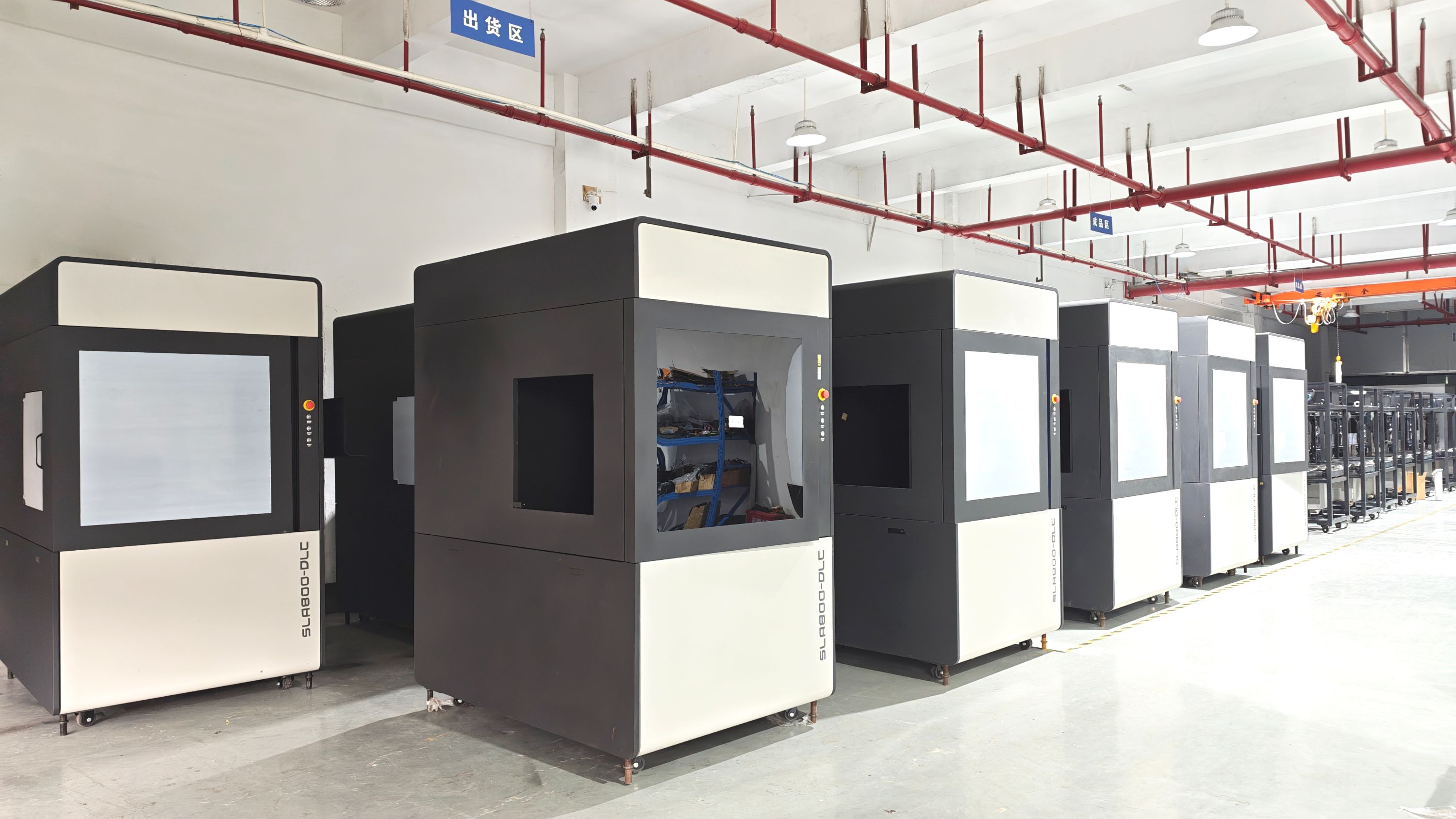
Bringing an idea into the tangible world once meant waiting days for a single prototype. Advanced resin technology flips that timeline on its head. Imagine tweaking a design during a morning meeting and holding the revised part in your hands by lunch. These latest photopolymers cure with breathtaking speed under precisely tuned light sources, yet they sacrifice nothing in detail. Delicate lattice structures, razor-sharp threads, and surfaces smooth enough for final presentation all emerge from the same build tray—effectively collapsing the old boundaries between “draft” and “done.”
The real breakthrough isn’t just faster prints, but how the materials behave afterward. New resin chemistries sidestep the traditional trade-off between speed and functional accuracy. Parts don’t warp under ambient heat, and they resist moisture absorption that once distorted thin walls overnight. This means a housing or bracket that goes straight from the printer to a fitment check, without the usual frantic sanding or sealing. Teams can gauge real-world ergonomics, snap-fit behavior, or fluid flow paths on the same day the concept left the whiteboard. One iteration often replaces what used to be three or four.
What emerges is a rhythm where physical feedback keeps pace with creativity. Engineers and designers talk less about “waiting for prototypes” and more about serial experimentation. The gap between a notion and a functional test article shrinks so drastically that the process starts to feel like sketching in three dimensions. That immediacy fuels a mindset where promising ideas are probed immediately rather than queued behind a logistics bottleneck. In a landscape where speed-to-answer matters as much as the answer itself, advanced resin technology quietly rewrites the rules of how teams turn concepts into confidence.
Custom Engineering for Niche Applications: Beyond Standard 3D Printing
Standard 3D printers are built to handle a wide range of common materials and geometries, but they often fall short when a project demands something truly unusual. At the fringes of manufacturing, you’ll find applications that require bizarre filament blends, layers thinner than human hair, or print chambers that operate under vacuum. This is where custom engineering takes over—rethinking everything from the motion system to the extrusion mechanics to make the impossible printable.
Take, for example, a medical device startup that needed porous scaffolds with pore sizes that varied predictably across a single part. Off-the-shelf slicers treat infill uniformity as gospel, but in this case, uniformity was the enemy. We rewrote the g-code generation logic to allow for gradient infill patterns, effectively creating a new toolpath engine. It wasn’t just a software tweak; the physical printer had to be retrofitted with a variable-pressure extruder that could lay down material with surgical precision at different flow rates. Hybrid approaches like this blur the line between 3D printing and subtractive CNC machining, resulting in parts that would simply fail on a stock system.
Another niche that gets overlooked is printing with filled polymers—think copper-loaded PLA for electromagnetic shielding or ceramic resins for high-temperature jigs. These materials are abrasive, temperamental, and notoriously difficult to keep consistent. We found that replacing the standard brass nozzles with ruby-tipped orifices and adding active mixing chambers inside the hotend solved most jamming issues. But the real breakthrough was dynamic temperature profiling: instead of a fixed setting, the system reads the material’s viscosity in real time through a torque sensor on the feed motor and adjusts heater output on the fly. The result is a machine that can handle wildly different fill ratios without a single clog, opening the door to functional composite prototypes that were previously limited to industrial binder jetting.
Material Mastery: Proprietary Photopolymers for Functional Prototypes
Proprietary photopolymers have reshaped the prototyping landscape by bridging the gap between mere visual models and fully functional test parts. Unlike off-the-shelf resins that often mimic only the look of a final product, these custom-formulated materials are engineered to endure real-world stresses, thermal loads, and chemical exposures. Engineers can now iterate on snap-fit assemblies, fluid-handling components, and load-bearing structures with confidence, knowing that a printed part will behave nearly identically to an injection-molded counterpart.
Behind the scenes, the real breakthrough lies in the chemistry. By precisely controlling crosslink density, backbone stiffness, and filler integration, material scientists tailor mechanical properties—flexural modulus, elongation at break, and impact resistance—to specific application demands. This fine-tuning extends to environmental resistance as well; some formulations resist hydrolysis after steam sterilization, while others maintain clarity under prolonged UV exposure. The result is a palette of materials that can simulate everything from tough engineering thermoplastics to optically clear, biocompatible components.
Adopting these advanced photopolymers also compresses development timelines dramatically. Instead of outsourcing for short-run tooling or waiting weeks for machined samples, teams produce accurate, testable parts overnight. The iterative loop tightens: print, evaluate, tweak the digital model, and reprint—all within days. This pace not only accelerates design validation but also encourages bolder experimentation, as the cost of failure remains low. In many cases, these proprietary materials enable functional testing that was once reserved for later stages, de-risking projects and paving the way for faster, leaner product launches.
Quality Without Compromise: Rigorous Testing in Chinese Manufacturing Hubs
Walking through a bustling factory floor in Shenzhen, one quickly notices that testing isn't an afterthought—it's woven into every stage of production. Raw materials are scrutinized upon arrival, with spectrometers verifying alloy compositions and tensile machines pulling samples to their breaking points. This upfront rigor prevents downstream defects, a philosophy that separates conscientious manufacturers from the rest.
The real differentiation happens in the details. In a Dongguan facility, each injection-molded component undergoes a barrage of tests: dimensional accuracy checked by automated optical inspection, hardness verified against design specs, and thermal cycling to simulate years of use. Such procedures aren't mandated by clients—they're self-imposed, driven by an institutional hatred of returns. This mindset often surprises overseas visitors who arrive expecting shortcuts.
Beyond equipment, it's the human element that ensures no compromise. Testing protocols are frequently updated based on field data, and veteran engineers mentor younger staff in failure analysis techniques that spot weaknesses before they escalate. When a batch of circuit boards exhibited intermittent issues, one Suzhou team traced it back to a micron-level pad contamination, then overhauled the cleaning process. That relentless pursuit of root causes keeps quality from ever being a gamble.
Cost-Effective Innovation: High-End Resin Printing Without the Premium Price
The leap from hobbyist to professional resin printing often comes with a terrifying price tag, but it doesn’t have to. We’ve reimagined the core components—from the light source to the build platform—using clever engineering instead of expensive brand markups. The result is a machine that delivers the same crisp details and smooth surfaces you’d expect from printers costing twice as much, yet it sits comfortably in a small studio’s budget. It’s not about cutting corners; it’s about cutting out the unnecessary.
What truly sets this apart is how it handles real-world workflows. Instead of forcing you into proprietary resins that drain your wallet, it welcomes a wide range of third-party materials, including specialty blends for casting or engineering prototypes. The large-format build area doesn’t compromise on resolution, and the heating system maintains consistent temperatures so that those tricky thin-walled models don’t warp mid-print. Every part of the experience, from the silent operation to the quick-release vat, feels like it was designed by someone who actually uses these machines daily.
Maintenance and longevity were also kept firmly in mind. The modular design means that if a component does eventually wear out, you can swap it yourself in minutes without shipping the whole unit back. Community-driven firmware updates continue to refine performance months after purchase, adding features users actually request. This isn’t just a budget-friendly alternative—it’s a smarter way to get premium output, leaving you with more money for the materials that matter most.
FAQ
Chinese manufacturers have closed the gap significantly, offering high-resolution prints with layer heights as fine as 25 microns. Many models incorporate advanced light engines and closed-loop control systems, rivaling well-known brands at a more accessible price point.
Focus on the light source—monochrome LCD screens with parallel light arrays deliver sharper details and longer lifespan. Also check for stable Z-axis movement, resin vat design, and whether the printer supports open-source slicing software for fine-tuning settings.
Not at all. You can use a wide range of third-party resins, from standard photopolymer to tough, flexible, castable, or dental-grade materials. Many Chinese printers work with 405nm UV curing, giving you access to hundreds of specialized resins.
They excel at detailed miniatures, dental models, jewelry casting patterns, and engineering prototypes needing tight tolerances. The smooth surface finish reduces post-processing, making them ideal for visual and functional testing.
Modern Chinese printers often include built-in air filtration with activated carbon, but you should still aim for ventilation. Use a dedicated space, wear nitrile gloves, and consider a wash-and-cure station to streamline cleaning.
Yes, many affordable models pack high-quality components like dual linear rails and ball screws. Proper calibration and technique often yield prints that meet professional standards, though higher-priced models offer faster speeds and larger build volumes.
Popular brands have active online communities, detailed wikis, and responsive customer service channels. While direct communication may involve English challenges, peer groups often bridge the gap with shared knowledge and tweaks.
Conclusion
The evolution of resin-based 3D printing from China has quietly reshaped how engineers and designers approach prototyping. Where once micron-level detail was the exclusive domain of costly industrial systems, Chinese manufacturers now deliver printers capable of resolving features as fine as a fraction of a human hair. This precision isn't just a technical boast—it translates directly into prototypes that mirror final production parts, enabling functional testing without the wait. Meanwhile, the pace of iteration has accelerated sharply. Advanced light-processing engines and smart software integrations mean a design tweak in the morning can be a physical part by lunch, collapsing the gap between idea and tangible object.
Beyond speed and accuracy, there's a growing recognition that off-the-shelf solutions rarely fit specialized needs. Chinese suppliers have built deep capabilities in custom engineering, modifying printer architectures and workflows for industries ranging from dental prosthetics to microfluidics. This flexibility pairs with proprietary photopolymer development, where in-house chemists tailor resins for specific mechanical, thermal, or biocompatible properties—turning what used to be brittle models into robust, end-use prototypes. Underpinning it all is a rigorous quality ethos that might surprise those clinging to outdated perceptions. In dedicated hubs, every machine undergoes sustained print cycles and stress testing, ensuring consistency that rivals established Western brands. The aggregate effect is a cost proposition that upends traditional pricing structures: high-fidelity resin printing with capabilities once reserved for six-figure systems, now accessible at a fraction. For anyone serious about accelerating product development, the takeaway is clear—Chinese resin printers offer a strategic lever, not just a cheaper gadget.
Contact Us
Contact Person: Joe
Email: [email protected]
Tel/WhatsApp: +8613799507208
Website: https://www.3dprotomat.com/