
Rigid Chain Lift System Company Guide to Reliable Vertical Conveyance Solutions
2026-11-16
What separates a rigid chain lift that runs for a decade from one that fails in a year? The answer is rarely obvious on a datasheet. This guide explores the engineering and support behind reliable vertical conveyance — and shows why Homall Industry Limited has become a go-to partner for companies that can't afford unplanned downtime. Read on for the practical criteria that matter before you choose a lift system supplier.
What Actually Happens Inside a Rigid Chain Actuator During a Lift Cycle
Inside a rigid chain actuator, the lift cycle begins not with a sudden jerk but with a controlled transformation. The flexible chain, wound loosely on its storage spool, is fed through a guide channel where its individual links interlock into a solid, column-like structure. This transition from flaccid to rigid is almost silent—the links snap together with a faint metallic click that repeats at precise intervals, each engagement adding another few millimeters of load-bearing height.
As the motor turns, the now-rigid chain pushes upward against the load, but the real work happens at the point of disengagement. When the chain exits the top of the guide, the links must separate cleanly without binding or jamming. A proper actuator channels the return side of the chain back toward the spool, ensuring that every link cycles through the exact same path. This continuous loop means the chain is never actually "lifted" in the traditional sense—it simply circulates, while its rigid section does the pushing.
Temperature and wear change the feel of the cycle. A cold start makes the links stiffer, requiring slightly more torque to interlock. After hundreds of cycles, the contact faces polish themselves, and the clicking becomes softer, more uniform. Operators who pay attention can tell the health of the actuator just from that rhythm—a steady beat means everything is aligned, while an irregular tap usually signals a misaligned guide or a link on the verge of fatigue.
Why Rigid Chain Systems Keep Payloads Stable Where Hydraulics Struggle
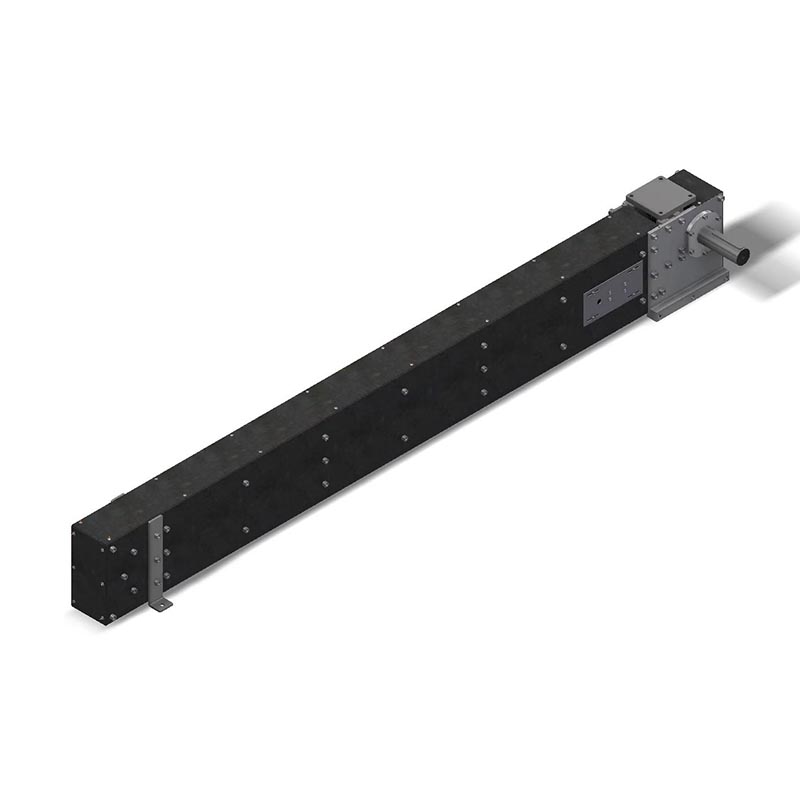
The secret lies in how force is transmitted. A rigid chain actuator pushes with interlocking links that form a solid column under compression, so there's virtually no drift once the load stops. Hydraulic cylinders, by contrast, rely on fluid pressure that can bleed past seals or compress under sustained weight, causing the payload to sag millimetres at a time. That slow movement might sound trivial, but in applications like medical imaging tables or automated assembly jigs, even half a millimetre of unintended displacement means rework, calibration drift, or a rejected part.
Rigid chain systems also avoid the “springiness” of hydraulics when loads shift. A hydraulic line acts like a long, thin spring—any change in load pressure creates a visible bounce before the system stabilises. Chain actuators don't store energy the same way; the links lock into a near-rigid beam, so the payload stays put even if the operator steps away or the load distribution changes slightly. That makes them especially useful where you need to hold a position without constant feedback correction.
Then there's the contamination factor. Hydraulic fluid degrades, leaks, and attracts dirt, all of which alter performance over weeks or months. Rigid chain systems are mechanical, often lubrication-free or using simple grease, so there's no fluid to compress, leak, or vary with temperature. The result is a repeatable holding force that stays consistent from the first cycle to the ten-thousandth, which is exactly what you want when a payload absolutely cannot be allowed to settle or wobble.
Matching Chain Pitch and Guide Rails to Your Real Duty Cycle
Most sizing guides treat duty cycle as an afterthought, but it is the first thing you should pin down. A conveyor running 20 minutes out of every hour behaves very differently from one that never stops. If you size chain pitch and rail profile purely from peak load, you end up with accelerated wear in light-duty systems or unnecessary bulk in intermittent ones. Start by logging actual run times, stop frequencies, and load spikes over a representative shift—not the theoretical maximum.
Once you have that real profile, match the components to the dominant operating mode. For short bursts with cool-down periods, a smaller pitch chain and standard polymer guide rails often handle the job without issue, and they reduce inertia and noise. For continuous or near-continuous duty, step up to a larger pitch and consider hardened or lubricated rail surfaces. The goal is not to overbuild, but to align wear rates so the chain and rails degrade together rather than one eating the other.
Finally, verify your choices under real conditions for at least a few weeks. Watch for rail grooving, chain elongation, and unexpected temperature rise at the return side. If you notice polishing but no measurable wear, you are close. If the rail shows deep scoring or the chain stretches early, revisit the pitch-to-rail contact geometry or the lubrication interval. Small adjustments based on observed duty cycle often beat a complete redesign.
The Hidden Cost Drivers in Vertical Conveyance Projects and How to Avoid Them
A lot of budgets for vertical conveyance fail not because the equipment is pricey, but because shaft construction and interface points drift. If the hoistway dimensions, pit depth, or overhead clearance are confirmed late, contractors either core-drill, shave beams, or reorder rails, which adds weeks and rush charges. One practical way around this is to lock down structural coordinates before the elevator package is finalized, with an on-site verification of as-built openings rather than relying on drawings alone.
Another quiet budget eater is the specification habit of calling for custom finishes or nonstandard cab sizes without quantifying the lead-time penalty. Suppliers often quote attractive base prices, then attach surcharges for bespoke brackets, heavier door operators, or non-registered layouts. You can blunt this by setting performance requirements instead of prescriptive details, and by asking vendors to itemize every deviation from their standard platform in the tender stage.
The commissioning and handover window is where many projects leak cash through repeated inspections, incomplete documentation, or missing interfaces with fire alarm and building management systems. Assigning a single interface coordinator and scheduling a pre-test walkthrough with the authority having jurisdiction can cut two to four weeks from closeout. Holding a small contingency for punch list items that emerge during integrated testing is usually cheaper than scrambling after a failed inspection.
Field Notes: Rigid Chain Lifts in Automotive Assembly and Cold Storage
Walking the line at a Midwest assembly plant last month, the rigid chain lifts stood out less for their footprint than for how quietly they handled palletized engine cradles. Unlike hydraulic scissor lifts that leak and drift, these units use interlocking steel links that form a column when extended. The chain doesn't spool; it stacks into a compact magazine below the platform. That means no pit, no overhead steel, and no exposed lubrication points near paint or body-in-white stations.
In cold storage, the same mechanics solve a different headache. At -20°F, oil viscosity and ice buildup kill conventional actuators. Rigid chain lifts don't rely on fluid power, so there's no warm-up cycle or frozen seals. I watched a facility in Wisconsin cycle a two-post lift every 90 seconds for a full shift, moving half-ton bins of frozen dough. The only maintenance note on the clipboard was a weekly wipe-down of the chain guides to prevent frost adhesion.
What often gets overlooked is control. Because the chain links engage positively, you get repeatable stopping accuracy—usually within a couple millimeters—without a linear encoder bolted on. That matters when a robot is trying to pick a casting from a lift that's been in service for three years. If I were speccing a new line, I'd look hard at the side-load ratings and ask for a demo under real load, not just a catalog cycle count.
Pre-Commissioning Checks That Prevent Most Vertical Conveyance Downtime
Many shutdowns trace back to small things that could have been caught before the unit ever carried a passenger. One classic example is rail alignment. A fraction of a millimeter step at a joint might feel smooth during slow inspection runs, but at rated speed with a full car it turns into a noticeable thump that wears guide shoes and leads to callback after callback. Using a straightedge and feeler gauge at every joint—and correcting the bracket shims before loading the car—costs far less than a later rail regrind.
Door systems are another source of avoidable downtime. The gap between the door operator clutch and the landing door roller, the closing force, and the reopen sensitivity are often set by feel during commissioning. If the lock contact doesn't get enough compression travel, normal door frame flexing on a windy day can break the safety circuit and strand the cab. Measure the contact wipe with a dial indicator, then simulate passenger leaning against the doors from both sides. That simple exercise exposes weak points that otherwise show up as intermittent door faults in the first month.
Electrical terminations and drive parameters deserve just as much attention. Main circuit lugs that aren't torqued to spec will loosen as copper expands and contracts through daily thermal cycles, eventually causing overheating or a completely dead controller. Meanwhile, acceleration and jerk settings in the drive that look fine on paper often produce vibration once real load and rope stretch enter the picture. Before handover, re-torque every power terminal and run the car through empty, balanced, and full load profiles while watching the speed feedback trace. These focused checks take a few extra hours but eliminate the intermittent calls that erode client confidence.
FAQ
Instead of pushing from below or pulling with cables, a rigid chain lift uses interlocking links that form a solid column when extended. This means the platform gets axial support without needing a deep pit or overhead structure, which changes how you can place it in a facility.
They shine in tight spaces where a pit isn't practical and overhead room is limited—think work platforms, assembly lines, and material handling cells that need stable vertical travel without a bulky footprint.
It's generally lighter than hydraulic systems because there's no oil to change or seals to leak, but the chain itself should be lubricated and inspected at intervals recommended by the manufacturer, typically around every 500 operating hours or so.
Yes, if it's configured with multiple chain columns or a guided carriage. The rigid chain resists buckling under axial compression, but the frame and guides still need to be rated for any side-load moments you introduce.
Look for redundancy in the chain engagement, load holding brakes, overload sensors, and a clear fail-safe mode if power drops. A supplier that shows you their testing data and field service record is usually a safer bet.
Speeds vary, but many systems run in the 0.1 to 0.5 meter per second range for precision handling. High-speed models can go faster, but stability and positioning accuracy often matter more than raw velocity.
It can be, especially if the chain and housing are made from stainless steel or have sealed lubrication. You'll want to confirm the design avoids exposed grease and can withstand washdown procedures if needed.
You're paying for the chain mechanism and precision manufacturing, so it may cost more upfront than a simple hydraulic scissor lift. But the savings often come from no pit construction, lower maintenance, and a longer service life.
Conclusion
Understanding what happens inside a rigid chain actuator during a lift cycle changes how you specify and maintain vertical conveyance equipment. The chain links interlock into a rigid column as they leave the magazine, transferring load directly downward without the drift or stick-slip common in hydraulic cylinders. This mechanical engagement is why rigid chain systems hold payloads steady even under off-center loads or temperature swings—conditions where hydraulics often struggle with leakage and viscosity changes. Matching chain pitch and guide rail profile to the actual duty cycle, not just peak capacity, prevents premature wear and reduces side loading. Many projects overlook this and pay for it later in frequent rail replacement or chain stretch.
Hidden cost drivers in vertical conveyance projects usually come from late design changes, poor access for maintenance, and underestimating environmental factors like cold storage condensation or abrasive debris in automotive assembly. Field experience shows that rigid chain lifts perform well in both settings when the chain is protected and the guide rails are aligned properly. Before commissioning, a focused checklist—verifying chain tension, lubrication, limit switch timing, and rail straightness—catches most sources of downtime. Reliable vertical conveyance isn't about buying the heaviest chain or largest motor; it's about aligning the actuator's mechanics with real operating conditions and then confirming that alignment before production starts.
Contact Us
Contact Person: Ryan
Email: [email protected]
Tel/WhatsApp: +85259582726
Website: https://www.robomast.com/