

Rotary Valve Supplier Guide: How to Choose the Right Partner for Your Industry
2026-11-16
Ever wondered why some rotary valves deliver years of maintenance-free service while others become a recurring headache? The difference rarely shows up on a datasheet—it hides in the expertise and support of the supplier you choose. This guide cuts through generic sales promises to give you a no-nonsense framework for finding a partner who truly understands your process, and explains why top-tier operations repeatedly turn to AVM for heavy-duty, application-ready solutions.
Pinpointing the Performance Specs That Actually Matter
Pinpointing the Performance Specs That Actually MatterWhy Material Compatibility Can Make or Break Your Process
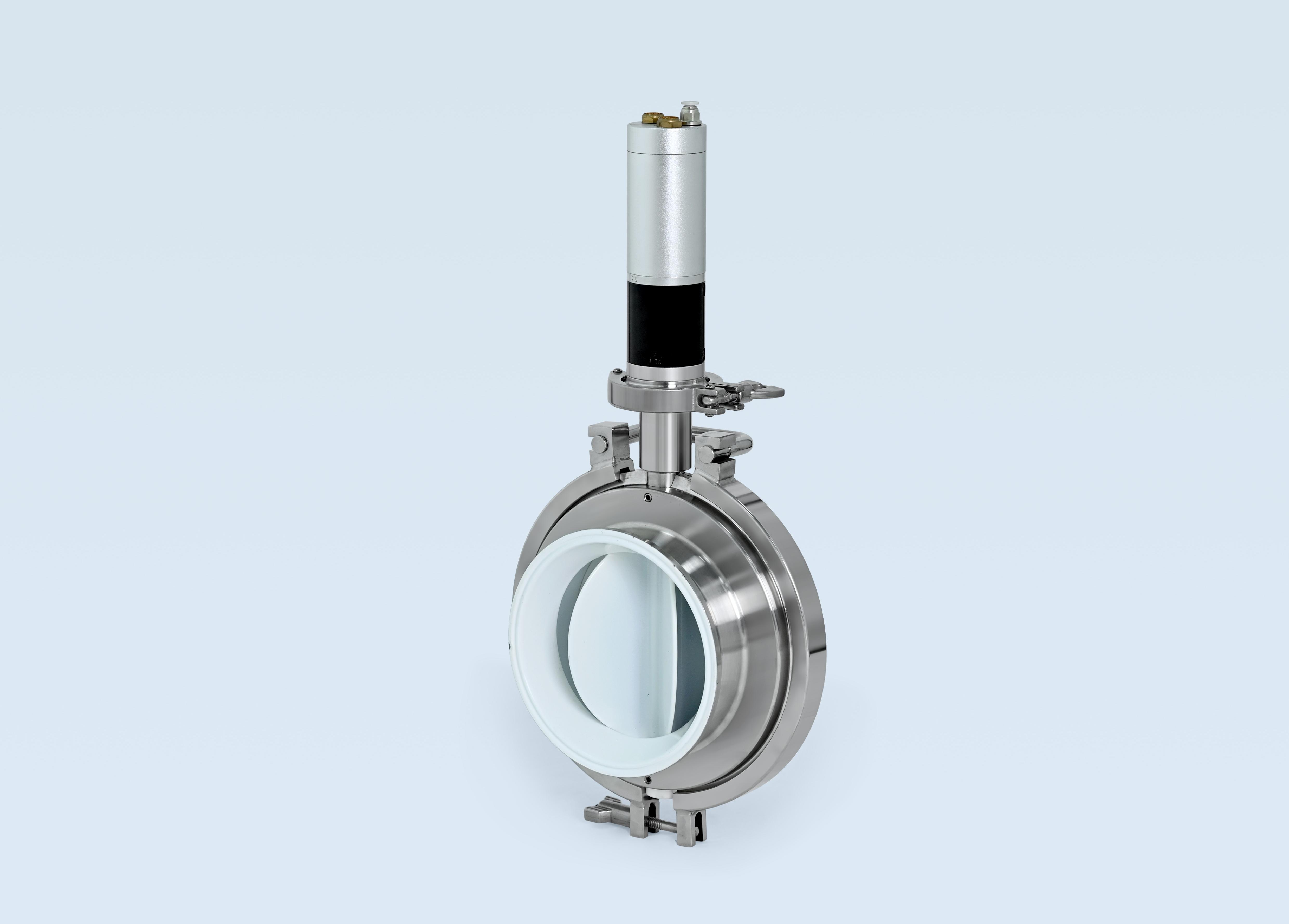
Material compatibility isn't just a line item on a spec sheet—it's the thread that holds your entire operation together. When you introduce a new chemical, adhesive, or cleaning agent without understanding how it interacts with the O-rings, gaskets, or tubing already in place, you're essentially gambling with your uptime. A subtle swell here, a bit of embrittlement there, and suddenly you've got leaks, contamination, or a full-blown equipment failure. The cost of that mismatch rarely shows up in the purchase order; it waits until the middle of a production run to make itself known.
What trips up a lot of teams is focusing solely on the primary fluid while ignoring secondary exposures—cleaning cycles, purge gases, or even ambient humidity. A pump seal might handle your process solvent beautifully but crumble after three CIP cycles because nobody checked its resistance to hot caustic. That's where the real danger hides: in the gaps between assumed compatibility and actual duty cycles. The fix isn't rocket science, but it demands a shift from reactive troubleshooting to deliberate material selection early in the design phase.
Uncovering the Hidden Costs of a Mismatched Partnership
The financial drain of a misaligned partnership rarely announces itself with a single large bill. Instead, it trickles in through slow decision-making, duplicated efforts, and the quiet erosion of team morale. When two organizations pull in slightly different directions, every process that should be seamless turns into a negotiation. The hours spent bridging communication gaps and reconciling conflicting priorities accumulate quickly, yet they seldom appear on any balance sheet until the damage is already done.
Beyond the measurable loss of time, there is a deeper cost that hits the people involved. Talented employees who joined to build something meaningful find themselves trapped in cycles of frustration, explaining the same discrepancy for the third time or defending a vision the partner no longer shares. This fog of misalignment drives away the very individuals the organization can least afford to lose, leaving behind a shell of a team that operates on survival mode rather than ambition.
The opportunity cost is perhaps the most savage. While energy is consumed by internal friction, the market keeps moving. A competitor with a unified approach launches the feature your team debated for six months, or captures the client who grew tired of waiting for coherent service. The true price of a mismatched partnership is not what you spend trying to fix it — it is everything you do not build while you are stuck in the wrong room, with the wrong ally, pretending the door is not already open for someone else.
Engineering Expertise Over Off-the-Shelf Promises
There’s a quiet arrogance in generic solutions—the assumption that one size truly fits all. But problems worth solving rarely come with standard dimensions. Engineering expertise means refusing to take a pre-packaged answer and forcing it onto a question that doesn’t match. It’s the difference between a mailbox crammed with unread flyers and a handwritten letter that lands exactly when it’s needed. Off-the-shelf promises often deliver noise; engineered thinking delivers signal, precisely tuned to the environment it’s meant to live in.
Pre-built frameworks and out-of-the-box tools are seductive because they offer speed without friction. Yet friction is often where real understanding lives. When a team leans into genuine engineering—measuring, adjusting, discarding what doesn't fit—they create systems that don't just function but endure. The off-the-shelf approach lets you borrow someone else’s logic; deep expertise lets you craft your own, shaped by the constraints, materials, and ambitions unique to your project. It’s the shift from renting a furnished identity to building a home that breathes with the people inside it.
This isn’t about dismissing ready-made components entirely—sometimes they’re useful scaffolding. But at the core, there must be a refusal to outsource understanding. Engineering expertise means turning the lights on in the basement of a problem, examining its wiring, its leaks, its hidden load-bearing walls, before even thinking about a fix. Off-the-shelf promises sell the illusion of a shortcut; real expertise invests in the map. And in the long run, it’s the map that prevents you from getting lost in a forest of fast fixes that never quite reach the root.
Decoding After-Sales Support Before You Sign
Walking into a showroom, the promise of a smooth ownership experience feels almost tangible. Sales teams highlight quick response times, nationwide service networks, and “customer-first” philosophies with practiced ease. Yet the true measure of support often hides in the details you’re not told during the pitch. It’s rarely about the broad claims, but about what happens when your specific problem lands outside the flowchart, on a weekend, or requires a part that isn’t sitting on a shelf three states away.
Most warranties are written to sound comprehensive while quietly carving out more exclusions than protections. Real after-sales strength reveals itself in the unglamorous stuff: who actually picks up the phone at 6 p.m., whether loaner vehicles are a certainty or just a “when available” asterisk, and how long the average diagnostic time stretches before anyone opens a wrench. If a company can’t give you a straight answer about service center queue times or technician training depth, assume the reality is less polished than the brochure.
Before you commit, test the waters. Call the service department with a hypothetical problem—something routine but slightly awkward. Watch how quickly you get a human, and listen for whether they default to scripted deflection or genuine problem-solving. Ask owners in forums about their last three non-routine visits, not just their first oil change. The paperwork you sign locks in the car; the support you decode beforehand locks in years of quiet confidence or constant frustration.
Real-World Testing That Predicts Long-Term Reliability
Most lab tests focus on controlled conditions, but the real story of a product’s endurance often unfolds in the chaos of everyday use. Real-world testing isn't about accelerating failure in a sterile chamber; it's about letting a product sweat through the kind of abuse real people dish out—scorching car dashboards, humid laundry rooms, gritty job sites, and backpacks tossed across dorm floors. By observing how materials warp, how seals degrade, and how interfaces hold up under genuine stress, engineers uncover failure patterns that lab simulations almost always miss. That’s where true reliability is born.
One powerful approach is embedding prototype devices into the daily routines of beta testers who treat them with a mix of indifference and heavy reliance. They don’t follow a test script; they leave the radio on all night, cram memory cards in sideways, or wipe down screens with whatever’s handy. The feedback that trickles in—random reboots, a sticky button after a juice spill, a fading indicator light—becomes invaluable. It’s not just about catching defects. It’s about understanding how a device ages over months, not hours. These are the data points that quietly outline a product’s five-year survival odds.
There’s also a growing shift toward building automated, real-world simulation rigs that replicate actual human behavior rather than industry-standard cycles. Think of a robotic arm that presses a car key fob with the erratic force of a frustrated owner, or a dishwasher rack that introduces grit and hard water residue specifically sourced from real region‑specific water supplies. When test environments mirror what customers truly subject products to, the resulting designs aren’t just passable—they become quietly resilient. That’s the kind of loyalty a product earns not through marketing, but through proving itself long after the warranty expires.
FAQ
A trustworthy partner will talk about your process first, not their equipment list. Ask if they visit your site, review your material's flow characteristics, and propose a valve built for your real operating conditions rather than off-the-shelf convenience.
The discussion should move beyond basic specs. A reliable supplier will want tested samples of your material, discuss rotor clearances vs. coating hardness, and might recommend features like dead-end rotors or specialized seals based on what your powder does when heated or compressed.
It becomes critical when unexpected wear appears. A partner with nearby service engineers and inventory can swap a rotor or rebuild a valve on-site in hours rather than shipping it back and shutting your line down for days. Time-to-recovery often matters more than the valve's initial price.
Ask for a visit to their assembly and testing area. Focus on machining tolerances, how flange faces are ground, and whether they do helium leak tests by default on the valves you need. This prevents leaks and cross-contamination that show up only after installation.
Ask how their rotor and housing material choices change when your pressure differential crosses 1 bar or when temperature swings exceed 40°C. An engineer-led supplier should talk about rotor deflection and thermal growth; a catalog-led one will keep referencing standard drawings.
Translate all estimates into cost per operating year. A cheaper valve with carbon steel internals in a mildly acidic powder might need replacement rotors every six months, while a mid-range option with duplex stainless pays back in under two years. Include lost production time in that math.
Instead of asking 'can you do ATEX or FDA', present a scenario: 'We need to meter a combustible flavor powder with a MIE below 10 mJ and after every batch we CIP with hot caustic.' The answer shows whether they've actually built for that intersection of requirements.
Watch for slow response on technical queries before the order is placed, a one-size-fits-all installation and maintenance guide, or reluctance to provide performance references from sites running a powder similar to yours. Post-sale commitment rarely improves if pre-sale follow-up is already weak.
Conclusion
Finding a rotary valve partner who understands your operation means looking past glossy datasheets and zeroing in on performance parameters that truly influence your day-to-day output—rotor tip speed, pressure sealing limits, and the shear sensitivity of your materials. A supplier who listens more than they pitch will likely ask about your bulk density shifts or the occasional lumps that can jam a poorly specified valve. That focus on real-world specs prevents the kind of material hang-up that slowly kills efficiency. Material compatibility is another area where generic advice falls flat. I've seen stainless steel valves fail catastrophically in mildly acidic atmospheres, while the right alloy or coating would have cost just slightly more upfront but avoided months of unscheduled maintenance. Those hidden expenses—downtime, product loss, and the creeping cost of emergency call-outs—are rarely listed in any quote. A mismatched partnership surfaces these costs long after the purchase order is signed, eroding margins you didn't think were at risk.
Off-the-shelf promises often crumble when your process throws a curveball, which is why engineering expertise matters more than a full inventory. The right supplier will dig into your system's pressure profiles and feeding accuracy needs, sometimes suggesting a vented rotor or a customized inlet that no standard model offers. That discussion alone can prevent a year of tuning nightmares. Once the valve is installed, after-sales support defines the relationship. You need to know whether replacement parts sit in a warehouse a state away or a continent away, and whether your weekend breakdown will be met with a technician or a voicemail. A supplier who commits to rapid diagnostics—even remote access for smart valves—keeps your lines moving. But before any of that, insist on real-world testing. Watching your actual material run through their valve, measuring wear and air leakage over consecutive cycles, provides a reliability forecast that spec sheets can't fabricate. Suppliers willing to open their test lab to your product aren't just selling hardware; they're investing in a partnership that lasts.
Contact Us
Contact Person: Ananda
Email: [email protected]
Tel/WhatsApp: 8619016718200
Website: https://www.wzaomi.com