

Solar Pillar Light Supplier Guide to Choosing Durable Outdoor Lights
2026-10-25
Choosing outdoor lights that actually last can feel like a gamble—fading panels, cracked housings, and batteries that quit after one season. If you're tired of replacing cheap solar pillar lights every few months, this guide is for you. We'll walk through what separates durable, all-weather designs from flimsy knockoffs, with real-world insights from SRS, a supplier known for engineering solar lighting that holds up year after year. From corrosion-resistant materials to smart battery management, here's how to spot quality before you buy.
Focus on Panel Efficiency, Not Just Wattage
Wattage gets all the attention, but it’s a shaky way to judge a solar panel. A 400-watt panel that’s physically larger might actually deliver less electricity per square foot than a smaller 370-watt panel with better conversion efficiency. If your roof has limited space, chasing the highest wattage can leave you with fewer total kilowatt-hours over the year.
Panel efficiency tells you how well the cells turn sunlight into usable power. Two panels with the same wattage can behave very differently in partial shade, heat, or low-light conditions if their efficiency ratings differ. A higher-efficiency panel often keeps closer to its rated output when the sun isn’t perfectly angled or when temperatures climb, which matters more than a bigger number on a spec sheet.
Before you fixate on watts, look at the panel’s dimensions and efficiency percentage. Multiply the two to get a realistic sense of what fits your roof and what it’ll actually produce. That calculation beats buying the biggest wattage panel that eats up space and underperforms where it counts.
Look for Marine-Grade Materials in the Frame
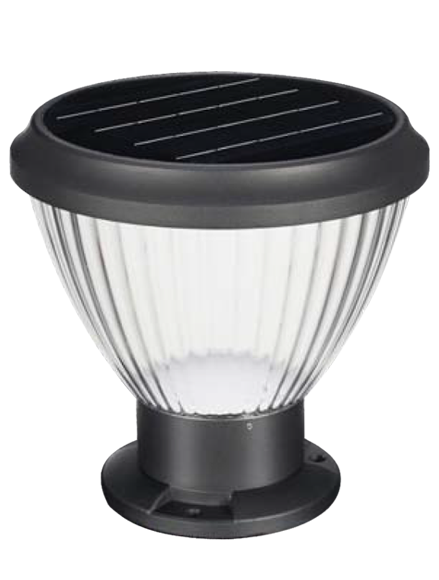
Salt air and moisture destroy ordinary metal frames quickly, but marine-grade materials are built to resist that kind of exposure. When you see an aluminum frame that hasn't been treated with marine-grade coatings, it might look fine indoors but will start pitting and corroding after a season near the water. That's why the frame material matters more than almost any other feature.
Look beyond the surface finish. Marine-grade stainless steel and powder-coated aluminum often hide their strength behind a clean, simple look. Check the hardware too—bolts, screws, and brackets should also be marine-grade or at least heavily coated. If the frame uses mixed metals, electrolysis can cause premature rust even on good materials.
One practical test is to look for the manufacturer's warranty or a clear statement about saltwater exposure. A frame built with marine-grade materials will usually be backed by a longer warranty and won't need constant touch-ups. Over time, that's the difference between replacing furniture every few years and keeping the same set for a decade.
Check Sealing Beyond the IP Code
IP ratings are useful for comparing enclosures under controlled lab conditions, but they rarely tell the whole story. A housing that passes IP67 can still leak after months of thermal cycling, because gaskets take a compression set and metal-to-plastic joints shift. That’s why sealing checks need to go beyond the numbers printed on a datasheet.
One practical approach is to run a pressure decay test with the enclosure mounted the way it will be used, not just sitting on a bench. Flex the housing slightly, expose it to a temperature swing, or wet the seal and watch for bubbles under low air pressure. These simple steps often expose weak points that a standard drip or immersion test misses completely.
Field experience adds another layer. Seals that look fine on paper can fail because of uneven screw torque, dirt trapped in the groove, or UV-hardened rubber. Instead of assuming the IP code guarantees long-term protection, treat it as a starting point and verify sealing performance under conditions closer to real operation.
Ask About Battery Chemistry and Cycle Life
When you're comparing batteries, don't just glance at the amp-hour rating. Ask what specific chemistry is inside—lithium iron phosphate, nickel manganese cobalt, or something else. Each one handles heat, charging speeds, and deep discharges differently, and that directly shapes how many cycles you'll actually get before capacity starts to fade.
Cycle life numbers on a datasheet can be misleading if you don't know the test conditions. A cell rated for 3,000 cycles at 80% depth of discharge might only deliver half that if you regularly drain it to empty or charge it at high currents in hot environments. So ask for the fine print: what depth of discharge, what temperature, and what end-of-life capacity threshold they used.
A good vendor should be able to tell you how the chemistry behaves at the edges—like whether occasional full discharges cause permanent damage or whether the battery prefers partial top-ups. That kind of detail matters more than a single cycle count printed on a spec sheet, especially if your application runs in less-than-ideal conditions.
Test Stability on Uneven Ground
Place the unit on a surface that tilts at least 10 degrees in two directions—side to side and front to back. Watch for any wobble, sliding, or tipping before adding load. A quick hand-pressure test on the top corners often reveals weak points that a flat floor never will.
If the feet or base can be adjusted, set each one to a different height to mimic broken ground. Then apply the maximum expected weight and lean the structure slightly. The goal is not just to see if it stands, but whether it stays put without creaking, shifting, or lifting a foot.
Repeat the check on grass, gravel, and a cracked slab if possible. Soft ground masks instability, so push down on one side and listen for grinding or feel for rocking. Only after the test survives a few minutes with no movement should you trust it outdoors.
Scrutinize Warranty Terms for Fading and Corrosion
Most warranty documents make fading and corrosion coverage sound broader than it actually is. The first thing to check is whether the finish warranty excludes environments that are common in your area. Coastal salt spray, high humidity, industrial emissions, and even frequent exposure to pool chemicals can be listed as exceptions. If the document says it covers normal weathering but does not define what that term means, the manufacturer has left itself room to reject your claim later. Ask for a written definition of fading, including whether a specific color shift tolerance is stated and how it will be measured.
Then look at how the warranty pays out. A 15-year corrosion warranty that only covers replacement panels but not the labor to remove and reinstall them may not be much help when rust appears. Many warranties are pro-rated after the first year or two, meaning the payout drops sharply long before the advertised period ends. Some also require you to use a specific cleaner or protective coating on a schedule, and missing one application can void the finish warranty entirely. Those conditions are often buried in a footnote or a separate maintenance guide.
Finally, separate the fading coverage from the corrosion coverage. It is common for a product to carry a long structural or rust-through warranty while only offering a few years of protection against visible color change. If fading is what you are worried about, the shorter number is the one that matters. Compare the exclusions and claim requirements side by side before you decide, because a longer warranty period with weaker definitions is often less useful than a shorter one with clear terms.
FAQ
Cast aluminum or marine-grade stainless steel hold up far better than plastic. Powder-coated finishes resist salt spray and UV fading, so the fixture won't pit or chalk after a couple of seasons.
Ask for the cell datasheet rather than just the brand name. Look for lithium iron phosphate (LiFePO4) or high-grade Li-ion with a wide operating temperature range, and request cycle-life test reports showing at least 1,500 cycles at 80% depth of discharge.
IP65 is the minimum for rain and hose-down cleaning, but IP66 or IP67 is safer near salt spray or heavy storms. Verify that the rating applies to the whole assembly, including the battery compartment and the solar panel seal, not just the LED housing.
Monocrystalline panels with at least 20% conversion efficiency perform best in low light. Also check that the panel is sized appropriately for the battery capacity—aim for a charge-to-consumption ratio of 1.2:1 or higher to avoid chronic undercharging.
Request an integrating sphere test report or an LM-79 report for the complete fixture, not just the LED chip. Compare lumens per watt and ask for runtime graphs at full brightness, because many suppliers list peak output that drops sharply after the first hour.
Push for at least three years on the fixture and two years on the battery. The warranty should explicitly cover water ingress, corrosion, and battery capacity dropping below 70% of the original rating.
Yes, look for sealed internal wiring channels, stainless steel screws, and a base with drainage holes to prevent water pooling. Avoid designs where the solar panel sits in a recess that traps dust and leaves, which blocks charging over time.
Ask the supplier to run a 72-hour soak test with the light submerged in a few centimeters of water, followed by a thermal cycling test from -10°C to 50°C. Then install a few samples at your own site for a full season to observe real-world charging and light output.
Conclusion
When sourcing solar pillar lights for outdoor projects, durability often hinges on details that spec sheets gloss over. A high wattage figure means little if the solar panel cannot convert weak or angled sunlight efficiently, so it's wiser to compare panel efficiency under realistic conditions rather than chase peak output numbers. The frame material matters just as much: marine-grade aluminum or stainless steel resists pitting and rust far better than powder-coated mild steel, especially in coastal or high-humidity settings. Beyond an IP65 or IP67 rating, ask how the internal gaskets and cable entry points are sealed, because water vapor can creep in through micro-gaps even when the housing passes a laboratory dunk test.
Battery choice is another silent determinant of service life. Lithium iron phosphate cells, for instance, tolerate deep cycles and wide temperature swings far longer than basic lithium-ion or NiMH packs, so request cycle-life data instead of just capacity. On site, mount the light on a sloped or uneven surface to see if the base rocks or the pole shifts before you commit to a bulk order. Finally, read the warranty through the lens of real-world wear: does it cover lens yellowing, aluminum fading, and corrosion of the mounting hardware, or only electrical failure? A supplier that stands behind those long-term failure modes is treating outdoor durability as a design requirement, not an afterthought.
Contact Us
Contact Person: kitty
Email: [email protected]
Tel/WhatsApp: +8618676039824
Website: https://www.srssolargroup.com/