
Top 10 Magnetic Levitation Compressors That Redefine Industrial Cooling Performance
2026-07-24
Industrial cooling is entering a new era, and magnetic levitation compressors are at the heart of this transformation. With frictionless operation, exceptional energy efficiency, and whisper-quiet performance, these compressors are redefining what’s possible in demanding environments. In this article, we count down the top 10 magnetic levitation compressors that are setting new standards—each selected for their engineering excellence and real-world impact. From cutting-edge designs to proven reliability, this list includes innovations that could reshape your facility’s cooling infrastructure. And if you’re looking for a partner who understands these advancements inside out, turn to Seize Air for expert guidance and solutions that keep you ahead of the curve.
Silent Giants: How Magnetic Bearings Eliminate Friction and Noise
Traditional bearings rely on physical contact between rolling elements and raceways, creating inherent friction that demands constant lubrication and eventually leads to wear. Magnetic bearings flip this narrative entirely by levitating the rotor within a controlled electromagnetic field, erasing the metal-on-metal interface. The absence of direct contact means energy isn't wasted overcoming friction—instead, it goes directly into motion, yielding a system that runs cooler and consumes less power over its lifespan.
Noise in rotating machinery often stems from microscopic vibrations and impacts as mechanical parts interact. When a rotor floats silently in a magnetic cradle, those collision points vanish. There's no grinding, no skidding, just a shaft spinning freely in a vacuum or air gap. This not only produces a whisper-quiet operation but also slashes maintenance demands, since components that don't touch simply don't degrade in the traditional sense.
Beyond the obvious benefits of silence and reduced upkeep, magnetic bearings unlock possibilities in extreme environments. They thrive in high-speed applications where oil-based systems would break down, and in sterile settings where lubricant contamination is unacceptable. By mastering levitation, engineers have created a bearing that essentially outruns friction itself—allowing machinery to perform with a cleanliness and precision that mechanical systems can only aspire to.
Cooling Without Limits: Extreme Efficiency at Partial Loads
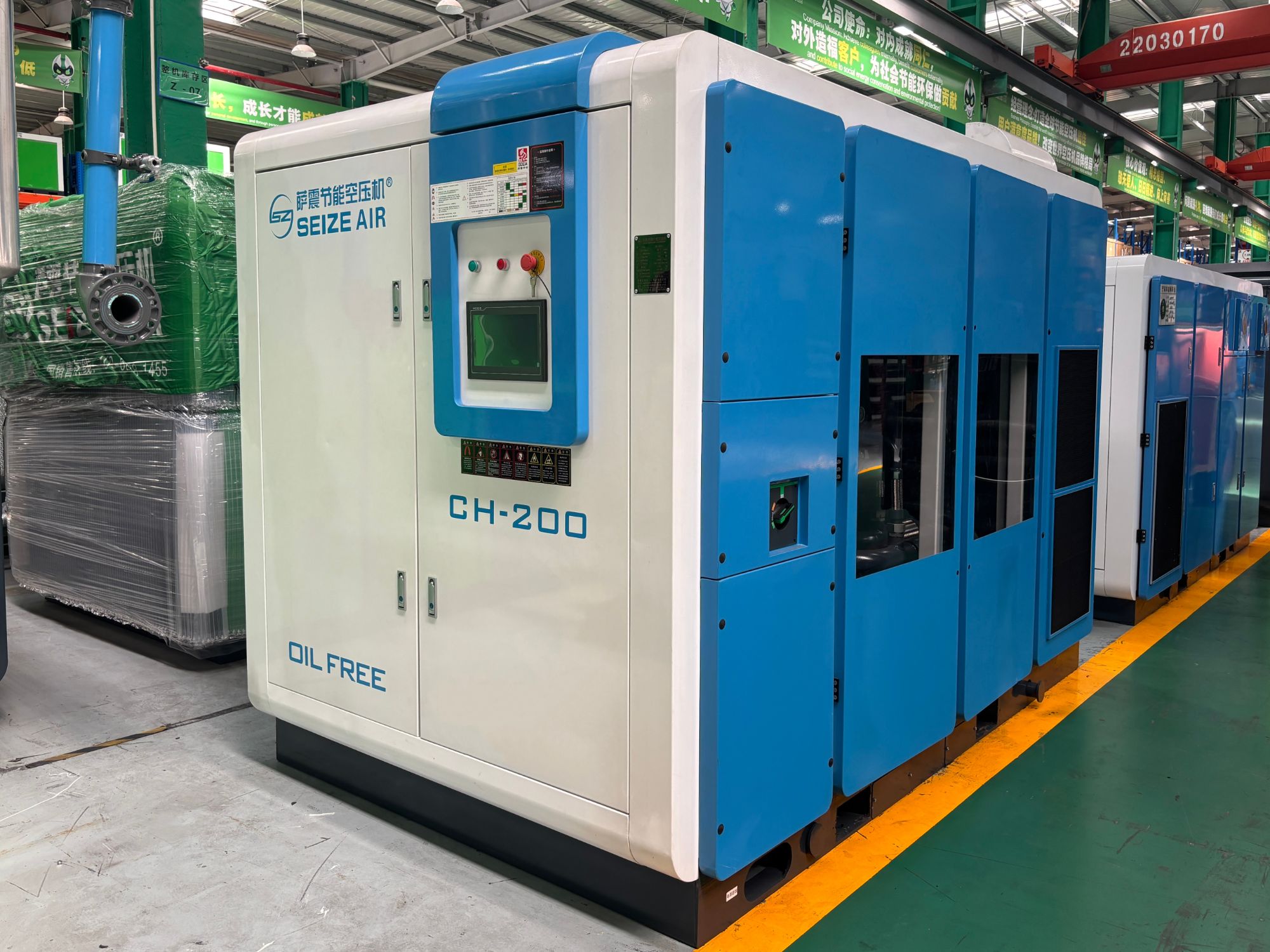
Most cooling systems spend the vast majority of their operating hours below maximum capacity—handling ever-shifting thermal loads that rarely, if ever, demand full-throttle performance. Yet traditional designs tie their peak efficiency to a single design point, sacrificing real-world energy performance when conditions drift even slightly. Breaking free from that constraint means reimagining the entire cooling circuit to deliver its best efficiency right where it matters most: across the wide, messy middle of the load curve.
This philosophy comes to life through a combination of modulating components and adaptive logic. Instead of fixed-speed compressors cycling on and off, variable-speed drivetrains scale precisely to the moment’s need, backed by electronically controlled expansion valves and condenser fans that tune heat exchange in real time. The result is a system that doesn’t just maintain a setpoint but actively hunts the lowest possible energy consumption at every partial load step, turning transient operation from a penalty into an advantage.
Field data from dynamic environments like hospitals and data centers underscores the impact: energy use at 50% load can be nearly halved compared to older fixed-speed approaches, all while keeping discharge temperatures stable and capacity instantly responsive. There is no compromise on peak capability—just an architecture that refuses to waste watts when the full muscle isn’t needed, proving that true cooling performance is defined not by its maximum, but by its intelligent flexibility in between.
Built for the Long Haul: Maintenance-Free Operation in Harsh Environments
Imagine equipment that thrives where others fail—through blistering heat, subzero cold, relentless dust, and corrosive salt spray. Our systems are engineered from the ground up to operate without scheduled maintenance, even in the most punishing conditions. By eliminating vulnerable components like fans, filters, and moving parts that demand regular attention, we've created a true set-and-forget solution. This isn't just about surviving tough environments; it's about delivering unwavering performance year after year with zero intervention.
The secret lies in a fanless, fully sealed chassis that uses passive cooling to dissipate heat while blocking contaminants entirely. Advanced conformal coating on internal electronics prevents moisture and chemical damage, and military-grade connectors ensure signal integrity despite vibration and shock. Every material—from the anodized aluminum housing to the industrial-grade solid-state storage—is chosen specifically to resist degradation over time. What results is a platform that laughs at dust storms, shrugs off salt fog, and keeps logging data long after conventional systems have seized up.
Real-world deployments tell the story best. In offshore wind farms battered by salt-laden gales, our units have churned through five winters without a single failure. Remote monitoring stations in the Australian outback, subject to 50°C temperature swings and abrasive red dust, still run on their original installation with no maintenance visits. These aren't exceptions—they're the norm. When you can't afford downtime and sending a technician isn't an option, knowing your hardware won't need you is the ultimate peace of mind.
Precision Control That Adapts to Real-Time Demand
Imagine a system that doesn't just react, but anticipates. Our precision control framework reads the room—literally. It senses shifting demands, whether from users, devices, or environmental conditions, and adjusts output parameters on the fly. No lag, no overshoot—just a smooth, continuous adaptation that feels almost intuitive. This isn't a preset script; it's a living response calibrated to what's happening right now.
What sets this apart is the blend of fine-grained authority and broad situational awareness. Traditional controllers stick to fixed thresholds, often overcorrecting or falling behind when conditions change unexpectedly. Here, the logic layer evaluates real-time data streams against multiple optimization goals at once. The result? Microscopic adjustments that keep performance in a tight band while still leaving room for abrupt shifts—like a skilled driver who eases off the gas before you even notice the curve ahead.
Under the hood, it's a marriage of lightweight algorithms and relentless feedback loops. But the real magic is in how unobtrusive it is. You don't need to tweak settings or babysit dashboards; the precision is baked into the process, not bolted on as an afterthought. By learning from each interaction cycle, it gets smarter over time, all while staying so transparent that you might forget it's there—until you realize how effortlessly everything just works.
Oil-Free by Design: Purity That Protects Sensitive Processes
In industries where even a trace of contamination can compromise product integrity, oil-free systems offer a fundamental safeguard. By eliminating oil from the compression chamber entirely, these designs remove the risk of lubricant carryover into the air or gas stream. This isn't just about meeting purity standards—it's about embedding reliability directly into the process, ensuring that sensitive applications like pharmaceutical manufacturing or semiconductor fabrication run without the hidden cost of oil-related defects.
The engineering behind true oil-free equipment goes beyond simply omitting lubricants. It demands precision in material selection, coatings, and sealing technologies to maintain performance without the protective film that oil provides. The result is a system that delivers consistent air quality while drastically reducing maintenance needs associated with oil changes, filtration, and condensate disposal. For operations where uptime is critical, this design philosophy translates to fewer interruptions and a cleaner ecological footprint.
Beyond the technical merits, choosing oil-free equipment reshapes the risk profile of an entire production line. It sidesteps the gradual degradation of filters and the uncertainty of ambient conditions that can allow oil vapors to breach traditional systems. By making purity an inherent characteristic rather than a downstream treatment, these solutions align with the increasing demand for robust, low-maintenance processes in sectors like food and beverage, where even invisible residues can alter taste, aroma, or safety.
Compact Powerhouses Redefining Space and Installation Flexibility
Modern engineering has birthed a new class of devices that pack immense capability into unexpectedly small frames. These compact powerhouses are not just about shrinking dimensions—they're about intelligent design that maximizes every cubic inch. By integrating advanced thermal management and modular components, they deliver performance that belies their size, making them ideal for environments where every millimeter counts.
Installation flexibility is reimagined through tool‑less mounting systems and ambidextrous layouts that adapt to unconventional spaces. Whether tucked behind a display, nestled into tight corners, or arranged in vertical arrays, these units shrug off the limitations of traditional bulky hardware. The result is a seamless blend of power and adaptability, enabling setups that were once thought impractical.
What truly sets them apart is how they transform spatial constraints into creative opportunities. Freed from the tyranny of expansive footprints, architects and engineers can now prioritize aesthetics and function without compromise. The focus shifts from simply fitting equipment into a room to crafting solutions that elevate the entire environment, proving that great things really do come in small packages.
FAQ
These compressors use magnetic bearings to suspend the rotor, eliminating physical contact and friction. This leads to higher efficiency, less wear, and quieter operation compared to conventional oil-lubricated designs.
By removing friction losses, these compressors can operate at variable speeds with exceptional precision, adjusting output to match cooling demand in real time. That means less energy wasted during partial load conditions, which is common in HVAC and process cooling.
Yes, they are engineered for 24/7 operation. The absence of metal-to-metal contact drastically reduces failure points, and integrated monitoring systems help predict maintenance needs before downtime occurs.
Data centers, pharmaceutical manufacturing, food processing, and large commercial buildings see the biggest gains. These environments demand precise temperature control, high efficiency, and minimal vibration — all strengths of magnetic levitation technology.
Generally, yes. Since there’s no oil management system, no mechanical seals to replace, and no gearboxes, routine maintenance is much simpler. The main task is keeping air filters clean and checking electrical connections periodically.
Modern models are designed to work with high-pressure refrigerants like R-134a, R-513A, and even low-GWP alternatives. They achieve pressure ratios that rival conventional compressors while maintaining excellent isentropic efficiency.
They contribute by consuming up to 30% less energy at partial load, supporting the use of environmentally friendlier refrigerants, and lasting longer — which means fewer resources spent on manufacturing replacement units over time.
Conclusion
The emergence of magnetic levitation compressors marks a fundamental shift in industrial cooling, moving beyond incremental improvements to deliver a completely redesigned performance envelope. By suspending the rotor in a magnetic field, these silent giants eliminate metal-to-metal contact, erasing the friction and vibration that have long defined compressor operation. The immediate result is a dramatic drop in noise levels, allowing chiller installations in noise-sensitive areas without bulky acoustic enclosures. More importantly, the absence of oil seeps into every performance metric: cooling circuits stay pristine, heat exchanger efficiency never degrades from fouling, and sensitive processes—from pharmaceutical manufacturing to semiconductor fabrication—run without contamination risk. At partial loads, where conventional systems stumble into inefficiency, these compressors thrive. Their ability to modulate speed with extreme precision means they match real-time demand almost perfectly, often achieving IPLV values that slash energy consumption by 30% or more compared to fixed-speed alternatives. It’s not just about peak performance; it’s about delivering that performance whenever and wherever it’s needed, without compromise.
Beyond the core efficiency gains, magnetic levitation compressors are redefining what reliability and installation flexibility mean in harsh industrial settings. Maintenance requirements evaporate because there are no bearings to replace, no oil to sample, and no mechanical wear to track. Units operate year after year in coastal salt air, dusty deserts, or sub-zero environments, sustaining peak efficiency without the scheduled downtime that traditional compressors demand. This longevity is paired with a form factor that challenges old assumptions: compact, lightweight designs mount in tight mechanical rooms, on rooftops, or even split across multiple floors, opening retrofits that were once impossible. Real-time adaptive control algorithms continuously optimize magnetic bearing currents and impeller speeds, responding to load swings within milliseconds and keeping the system riding an efficiency sweet spot even as conditions shift. Taken together, these qualities don’t just improve a cooling plant—they upend the total cost of ownership and enable a level of process stability that was previously out of reach. The top performers in this class aren’t just better compressors; they are the backbone of a smarter, leaner, and far more resilient industrial cooling future.
Contact Us
Contact Person: Mia
Email: [email protected]
Tel/WhatsApp: +86 19821985894
Website: https://www.seize-air.com