

Top 10 Sewer Pipe Cleaning Equipment Manufacturers for Powerful Drain Solutions
2026-09-08
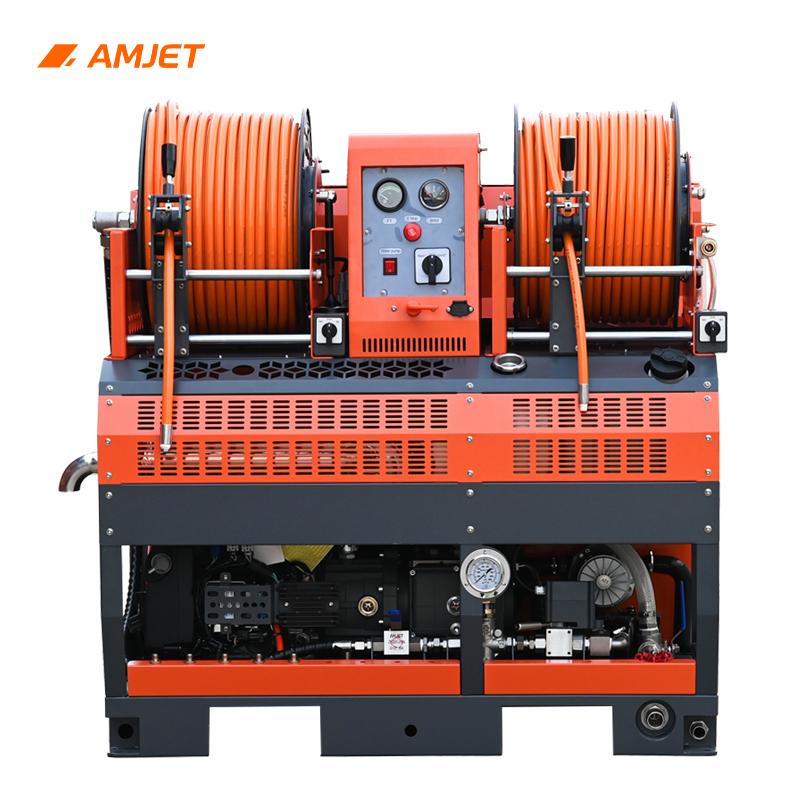
Few things derail a property's plumbing faster than a stubborn sewer blockage. The difference between a quick fix and a costly excavation often comes down to the equipment in your truck. That's why we've rounded up ten manufacturers known for powerful, dependable drain cleaning technology—companies that combine hydraulic force with real-world durability. Among them, AMJET stands out for its high-pressure jetting systems engineered to clear even the toughest pipe obstructions without damaging infrastructure. Whether you're maintaining municipal lines or tackling residential backups, this list will help you match the right tool to the job—and avoid the downtime no crew can afford. Let's meet the brands setting the standard for sewer and drain performance.
The Real Difference Between Residential and Industrial Sewer Cleaning Rigs
Most people picture a sewer cleaning rig as a big truck with a hose and a tank, but that mental image collapses the moment you park a residential unit next to an industrial one. A residential rig often runs a smaller chassis, maybe a single-axle or a lighter tandem, with a water pump that hits around 2,000 to 3,000 PSI and a vacuum blower sized for 3- to 6-inch lines. It’s built for cul-de-sacs and backyard cleanouts where tight turns and low weight limits matter more than brute force.
Industrial rigs, on the other hand, are a different animal entirely. You’re looking at heavy tandem or tri-axle chassis, often with a combined jetting and vacuum system that can pull 4,000 PSI or more while moving 80 to 100 gallons per minute. The debris tank might hold 12 to 20 cubic yards, and the hose reel alone can weigh more than a whole residential trailer. These machines are designed for municipal mains, storm drains, and industrial plants where a clog isn’t a toilet paper wad but a collapsed pipe or a wall of grease and grit.
The real difference isn’t just size—it’s how the job changes. Residential crews can usually park at the curb, run a 100-foot hose through a side gate, and finish before lunch. Industrial work means traffic control, confined space permits, bypass pumping, and sometimes recycling the water on-site because you can’t just dump it down the nearest storm drain. That operational gap is why you rarely see one company successfully running both types of rigs without doubling their training and maintenance budget.
How Nozzle Geometry Changes the Outcome on Grease and Roots
A nozzle’s internal bore profile and exit orifice arrangement determine how water energy converts into cleaning force. On grease, a nozzle with a tight, forward-facing jet creates a concentrated stream that scours the pipe wall, while a fan pattern spreads the same flow over a wider area, losing punch but covering more surface. The angle of the rear jets also matters: steeper rear angles produce more pull down the line, dragging the hose deeper, but they can leave grease smeared if the forward spray is too weak.
Roots respond differently. A spinning or flailing nozzle with offset side orifices generates a chaotic, high-impact spray that can fray and slice thin root hairs, but it struggles with thick mats unless the nozzle body has a cutting edge or the jet angle is nearly perpendicular to the root mass. Straight multi-jet nozzles, especially those with a 15-degree forward cone, tend to push roots aside rather than cut them, so repeated passes only pack the mass tighter. Changing the orifice size without changing the angle alters velocity; smaller orifices raise exit speed but reduce flow, which can either slice more effectively or simply bounce off dense root structures.
For grease, a nozzle with a wider spray angle and higher flow rate emulsifies fat better because it delivers more water volume at lower velocity, giving the detergent or enzyme time to work. But combine that with a root blockage and the same wide fan will waste energy by dispersing before contact. That’s why many pros switch from a 15-degree forward jet to a 30-degree rear-angled nozzle when moving from a root obstruction to a grease-coated line. The geometry change isn’t just about angle; it’s about how the water front hits the deposit — blunt and broad for grease, sharp and oblique for roots.
Why Some Drum Machines Outlast Their Cables—and Others Don’t
A drum machine that survives a decade of gigs often owes its longevity to how little it relies on moving parts and how well its build tolerates the physical stress of transport. Units with solid metal enclosures, recessed knobs, and jacks anchored directly to the chassis rather than floating on the main PCB tend to shrug off the bumps and drops that wreck lesser gear. Meanwhile, machines with plastic end caps, ribbon cables connecting front-panel controls to the core board, or power supplies integrated into the main logic board frequently develop intermittent faults long before their audio cables wear out. The difference isn't always brand prestige—it's whether the designer treated the instrument as a road tool or a desk ornament.
Thermal behaviour plays an equally silent role. Drum machines crammed into tight spaces with poor ventilation or those that run hot due to inefficient power regulation slowly cook their electrolytic capacitors and solder joints. After a few years of heat cycling, you get the classic “works for ten minutes then the hi-hats vanish” failure—a cable might still be fine, but the machine is effectively dead on stage. Designs that spread heat across a larger board, use higher-rated capacitors, or simply run cooler by drawing less current tend to keep their timing stable and their outputs clean far longer than their spec sheets suggest.
Then there's the software and service angle. A drum machine with a simple, well-documented OS and replaceable socketed chips can be revived with a screwdriver and a $15 part twenty years later. One with a sealed flash chip, proprietary file format, and a dead manufacturer becomes a brick the moment its internal battery fails or its memory corrupts. The same goes for encoders versus potentiometers—endless rotary encoders with software-defined ranges feel modern but often skip or drift after heavy use, while old-school pots with metal shafts and sealed bodies can be cleaned or replaced in minutes. In the end, the cable outlasting the drum machine usually means someone chose convenience and flash over serviceability and thermal headroom.
Battery Drain Cleaners That Finally Match Corded Torque
For years, the promise of cordless drain cleaners was undercut by a simple reality: they spun fast but stalled under real resistance. You’d pull the trigger, hear the whir, and the moment the cable bit into a stubborn clog, the motor would bog down. It felt like using a toy when the job called for a tool. That gap has quietly closed, and the latest battery-powered models aren’t just catching up—they’re delivering the kind of low-end grunt you used to only get from a wall outlet.
The change comes down to smarter motor design and better battery management. New brushless motors paired with high-drain lithium cells can sustain peak torque for longer bursts without overheating or tripping protection circuits. In practice, that means you can lean into a tough blockage the same way you would with a corded unit, feeling the cable twist and push rather than simply spinning in place. The difference is most obvious on older pipes with years of grease and scale, where a weaker cordless tool would have you reaching for a manual snake out of frustration.
That said, not every battery drain cleaner earns the comparison. Look for models that advertise sustained torque ratings rather than just no-load RPM, and pay attention to how they handle stall conditions. A few premium options now include adjustable torque limits that mimic the feel of a corded drill’s clutch, letting you work through a clog without risking damage to thin-wall drain lines. If you’ve been holding off on going cordless because of past disappointments, it’s worth another look—the torque gap isn’t just narrow now, it’s practically gone.
What a Manufacturer’s Support Network Reveals About Equipment Longevity
A machine is only as reliable as the people standing behind it. When a manufacturer invests in a dense, well-trained support network—local technicians, readily available spare parts, and responsive engineering teams—it sends a clear signal about the expected service life of the equipment. Longevity isn’t just a spec on a datasheet; it’s a promise upheld by every service call answered promptly and every component shipped without delay. Manufacturers that scatter their support resources thin often leave operators stranded, forcing premature replacements and costly downtime.
Look closely at how a company structures its field service and parts distribution. A robust support ecosystem typically mirrors the equipment’s design philosophy: modular components that can be swapped quickly, diagnostic tools shared with local partners, and training programs that turn third-party technicians into brand specialists. This isn’t accidental. It means the manufacturer expects the machine to run long enough to justify that infrastructure. If they’re willing to stock parts for a decade or more, they’re betting on durability.
Ultimately, the support network is a quiet confession of engineering confidence. A sparse or outsourced service model often hints at planned obsolescence or uncertain build quality. Conversely, a dense network of factory-certified experts who know the equipment’s quirks by heart is proof that the manufacturer plans for years of hard use. Savvy buyers treat support maps and response-time guarantees not as afterthoughts, but as direct indicators of how long that equipment will truly last in the field.
Building a Preventative Maintenance Routine That Keeps Municipal Fleets Running
Municipal fleets face a unique set of demands: daily routes across rough pavement, frequent idling, and the constant pressure to respond to emergencies. Without a structured upkeep plan, small issues quickly become roadside breakdowns that disrupt public services. The first step is to move beyond reactive fixes and build a routine rooted in the actual operating data of each vehicle—engine hours, fuel consumption, and past repair histories. This shift helps mechanics spot patterns before they become costly failures.
A practical routine works in layers. Daily walk-around checks catch visible problems like worn tires, leaking fluids, or malfunctioning lights. Weekly tasks might include battery load tests and brake inspections, while monthly intervals cover deeper items such as transmission fluid analysis and suspension component wear. The key is to tailor these layers to the specific duty cycles of your fleet—a refuse truck idling at low speeds needs different attention than a highway patrol sedan. Assigning clear ownership for each check, whether to drivers or shop techs, keeps accountability high.
Finally, track everything in one accessible place. A simple spreadsheet works, but fleet management software makes it easier to schedule work orders, set reminders, and compare repair costs over time. Review the data quarterly to adjust intervals—if a particular bus model shows repeated alternator failures at 45,000 miles, move that inspection earlier. The goal is not just preventing breakdowns, but extending the useful life of expensive public assets while keeping response times reliable. A well-run preventative routine turns maintenance from a budget drain into a predictable, controlled operation.
FAQ
Focus on water pressure range, hose length, and whether the unit handles grease, roots, and scale without switching attachments constantly. Commercial jobs usually need at least 3000 PSI with adjustable flow, and a frame that survives being hauled in and out of trucks daily.
Some prioritize high-pressure water jetting with precise nozzle control, while others lean into mechanical cable machines with stronger torque for tough blockages. The best ones tend to offer both styles plus interchangeable parts, so you're not locked into one method on stubborn jobs.
Yes, if you pick models with brushless motors or Honda-grade engines and stainless steel hose reels. Portability doesn't have to mean flimsy; several top brands build compact frames that hold up to daily transport and cold-weather starts.
Flush the pump with clean water after every job, inspect O-rings and nozzles weekly, and never let water sit in the system overnight. Also check hose couplings for wear before they fail mid-job; that's a common avoidable breakdown.
Water jetters with root-cutting nozzles can slice through fine roots and flush them out, but thick root masses often need a cable machine with a heavy-duty cutter. Leading manufacturers frequently sell both, and contractors often carry one of each for layered blockages.
It depends on the size and power range. Mid-sized trailer or van-mounted jetters with 3000-4000 PSI and 4-10 GPM can switch between 2-inch residential lines and 8-inch municipal laterals, but mainline sewer work usually requires larger engine-driven units above 10 GPM.
Look for thermal relief valves, pressure gauges with clear markings, foot-operated switches, and hose burst protection sleeves. Some brands include automatic shutoffs when the hose kinks or the reel jams, which prevents a lot of hand and eye injuries.
Big manufacturers often offer wider service networks and quicker parts availability, while niche brands may excel in a specific feature like ultra-compact frames or high-flow jetting. Check local dealer support and whether they stock common wear parts before committing.
Conclusion
Choosing among the top sewer pipe cleaning equipment manufacturers means looking past horsepower ratings and tank sizes. The real difference between residential and industrial rigs isn't just scale—it's how the machine handles sustained pressure, debris volume, and operator fatigue. On the nozzle side, geometry dictates whether you slice through grease or tear out roots; a narrow jet stream can clear a kitchen line fast, while a wider pattern with rear-facing thrust is needed for collapsed laterals. Some drum machines outlast their cables simply because the manufacturer matched drum speed and torque to the specific cable lay, preventing internal kinking that no amount of lubrication will fix.
Battery-powered drain cleaners have quietly caught up to corded torque, but only from brands that invested in high-discharge cells and smart thermal management—not just bigger motors. A manufacturer’s support network tells you more about longevity than any spec sheet: if replacement seals, jets, and drums are stocked regionally and their techs actually answer calls, your fleet stays on the road. For municipal crews, building a preventative maintenance routine around nozzle wear, cable memory, and battery health often matters more than the initial purchase price. The best manufacturers design for that reality, making service intervals predictable and parts swaps quick, so downtime doesn’t eat into the next emergency call.
Contact Us
Contact Person: Mike
Email: [email protected]
Tel/WhatsApp: +86 19545555505
Website: https://www.amjeting.com/