

Top Heterocyclic Intermediates: Essential Building Blocks for Modern Drug Discovery
2026-07-27
In the quest to develop life-saving drugs, heterocyclic intermediates quietly orchestrate the magic behind countless breakthroughs. These ringed structures are far more than chemical curiosities—they form the very backbone of modern pharmaceuticals, from antivirals to cancer therapies. Yet, their critical role often goes unnoticed outside the lab. At DSL Chemicals, we understand that choosing the right building block can make or break a drug discovery program. In this post, we’ll explore the most indispensable heterocyclic intermediates reshaping the field today and why they deserve a spotlight.
The Undeniable Role of Heterocycles in Shaping Blockbuster Drugs
There’s something quietly elegant about how heterocycles work in modern medicine. They’re not just chemical curiosities—they form the backbone of compounds that have reshaped entire therapeutic landscapes. Think of the blockbuster drugs you’ve likely encountered: the antiviral oseltamivir, the antipsychotic olanzapine, or the cholesterol-lowering atorvastatin. Each of these relies on a heterocyclic core to bind precisely to biological targets, often with a selectivity and potency that would be unattainable with purely carbocyclic structures. Drug designers don’t just sprinkle them in for decoration; they’re strategic tools, manipulating everything from solubility to metabolic stability. When you look at the top-selling pharmaceuticals year after year, you’re looking at a testament to heterocyclic chemistry.
The real genius lies in the sheer diversity of these rings. From five-membered azoles to six-membered pyridines and beyond, each heterocycle brings a distinct profile of electronic properties and shape. This variety means medicinal chemists can fine-tune a molecule’s behavior like dialing a safe—replacing an oxygen with a nitrogen, shifting a substitution pattern, or fusing rings to lock a conformation. Consider how sildenafil’s pyrazolo[4,3-d]pyrimidine core allows it to mimic cyclic guanosine monophosphate, or how the thiazolidinedione ring in pioglitazone activates a nuclear receptor. It’s not hyperbole to say that without the ability to incorporate nitrogen, oxygen, and sulfur into cyclic scaffolds, the pharmaceutical industry would be stripped of its most reliable molecular architects.
It’s also worth noting how heterocycles have accelerated the drug discovery process itself. Combinatorial chemistry and fragment-based screening lean heavily on libraries rich in heterocyclic building blocks because they offer privileged motifs that nature and synthetic chemists have repeatedly validated. A pyrimidine or piperidine isn’t just a random choice—it’s a proven starting point for hits against kinases or CNS targets. The result is a feedback loop: successful drugs inspire more research into novel ring systems, which in turn spawn new candidates. As resistance emerges and new diseases demand attention, the quiet hum of heterocyclic innovation keeps running in the background, ensuring that tomorrow’s blockbusters will still bear the signature of these versatile rings.
Why Pyrrolidines, Piperidines, and Beyond Remain Chemists' Favorite Scaffolds
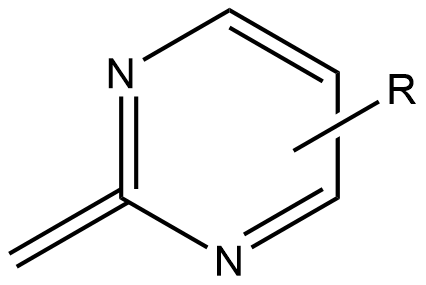
Pyrrolidines and piperidines occupy a unique niche in drug discovery, not merely for their prevalence but for the subtle balance they strike between rigidity and flexibility. These saturated nitrogen heterocycles offer a conformational profile that can mimic natural ligands or lock bioactive molecules into their optimal binding geometry without excessive strain. Their ring sizes create just enough three-dimensional character to explore chemical space efficiently, steering clear of the flatness that plagues many aromatic scaffolds yet avoiding the synthetic complexity of larger, more elaborate ring systems.
What truly sets these scaffolds apart is how effortlessly they accommodate functionalization. Chemists can modulate pKa, solubility, and metabolic stability through simple substitution patterns on the ring or at the nitrogen, fine-tuning drug-like properties without overhauling the core structure. The advent of robust, enantioselective methods for their synthesis has only deepened this advantage, making chiral pyrrolidines and piperidines accessible on scales that once seemed impractical. This synthetic accessibility, paired with the predictable pharmacokinetic behavior conferred by the saturated ring, keeps them in the spotlight for programs targeting everything from central nervous system disorders to anti-infectives.
Beyond the classic five- and six-membered rings, the broader family of saturated azacycles continues to gain traction because it offers a strategic middle ground. As medicinal chemistry pushes toward more complex, sp³-rich frameworks to escape the liabilities of planar molecules, these scaffolds serve as a launchpad for innovation—bridged variants, spirocyclic analogues, and fused systems all borrow from the favorable properties of pyrrolidines and piperidines while adding new vectors for exploration. Their enduring appeal lies not in a single attribute but in a rare combination: synthetic tractability, biological relevance, and an almost chameleon-like ability to adapt to the demands of modern drug design.
Smart Synthesis: Unlocking Heterocyclic Complexity with Modern Tools
The synthesis of heterocyclic compounds has long been a cornerstone of medicinal chemistry and materials science, yet their structural diversity often poses significant challenges. Traditional methods frequently rely on linear sequences with limited functional group tolerance and harsh conditions. Modern tools have begun to dismantle these barriers by enabling more direct, selective, and sustainable approaches to complex ring systems. From late-stage functionalization to multicomponent cascades, the strategic application of contemporary synthetic methodologies is reshaping how we access pharmaceutically relevant scaffolds. This shift not only accelerates discovery but also opens up previously inaccessible chemical space for exploration.
Catalytic strategies have emerged as a driving force in this transformation. Transition-metal catalysis, photoredox chemistry, and organocatalysis now allow for the construction of intricate heterocycles from simple precursors under mild conditions. These methods often display remarkable regioselectivity and stereocontrol, reducing the need for protecting groups and tedious purification steps. Moreover, the integration of high-throughput experimentation and computational modeling is refining reaction development, turning serendipity into a more predictable design process. By embracing these tools, chemists can construct polycyclic frameworks with multiple stereocenters in a single operation, dramatically shortening synthetic routes and minimizing waste.
The impact extends beyond efficiency. Innovations such as electrochemical synthesis and biocatalysis are expanding the toolkit with greener alternatives that operate under ambient conditions. Meanwhile, the rise of automated synthesis platforms is enabling the rapid assembly of heterocyclic libraries, fueling drug discovery pipelines with diverse, lead-like molecules. As these modern techniques become more accessible, the creative assembly of heterocyclic complexity is no longer a bottleneck but a fertile domain for innovation. The ongoing fusion of mechanistic insight with synthetic creativity promises to unlock even greater structural complexity, delivering molecules that were once deemed impractical to prepare.
From Bench to Bedside: Real-World Impact of Key Intermediates
The journey of a new drug often begins with a single molecule synthesized in a research lab, but its path to becoming a widely available treatment hinges on the availability of reliable key intermediates. These compounds, while rarely mentioned in headlines, serve as the essential building blocks that bridge early discovery and scalable production. For instance, during the rapid development of antiviral therapies, certain chiral intermediates enabled chemists to streamline complex synthetic routes, cutting reaction steps by nearly half. This not only accelerated the timeline from initial concept to clinical trials but also reduced the overall cost burden on healthcare systems. When production bottlenecks were resolved through innovative intermediate design, patients gained faster access to life-saving medications that might otherwise have languished in the pipeline.
Beyond the chemistry, the real-world impact of these intermediates is often measured in supply chain resilience and equitable distribution. Consider the case of a breakthrough cancer drug whose active pharmaceutical ingredient relied on a temperature-sensitive intermediate prone to degradation during transport. By re-engineering the intermediate’s formulation into a more stable salt form, manufacturers eliminated the need for costly cold-chain logistics, allowing the therapy to reach clinics in regions with limited infrastructure. Such practical adjustments, rooted in deep material understanding, transform a laboratory triumph into a tangible public health victory. From reducing injection frequency through prodrug design to enabling tablet formulations that bypass complex intravenous administration, the quiet evolution of intermediates continues to reshape patient experiences far from the spotlight of initial discovery.
Beyond the Usual Suspects: Emerging Heterocyclic Gems in Pharma Pipelines
When scanning the pharmaceutical landscape, certain heterocyclic scaffolds—pyridines, pyrimidines, indoles—dominate, almost to the point of ubiquity. Yet buried deeper in development pipelines are a collection of less celebrated ring systems that are quietly reshaping medicinal chemistry. These emerging heterocycles, often overlooked in mainstream reviews, offer distinct electronic profiles, improved metabolic stability, and novel vectors for target engagement. From drug candidates tackling kinase inhibition to agents modulating protein–protein interactions, these structures are carving out niches where traditional motifs fall short.
Take, for instance, the resurgence of diazepines and oxadiazoles. Once dismissed as too metabolically vulnerable, modern substitution strategies have transformed them into robust pharmacophores. A recent crop of clinical candidates exploits their precisely tuned conformational preferences to achieve selectivity that flat aromatic systems cannot. Similarly, spiro-fused and bridged heterocycles are gaining traction, introducing three-dimensional complexity that enhances binding site complementarity and reduces off-target promiscuity. These molecules often originate from diversity-oriented synthesis or fragment-based campaigns, where their underappreciated attributes shine.
Beyond mere structural novelty, these 'gems' are enabling therapeutic breakthroughs in areas like epigenetics and targeted protein degradation. Bifunctional degraders, for example, rely on intricate heterocyclic linkers to optimize ternary complex formation. Meanwhile, macrocyclic heterocycles—once considered synthetically daunting—are now accessible through advances in ring-closing methodology, offering cell permeability and oral bioavailability that defy classical rules. The true value of these emerging scaffolds lies not in replacing the usual suspects, but in expanding the druggable space and addressing targets long deemed undruggable.
Future Foundations: How Heterocyclic Diversity Powers Next-Gen Therapeutics
Heterocyclic scaffolds have long been the silent workhorses of medicinal chemistry, providing the rigid yet adaptable cores that drive target selectivity. Today, a renaissance in synthetic methodology is reshaping what's possible, moving beyond the traditional clique of six-membered rings into richly functionalized polycyclic systems. This expansion isn't just academic—it's directly translating into clinical assets that tackle previously undruggable targets.
The true leap forward lies in spatial diversity. By controlling the three-dimensional orientation of substituents around a heterocyclic nucleus, researchers can now precisely mimic the conformational subtleties of natural ligands. This goes far beyond simple “flat” aromatic diversity; it embraces sp³-rich architectures that break out of the planar rut, improving solubility and minimizing off-target binding. The impact is felt most acutely in kinase inhibition and targeted protein degradation, where subtle changes in exit vector geometry can transform a weak binder into a picomolar glue.
Perhaps most compelling is the integration of diversity-oriented synthesis with late-stage functionalization. Chemists are no longer forced to rebuild a core just to install a methyl or fluorine at a hindered position—new photocatalytic and electrochemical methods allow direct C–H editing on advanced intermediates. This convergence of accessible chemical space and biological insight is accelerating lead optimization in ways that were unimaginable a decade ago, turning heterocyclic diversity into the cornerstone of therapeutic innovation.
FAQ
Heterocyclic intermediates are ring-containing compounds that incorporate at least one heteroatom like nitrogen, oxygen, or sulfur. In the drug discovery pipeline, they act as versatile scaffolds that can be decorated with various functional groups to modulate biological activity. Their inherent electronic and conformational characteristics allow researchers to fine-tune interactions with target proteins, influence metabolic stability, and control physicochemical properties essential for oral bioavailability. Simply put, they provide the structural foundation upon which many successful drugs are built.
Several ring systems stand out for their ubiquity and utility. Pyridine and piperidine derivatives are cornerstone building blocks for numerous CNS and oncology drugs. Pyrimidine and purine intermediates are vital for antiviral and kinase-targeted therapies. Other heavy hitters include indole, benzimidazole, and quinoline scaffolds, which appear in everything from anti-inflammatories to antimalarials. The choice often depends on the specific biological target, but these frameworks consistently prove their worth.
The ring system’s shape, electron distribution, and substituents govern how a molecule binds to its intended target and avoids off-target effects. A well-chosen heterocycle can enhance binding affinity through hydrogen bonds or π-stacking, improve solubility to ensure adequate absorption, or reduce metabolic vulnerability by blocking sites of oxidative attack. Conversely, a poor match might lead to rapid clearance or toxicity. So, the intermediate isn't just a placeholder; it actively shapes the compound’s pharmacological behavior.
Certainly. Atorvastatin (Lipitor) relies on a pyrrole ring; sildenafil (Viagra) features a pyrazolopyrimidine core; imatinib (Gleevec) is built around a pyrimidine scaffold; and sofosbuvir (Sovaldi) contains a pyrimidine-dione unit. Even classic drugs like diazepam (Valium) are centered on a benzodiazepine heterocycle. These examples highlight how heterocyclic intermediates are not just academic curiosities but the engines behind multi-billion-dollar therapies.
Modern synthesis blends classic condensation reactions with cutting-edge cross-coupling methodologies. For instance, Hantzsch and Biginelli reactions rapidly assemble pyridines and pyrimidines, while Buchwald–Hartwig aminations and Suzuki–Miyaura couplings allow precise functionalization. Flow chemistry and microwave-assisted techniques now accelerate ring formation. The trend is toward modular, divergent strategies that enable quick access to diverse analogues from a single intermediate, streamlining the hit-to-lead process.
Heteroatoms introduce hydrogen-bond donors and acceptors, which are critical for molecular recognition by proteins. They also provide synthetic handles for further derivatization and can fine-tune electron density to affect metabolic stability. A purely hydrocarbon core often lacks the necessary three-dimensional complexity and polarity, leading to poor solubility and off-target binding. Nature itself uses heterocycles like porphyrins and nucleobases, reinforcing their privileged status.
Scaling up can be tricky due to highly exothermic reactions, hazardous reagents (like azides or cyanides), and purification difficulties if regioisomers form. Solubility issues and crystallization behavior may change between milligram and kilogram scales. Supply chain reliability for starting materials is another concern, especially for strained or exotic rings. Process chemists often need to redesign routes to avoid chromatographic purifications and ensure consistent quality under cGMP conditions.
Conclusion
Heterocyclic scaffolds form the chemical backbone of modern pharmaceuticals, appearing in everything from cardiovascular agents to cutting-edge cancer therapies. Their structural versatility and ability to engage biological targets with precision have cemented pyrrolidines, piperidines, and their analogues as indispensable tools in medicinal chemistry. These saturated nitrogen-containing rings, along with aromatic cousins like pyridines and pyrimidines, offer a delicate balance of rigidity and conformational flexibility that optimizes drug-like properties. The blockbuster success stories of atorvastatin, sitagliptin, and ibrutinib all pivot on heterocyclic cores, demonstrating how subtle changes in ring size or substitution can radically transform pharmacological profiles. This enduring relevance drives continuous innovation in synthetic methodology, pushing chemists to access these motifs with greater efficiency and selectivity than ever before.
Modern synthesis strategies, from photoredox catalysis to biocatalytic cascades, now unlock heterocyclic complexity that was once prohibitively challenging, accelerating the journey from bench to bedside. The tangible impact is visible in the streamlined production of key intermediates that feed into clinical pipelines, cutting development timelines and reducing waste. Meanwhile, the pharmaceutical landscape is being reshaped by emerging heterocyclic gems—spirocyclic oxindoles, bicyclic azetidines, and boron-dipyrromethene conjugates—that offer uncharted vectors for modulating protein-protein interactions and difficult-to-drug targets. As drug discovery ventures into new modalities like protein degradation and RNA targeting, heterocyclic diversity becomes the engine of next-generation therapeutics. The future will reward those who master the art of designing and synthesizing these foundational ring systems, ensuring that the chemistry of today's intermediates becomes tomorrow's standard of care.
Contact Us
Contact Person: Wei Zhang
Email: [email protected]
Tel/WhatsApp: 862163529955
Website: https://www.dslchem.com