

Top Pallet Jack Options to Elevate Your Material Handling Efficiency
2026-08-02
Looking to streamline your warehouse operations? The right pallet jack can make all the difference. From improved maneuverability to enhanced durability, today's top models are redefining material handling efficiency. Whether you're upgrading your fleet or making a first-time purchase, options from trusted brands like HANGCHA offer the reliability and performance that modern logistics demand. Let's explore the best picks that can truly transform your workflow.
Rethinking Manual Pallet Jacks: Are They Holding Back Your Workflow?
You might not think much about that trusty manual pallet jack sitting in the corner of your warehouse—it’s been there for years, after all. But when you start counting the hours your team spends yanking, pushing, and maneuvering heavy loads across the floor, the picture changes. Those minutes add up, and they’re not just a workout for your staff; they're a silent drain on your operation’s rhythm.
Beyond the obvious physical strain, manual jacks introduce a kind of creeping inefficiency. One person can only move so many pallets per shift, and as order volumes climb, you either push your team harder or let orders stack up. Neither is a sustainable choice. There’s also the matter of precision: manual handling means more chance for bumped racking, scratched product, and the occasional toppled load—small mistakes that ripple into bigger delays.
It’s not about blaming the equipment; manual jacks have their place. But if your workflow is starting to feel like a workout routine with a side of damage control, it might be time to question whether that old pallet jack is actually serving your goals—or quietly working against them.
Electric Pallet Jacks That Quietly Revolutionize Warehouse Speed
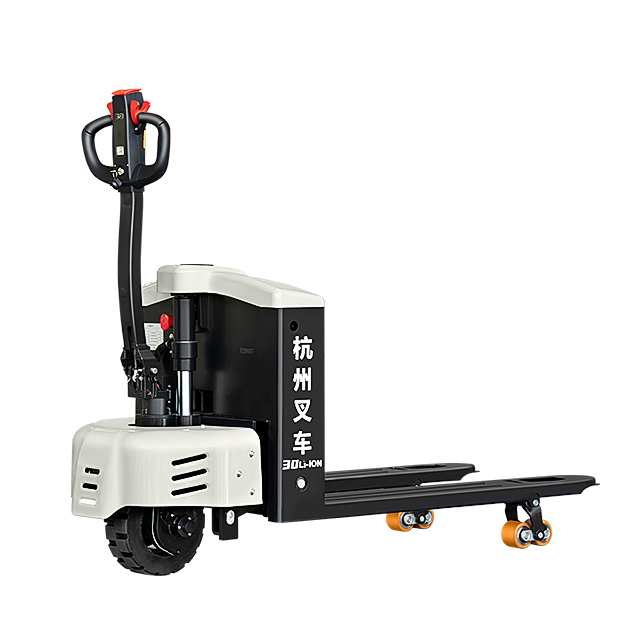
The hum of traditional machinery is fading. Electric pallet jacks now glide through aisles with a near-silent precision that transforms the pace of daily operations. Without the roar of engines or the clatter of metal, workers move faster and with fewer distractions, slashing the time it takes to shift loads from dock to shelf.
Why All-Terrain Pallet Jacks Save Hours in Outdoor Lots
Moving heavy loads across gravel, mud, or uneven pavement usually means waiting for a forklift or struggling with standard warehouse jacks that bog down the moment they leave smooth concrete. All-terrain pallet jacks are built with oversized, treaded wheels and reinforced frames that glide over ruts and soft ground without constant repositioning. Instead of multiple trips or manual hauling, one operator can transport a full pallet directly from a delivery truck to a distant storage area in a single pass, cutting the time per load by more than half.
The real time savings come from eliminating bottlenecks that plague outdoor logistics. Without an all-terrain jack, workers often stage materials at the edge of a lot and then transfer them piece by piece onto smaller carts that can handle the ground—or they wait for a forklift that's tied up elsewhere. With a rugged pallet jack always available, there's no double handling or idle waiting. Crews keep moving at a steady pace, even when the weather turns the lot into a muddy mess, because these jacks don't sink or lose traction.
Durability also plays a huge role in long-term efficiency. Standard pallet jacks exposed to rough terrain suffer constant wheel damage, bearing failures, and bent frames—leading to downtime and repair delays that eat into productivity. All-terrain models are designed with sealed bearings, corrosion-resistant materials, and thicker steel, so they stay in service day after day without breaking down. That reliability means fewer interruptions and no surprise setbacks, making the total hours saved far greater than what a stopwatch might show on a single run.
Compact Designs That Navigate Narrow Aisles Without Compromise
Squeezing through tight spaces used to mean sacrificing capacity or stability, but modern compact designs have flipped that logic. By rethinking chassis geometry and mast profiles, engineers have created machines that slip through narrow aisles with surprising ease while still handling full-size loads. The secret often lies in the articulation points and reduced turning radii that let operators pivot sharply around corners without needing extra clearance. It’s not just about being small—it’s about moving smart.
What really sets these designs apart is how they maintain operator comfort and visibility when the footprint shrinks. You’ll find clever cabin layouts that push sightlines forward and upward, eliminating the blind spots that can make tight maneuvers nerve-wracking. Some models integrate side-stance seating or transparent roof panels, so drivers always know where the mast ends and the rack begins. That connection between control and awareness makes navigating congested warehouses feel more natural, not claustrophobic.
Underneath the sleek exteriors, the real innovation is in load-handling stability. Advanced weight distribution and dynamic sway technologies keep the center of gravity low and predictable, even when lifting high on uneven floors. These aren’t stripped-down units that compromise for the sake of size; they’re engineered to deliver full-scale performance in places where every inch counts. The result is a fleet that flows through workflow pinch points without slowing down or cutting corners on safety.
Long-Lasting Battery Tech: A Silent Shift in Shift Work
Extended battery life is quietly rewriting the rhythms of round-the-clock operations. Without fanfare, the persistent anxiety of mid-shift power drain has faded for many industries. Devices once tethered to charging cradles now endure multiple shifts on a single charge, dissolving that constant scramble for outlets. It's not just convenience—it's a fundamental shift in how workflows breathe, especially in roles where attention can't afford to be fractured by low-battery alerts.
What's often overlooked is how this reliability recalibrates trust in equipment. When scanners, tablets, and communication tools run reliably from dusk till dawn, the mental load lightens. Workers no longer carry that subliminal tally of remaining battery percentage alongside their actual tasks. This subtle change reduces micro-interruptions that can erode concentration and safety margins during night hours. The technology itself may be invisible to end users, but its effect on sustained performance is unmistakable.
A less obvious ripple touches job satisfaction and retention. In shift-heavy sectors, eliminating the low-battery scramble removes a small but persistent friction point. When tools simply work for the duration of a shift, it reinforces a sense of professionalism and respect for the worker's time. It swaps frantic midday charging drills for quiet consistency, allowing people to focus on what they do best without the background hum of battery anxiety. That's the real transformative power—not the extended hours alone, but the mental space it reclaims.
Unusual Features That Reduce Operator Fatigue Over a 10-Hour Day
Most ergonomic discussions stop at adjustable chairs and monitor height. But in machinery designed for marathon shifts, some of the most impactful fatigue reducers are almost invisible. Take the subtle haptic feedback built into control levers—they pulse gently when an operation is complete, so the operator doesn't have to constantly glance at a screen. It's a small nudge that keeps attention from fraying.
Another clever inclusion is the active noise cancellation embedded directly into the headrest. Instead of just muffling ambient sound, it creates a quiet zone around the ears, allowing the operator to perceive only essential machine sounds. This prevents the mental drain that comes from filtering out a constant roar, making the 10th hour feel less like an assault on the senses.
Then there's the lighting architecture that mimics the progression of natural daylight. Over the course of a shift, the cabin's ambient light temperature shifts subtly from cool to warm, reinforcing the body's circadian rhythm even underground or in windowless bays. It's an unconventional strategy, but one that measurably eases the dip in alertness that typically hits late in the day.
FAQ
Look for durable construction, smooth-rolling polyurethane wheels that won’t mark floors, and an ergonomic handle that reduces operator fatigue during long shifts. Quick-lift pumps and precision controls also keep workflows humming without constant adjustments.
It boils down to how often you move heavy loads and the distance they travel. Manual jacks excel in tight budgets and short hauls, while electric models shine when you’re shuttling 2,000+ pounds across large facilities every hour. Factor in battery runtime and recharge cycles if you go electric.
A fast-lift hydraulic system cuts seconds per move, adding up over a shift. Tandem rollers ease entry into pallets, and maintenance-free sealed bearings eliminate drag. For powered units, variable speed controls and regenerative braking keep acceleration smooth yet nimble.
Yes, compact models with shorter fork lengths and tight turning radiuses fit where standard jacks can’t. Some low-profile designs slip under low-clearance pallets, and side-seated electric jacks offer excellent visibility for confined spaces without sacrificing capacity.
A standard 5,500-pound rating covers most warehouse pallets, but if you consistently handle double-stacked or oversized loads, stepping up to 8,000 pounds gives you a safety buffer. Always match capacity to your heaviest routine load — not just the average — to avoid premature wear.
Manual jacks usually just need occasional lubrication and wheel checks, making them cheap to keep running. Electric versions involve battery replacements, motor servicing, and more complex electronics, so annual expenses can run higher. However, the productivity gain often offsets the upkeep.
Conclusion
It’s easy to overlook how much a manual pallet jack can quietly throttle your daily throughput. The constant push-pull effort doesn’t just wear down operators—it dictates the pace of every load, every shift. Once you start looking at electric alternatives, the contrast is immediate and hard to ignore. Instead of laboring through repetitive strain, a walkie or rider model lets one person move twice the product in the same time window, with noticeably less fatigue. Warehouses that have made the switch often find that order picking speeds jump, and end-of-shift energy levels stay more consistent. Outside, all-terrain units solve a different but equally costly problem: shifting heavy pallets across gravel, cracked asphalt, or uneven ground without getting stuck or relying on a forklift. Where standard wheels sink or spin, their larger, treaded tires and reinforced frames power through, cutting those outdoor transfer tasks from forty minutes of wrestling to a ten-minute breeze.
When floor space is at a premium, compact designs prove that tighter turn radiuses and narrower chassis don’t have to mean lower capacity. These machines slip into aisles that would stop a standard jack, allowing you to store more SKUs without expanding the building. Meanwhile, battery technology has shifted from being a weak link to a genuine advantage. Lithium-ion packs hold a full charge across the shift and opportunity-charge in minutes, so there’s no midday lull while waiting for a battery swap. That alone redefines how you schedule breaks and stagger workflows. Add in the less-talked-about ergonomic touches—automated lift height stops, cushioned grips placed at intuitive angles, thumb controls that require a feather-light press—and you start to see why operators on 10-hour days feel the difference in their backs, wrists, and overall alertness. Tiny design decisions compound into real gains, turning material handling from a bottleneck into a silent driver of warehouse efficiency.
Contact Us
Contact Person: Liuxue
Email: [email protected]
Tel/WhatsApp: +86-19084200370
Website: https://www.hf-ec.com/