

Voltage Changer Factory Insights: Key Elements of Efficient Power Conversion Solutions
2026-08-08
In the dynamic landscape of modern electronics, efficient power conversion is the silent cornerstone of every reliable system. Behind every seamless voltage shift lies a blend of precision engineering and deep factory expertise—factors often overlooked until a failure occurs. At Chang Song, we've spent decades refining the key elements that separate robust solutions from mere components. This post pulls back the curtain on those critical insights, revealing what truly drives performance in voltage changer manufacturing.
Inside the Design Philosophy of Modern Voltage Converters
Modern voltage converters are no longer just functional blocks; they embody a philosophy where efficiency coexists with adaptability. Designers treat power as a narrative that flows through every component, shaping the converter into a responsive, intelligent entity rather than a static circuit. This approach prioritizes seamless integration, anticipating real-world use cases where load conditions shift unpredictably, voltage levels must be precisely modulated, and thermal performance cannot be an afterthought. The result is a design ethos where the converter becomes a silent partner, adjusting its behavior in real time to match the rhythm of the system it powers.
The component selection itself tells a story of deliberate minimalism—every inductor, capacitor, and switching element earns its place through a careful balance of performance, footprint, and longevity. Rather than chasing abstract specifications, designers focus on holistic behavior: how the converter reacts at light loads, how it maintains stability across input variations, and how gracefully it handles transient demands. This philosophy extends beyond the board, embracing packaging that dissipates heat in innovative ways, and control algorithms that learn from operating conditions. It’s a departure from the era of brute-force efficiency, moving toward converters that feel almost intuitive in their operation.
Material Selection and Its Impact on Conversion Efficiency
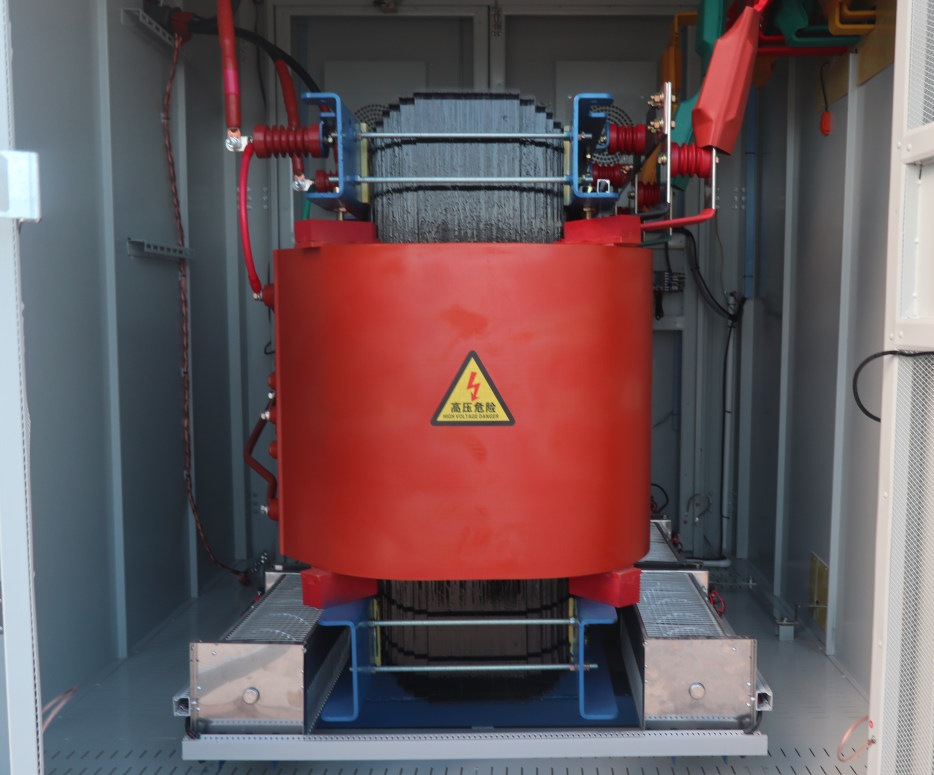
The choice of materials sits at the very heart of any energy conversion device, dictating how effectively photons or other energy carriers are transformed into usable electrical power. For instance, in photovoltaic cells, the bandgap of the semiconductor determines which portion of the solar spectrum can be absorbed. If the bandgap is too wide, low-energy photons pass right through; too narrow, and much of the energy from high-energy photons is lost as heat. This fundamental trade-off means that even a theoretically perfect single-junction cell has a maximum efficiency capped by the Shockley-Queisser limit. In practice, imperfections in the crystal lattice, impurities, and interface defects further eat into the achievable performance, making material purity and structural perfection just as critical as the bandgap itself.
Beyond the intrinsic properties of the active layer, auxiliary materials also play a pivotal role. Transparent conductive oxides, back contacts, and encapsulants can introduce resistive losses, optical shading, or degradation pathways that chip away at the initial conversion promise. The push towards perovskite solar cells, for example, is fueled not just by their tunable bandgap and high absorption coefficient, but also by the possibility of low-temperature solution processing which can preserve the integrity of underlying layers. Yet, the very same material flexibility brings challenges like sensitivity to moisture and thermal instability, highlighting that material selection is a balancing act between theoretical conversion potential and long-term, real-world performance under operating conditions.
Overcoming Heat Dissipation Challenges in Compact Designs
Shrinking footprints bring thermal management into sharp focus. When components huddle close, heat doesn't simply vanish; it lingers, raising temperatures and threatening reliability. Traditional heatsinks and fans often lack the clearance or airflow to function effectively. Designers turn to thermally conductive materials, integrating them into housings or circuit boards to draw heat away from hot spots. Graphite sheets, heat pipes, and even liquid cooling loops find their way into cramped enclosures, each solution tailored to the specific geometry and power profile of the device.
Beyond passive transfer, active strategies adapt in clever ways. Miniature blowers with custom impellers push air through serpentine channels, while vent placement is optimized through simulation rather than guesswork. Component layout becomes a deliberate act—high-power processors sit near edges where heat escapes, and sensitive parts are shielded. Sometimes the chassis itself doubles as a heatsink, milled to expose fins or coated with radiative paints. These approaches demand early collaboration between electrical, mechanical, and thermal teams, ensuring that every watt dissipated is accounted for and no millimeter goes wasted.
Custom Power Solutions: Tailoring Voltage to Application Needs
Every electronic system has its own voltage demands, and off-the-shelf power supplies rarely hit the mark. We work closely with engineers to map out exact load characteristics, transient behaviors, and environmental factors that standard units overlook. This isn't about picking a number from a datasheet—it's about understanding what keeps your sensors stable, your motors efficient, and your data links clear. By starting with your actual operating conditions, we shape a supply that fits like a custom part, not an afterthought.
Voltage tailoring goes beyond simple regulation. In sensitive laboratory gear, a few millivolts of ripple can distort measurements; in outdoor LED arrays, wide-input resilience cuts maintenance. We embed intelligence that adapts to fluctuating sources, whether it's a vehicle's alternator or a solar panel under partial shade. Our designs often merge multiple output rails within the same compact footprint, each trimmed to a different voltage level, all while keeping thermal stress low and reliability high. The result is a supply that feels transparent—delivering exactly what's needed without generating heat or noise that could undermine the product's lifespan.
Collaboration during prototyping ensures the final unit isn't over-engineered or underperforming. We test against your specific load steps, inrush currents, and brownout scenarios, refining every parameter until the power curve is predictable and safe. This approach cuts down on field returns and support calls, because the voltage is dialed in from the start. Ultimately, it's about freeing you to focus on your system's core innovation, confident that the power beneath it is stable, efficient, and purpose-built.
From Prototype to Production: Ensuring Consistency and Reliability
Transitioning a prototype into a full-scale production system is rarely a linear path. The initial proof-of-concept often thrives in a controlled environment, where variables are minimized and edge cases politely ignored. In the real world, however, the same system must handle unpredictable inputs, fluctuating loads, and the occasional hardware glitch without breaking a sweat. The gap between a working demo and a robust product is filled with meticulous refinements—rethinking error handling, stress-testing under peak conditions, and building safeguards that keep one failure from cascading into a total outage. It's the difference between a craft project and a factory-built machine, where every joint is reinforced and every process is documented.
Consistency becomes the quiet backbone of reliability. When a system behaves identically across development, staging, and production environments, debugging shifts from guesswork to a precise science. Achieving this demands more than just matching software versions; it requires rigorous configuration management, infrastructure-as-code practices, and automated pipelines that rebuild environments from scratch on every commit. Subtle discrepancies—a slightly different library version, a misaligned timezone setting, or a forgotten environment variable—can turn a seamless rollout into a frantic rollback. By treating infrastructure as immutable and deployments as repeatable rituals, teams can drastically shrink the surface area for those maddening "works on my machine" moments.
Reliability, in turn, isn't just about avoiding crashes; it's about delivering a predictable experience even when things go sideways. This means designing for graceful degradation—ensuring that if a non-critical service fails, the core functionality remains intact. It means instrumenting the system with meaningful metrics, not just raw CPU usage, but business-relevant signals like checkout completion rates or login latency. When monitoring catches a drift in these indicators, automated alerts can trigger pre-defined runbooks, keeping small hiccups from becoming customer-facing incidents. Over time, this feedback loop between production behavior and iterative hardening transforms a fragile prototype into a service that can run unattended, scale without drama, and earn the trust it needs to survive in the wild.
The Future of Power Conversion: Integration and Smart Management
Power conversion is no longer a standalone function—it's becoming deeply woven into the fabric of how we manage electricity. Instead of bulky, isolated converters, the next wave packs conversion, control, and communication into compact, intelligent nodes that decide when to store energy, when to shed loads, and how to keep grids stable. This shift isn't just about shrinking hardware; it's about making power conversion a responsive partner in energy systems, adapting in real time to changes in supply and demand.
Smart management brings a layer of autonomy that older systems lacked. By embedding sensors and adaptive algorithms directly into converters, the equipment can monitor its own health, predict failures, and optimize performance without waiting for a central controller. This means fewer surprise outages and more efficient use of everything from solar panels to industrial motors. The intelligence isn't bolted on afterward—it's designed into the silicon from day one, turning raw electrical flow into a managed, trackable resource.
Integration also opens the door to multi‑functional platforms. The same hardware that steps down voltage for a data center can simultaneously filter harmonics and feed battery storage. As wide‑bandgap semiconductors become common, converters get smaller, faster, and smarter, blurring the line between simple rectification and full‑scale energy management. Users won't have to think about power conversion as a separate box—it'll simply be the quiet, clever backbone that keeps everything running.
FAQ
Designers focus on minimizing losses—both switching and conduction—by selecting appropriate topologies and semiconductor devices. Careful PCB layout to reduce parasitic inductance and optimal transformer design also play huge roles. The goal is to balance cost, size, and thermal performance without compromising reliability.
The core material dictates magnetic flux density, permeability, and losses. Ferrite cores are common for high frequencies due to low eddy current losses, while amorphous metals can offer higher saturation and efficiency at lower frequencies. The choice directly impacts the unit’s size, heat generation, and overall efficiency.
Heat is the enemy of electronics. Excessive temperatures degrade components faster and increase resistance, further reducing efficiency. Effective cooling—whether through heatsinks, forced air, or liquid cooling—maintains performance within safe operating limits and extends product lifespan.
Customization ranges from input/output voltage and power rating to form factor and communication protocols. Some industries need rugged enclosures for harsh environments, others require ultra-low noise for sensitive medical equipment. Factories often work closely with clients to tailor protection features and control interfaces.
Rigorous testing includes burn-in tests at elevated temperatures, thermal cycling, vibration, and overload scenarios. Automated test equipment verifies efficiency, regulation, and transient response across the full load range. Insulation resistance and hipot tests are also standard to ensure safety.
Many units now include microcontrollers that enable remote monitoring, predictive maintenance alerts, and adaptive control. Data on input/output parameters, temperature, and load history can be transmitted to central systems, allowing for real-time optimization and reduced downtime.
Maintaining consistent quality with growing volumes is tough. Sourcing high-grade components in bulk without lead time issues, training staff on precise assembly, and ensuring every unit meets tight efficiency specs causes headaches. Automation helps, but fine-tuning processes for repeatability is key.
Efficiency often varies with load; a poorly regulated converter might waste power at light loads. Advanced designs employ techniques like burst mode or synchronous rectification to maintain high efficiency across a wide load range, which is critical for applications with varying power demands.
Conclusion
Designing a modern voltage converter isn’t just about stepping voltage up or down; it’s a careful balancing act where topology choices, component layout, and switching strategies all converge. Engineers obsess over every detail—whether it’s optimizing gate drive timing to shave off a few milliwatts or selecting magnetics that maintain performance under varying load conditions. Material selection plays an outsized role here. For instance, moving from traditional silicon to silicon carbide or gallium nitride semiconductors can dramatically cut conduction and switching losses, allowing converters to run cooler while pushing higher power densities. But those gains only materialize when the supporting passives and board materials are chosen with equal care—low-loss ferrites, high-thermal-conductivity substrates, and carefully specified capacitors all contribute to the final efficiency figure. And with shrinking form factors, heat dissipation becomes a frontline challenge. Gone are the days of slapping on a bulky heatsink; today’s designs use thermal vias, copper coin inserts, and even phase-change materials to pull heat away from critical junctions. It’s a constant push-pull between electrical performance and thermal reality, where every degree shaved off a hotspot translates directly into longer service life and better reliability.
Beyond the lab bench, practical power solutions rarely fit a generic mold. Customization is where many factories add real value—adapting output characteristics, protection thresholds, and even communication protocols to match an application’s exact demands. This might mean a converter that delivers a precise current profile for LED lighting or one that interfaces seamlessly with a building’s energy management system. Turning a prototype into a production-ready unit, however, demands rigorous consistency. Automated winding machines, precise SMT lines, and thorough burn-in testing ensure that the converter you order tomorrow performs identically to the one you tested last month. And that reliability is non-negotiable when gear operates in remote telecom towers or critical medical devices. Looking ahead, the integration of power conversion with digital intelligence is reshaping the landscape. Converters are becoming nodes in a larger network, reporting their health, adapting to load changes in real time, and even predicting failures before they happen. Smart management not only boosts efficiency but also slashes maintenance downtime. It’s a shift that turns a simple voltage changer into a strategic asset—one that learns, communicates, and evolves with the system around it.
Contact Us
Contact Person: Tonglun Chen
Email: [email protected]
Tel/WhatsApp: 8618906642555
Website: https://www.cncsele.com