

VTOL UAV Simulator Company Selection: A Practical Guide
2026-08-22
Finding a VTOL UAV simulator provider that actually understands the demands of real flight testing isn't as straightforward as it seems. From aerodynamic fidelity to hardware-in-the-loop integration, the gap between marketing promises and practical performance can be costly. This guide cuts through the noise, focusing on what truly matters when selecting a simulation partner. Along the way, you'll see why teams are increasingly turning to SRIZFLY for a simulator that feels less like a demo and more like a test rig.
VTOL Flight Dynamics: Separating Toys from Training Tools
Most consumer quadcopters hover with the stability of a ceiling fan, but their flight dynamics tell a different story once the throttle moves beyond a gentle nudge. A toy-grade platform often relies on aggressive auto-leveling and gyro-only feedback, which masks the raw coupling between pitch, roll, and yaw. You feel this as mushy corrections and a dead zone around center stick. In contrast, a machine built for training lets you feel the airframe's natural tendencies—slight pendulum swings in a banked turn, the way a descending turn tightens without added input, the weight shift as momentum carries through a stall. These aren't flaws to be engineered away; they're the curriculum.
Move into forward flight and the difference sharpens. A toy will often fly like a brick on a string, chasing its own nose with a fixed-wing-like authority but no real energy management. A training-focused VTOL, however, will expose the transitional lift and drag trade-offs that happen when transitioning from hover to cruise. You'll notice the nose wanting to rise as airspeed builds, demanding a steady hand on the elevator or collective. Autorotation practice, even in a small electric model, only works if the rotor disk can actually maintain energy—many toys simply drop out of the sky the moment power cuts, leaving no room for the subtle blade-pitch and descent-rate adjustments that real VTOL pilots must learn. The tool feels less stable on purpose, because that instability is where skill lives.
Finally, pay attention to control latency and tuning granularity. A toy ships with fixed gains and exponential curves designed for a five-minute indoor flight. A trainer gives you access to rate modes, adjustable PID loops, and throttle curves, so you can deliberately de-tune stability and force your thumbs to do the work. That transition—from a machine that flies itself to one that demands you understand cross-coupling, ground effect, and propeller wash—is the threshold between a gadget and a legitimate training tool. If you can't make it wobble, you can't learn to stop the wobble.
Reading Between the Lines of Vendor Demos
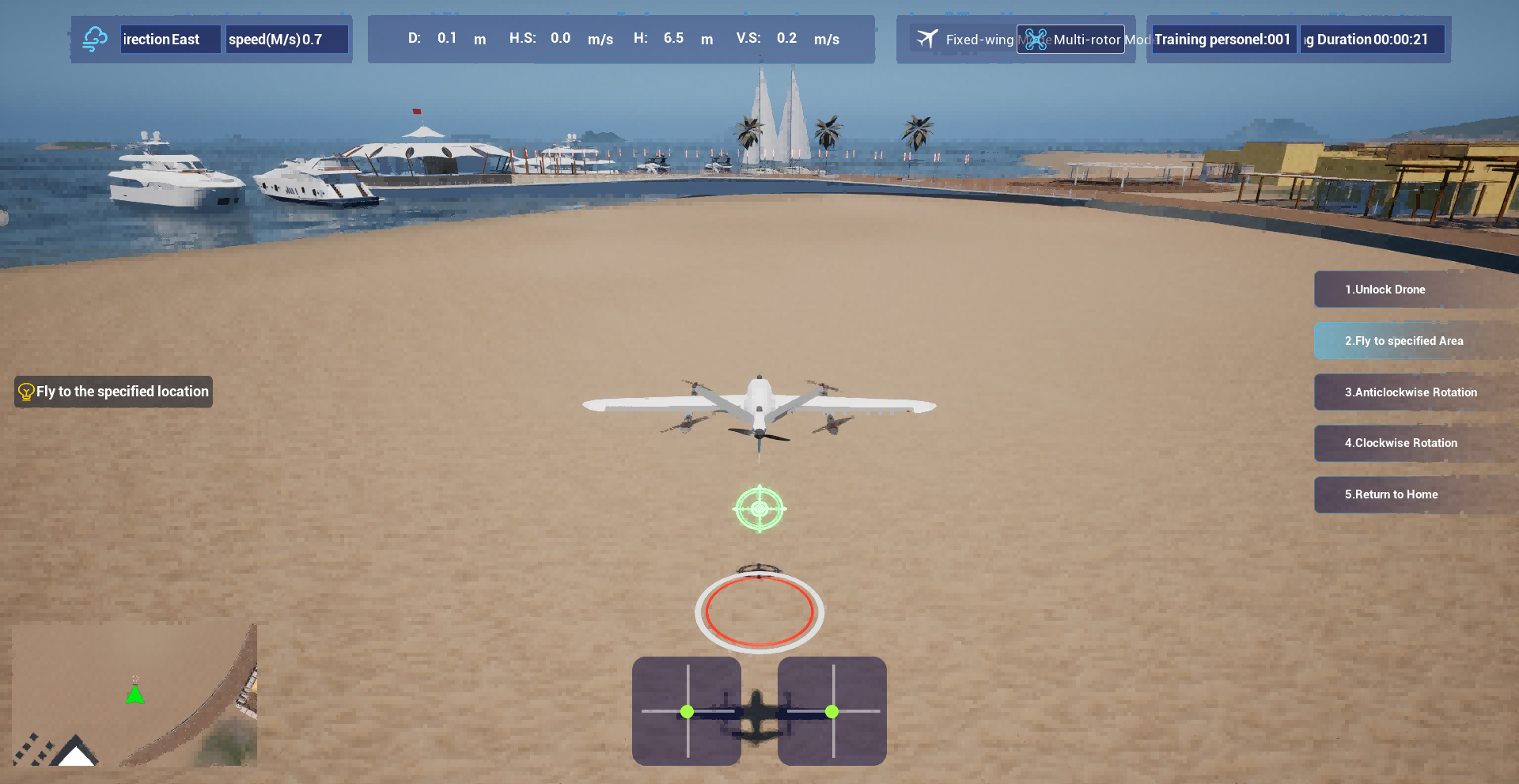
Vendor demos are polished performances, but the real story often hides in what gets skipped. Watch how quickly the presenter moves past certain screens, which features get a casual mention instead of a live click-through, and which questions trigger a detour to a “future roadmap” slide. Those moments reveal more than any scripted highlight reel.
Pay attention to the language that fills the gaps. Phrases like “we can customize that” or “this will be available in the next release” should prompt a direct follow-up: ask for a current customer example or a sandbox login to test the promised capability yourself. If the response gets vague, that's usually your answer.
A practical habit is to request an unscripted walk-through of a workflow you already know well. Bring your own sample data and watch what breaks. The friction you encounter during the demo is often a preview of what your team will face daily, so treat any hesitation or workaround as a data point, not a deal-breaker.
The Support Call Test Before You Sign with a Simulator Company
Most people judge a simulator company by its demo reel or the smoothness of its sales pitch. Those things can be rehearsed. A support call is different. Pick up the phone before you sign anything and ask a real, slightly messy question—something about hardware compatibility, licensing terms, or what happens when a module breaks mid-session. How the person on the other end handles that call will tell you more about your next three years than any brochure.
Listen for three things. First, how long you wait. A minute is fine; fifteen minutes is a warning sign. Second, whether the person actually understands the product or just reads from a script. Third, whether they try to solve your problem or rush to upsell you a higher tier. A good support team treats a pre-sales question with the same patience as a post-sales emergency. If they are short with you when you are still a prospect, imagine how they will be once the invoice is paid.
This test also exposes hidden gaps. You might hear things like "I'll need to check with engineering" for a question that should have a straightforward answer, or you might get transferred three times before anyone can help. Those small frictions compound over months of training. A simulator company that cannot answer a basic support question before you sign is unlikely to become more responsive after the contract locks you in.
When Cheap VTOL Simulators Cost More Long-Term
A budget VTOL simulator might look like a smart way to stretch a training budget, but the savings often evaporate once you factor in how quickly pilots outgrow the software. The simplified flight models and limited environmental variables teach basic stick-and-rudder coordination, yet they fail to replicate the complex aerodynamic interactions of transitional flight. As a result, trainees develop habits that need to be unlearned later, requiring extra hours on a more capable platform and driving up total instruction costs far beyond the initial purchase price.
Another hidden expense comes from the upgrade path. Many low-cost simulators ship with a narrow set of default aircraft and scenarios, then charge separately for each add-on—weather systems, sensor failure drills, or additional VTOL configurations. Over a year or two, those small purchases stack up, and you may find yourself paying more than you would have for a mid-range system that included them from the start. Add in sporadic updates and limited technical support, and the cheap option becomes a recurring source of frustration rather than a one-time bargain.
Hardware compatibility further skews the long-term math. Inexpensive simulators are often designed around a specific joystick or pedal set, and when that hardware wears out or gets discontinued, finding a compatible replacement can be difficult. Higher-end counterparts typically support a wider range of input devices and offer longer product life cycles, meaning they adapt to new equipment without forcing you to abandon your existing setup. In the end, a slightly larger upfront investment can prevent the cycle of repeated small purchases and downtime that makes cheap simulators more expensive over time.
What Real VTOL Pilots Say About Simulator Transfer
Most VTOL pilots I've spoken with describe simulator time as essential for learning switch positions and emergency flows, but they're quick to point out the gap when it comes to the actual feel of transitional lift. The sim gets the checklist rhythm right, yet hovering in a crosswind still surprises new pilots who've only flown the desktop trainer.
One experienced test pilot put it bluntly: the simulator teaches you to manage the aircraft, not to fly it. For vertical takeoff and the conversion to forward flight, the visual and motion cues in the sim can lag behind the real thing, so pilots learn to ignore certain warnings that become critical in the air. Still, almost everyone agrees that rehearsing engine-out procedures in the sim saves lives, even if the control forces feel synthetic.
There's also a split between military and civilian operators. Military crews often get more simulator hours and say the transition to the real VTOL is smoother because they treat the sim as a mission rehearsal tool, not a substitute for stick time. Civilian pilots transitioning to eVTOL aircraft tend to over-rely on the automation modeled in the sim, then struggle with the manual backup modes when the real aircraft behaves slightly differently due to sensor noise or wind gusts.
Upgrade Paths: Avoiding the Orphaned Simulator Trap
Falling into the orphaned simulator trap usually starts with a simple oversight: the tool you rely on stops receiving updates, the vendor disappears, or the community moves on. Before you know it, your entire workflow is pinned to a piece of software that no longer talks to anything else.
A practical upgrade path means treating the simulator as a replaceable component, not a permanent foundation. Keep exports in open formats, document your custom scripts, and check at least twice a year whether the project is still actively maintained. If the commit history has gone quiet, start sketching a migration route to a different system while you still have leverage.
The real risk isn't the initial switch—it's the slow drift into dependency. Set a recurring reminder to test your backup plan, and don't let convenience turn into captivity. A simulator should serve your training or research goals, not become an anchor that drags them down.
FAQ
Look for a vendor that actually understands the two very different flight regimes you're dealing with. In hover, you need accurate modeling of rotor wash, ground effect, and control authority at low speeds. In forward flight, you need proper fixed-wing aerodynamics including stall behavior and control surface effectiveness. The vendor should be able to show how their model handles the transition corridor, not just claim it works. Ask for a demo where you can watch the aircraft switch modes under different wind conditions and see if the response looks physically plausible rather than just numerically stable.
Push them to explain their approach to modeling the nonlinear aerodynamics during transition. A trustworthy vendor will talk about blended lift curves, propeller slipstream effects on the wing, and how they handle control mixing as airspeed changes. If they only mention simple interpolation between hover and cruise models, that's a red flag. Ask for validation data from a real VTOL platform they've simulated. If they can't share flight test comparisons, ask for at least a published paper or technical report that describes their method in enough detail for your engineers to evaluate.
Start with software-in-the-loop for evaluating the core flight dynamics and autopilot logic. It's faster to set up and lets you compare multiple vendors on the same scenarios. Once you've narrowed down to two or three, then bring in hardware-in-the-loop to check timing, sensor latency, and communication interfaces. A vendor that pushes you straight to HIL without first proving their SIL model is often hiding weaknesses in the physics. Conversely, if they can't support HIL at all, that limits your ability to test actual flight controllers.
For VTOL operations, you need more than a basic wind vector. Look for gust models that affect hover stability, turbulence that scales with altitude, and thermal effects if you're operating in urban or mountainous areas. Sensor modeling should include realistic noise, update rates, and dropouts for GPS, IMU, and barometer. If the vendor only offers a perfect sensor model with no failure injection, you won't be able to test degraded modes or emergency procedures that are crucial for VTOL platforms operating near people and structures.
It matters a lot, but not in the way most people think. Don't just count how many VTOL projects they list on their website. Ask for a reference call with an engineer, not a sales contact, from a past customer. Specifically ask about how the vendor handled unusual configurations like tilt-rotors, tilt-wings, or vectored thrust. If their experience is all with quadplanes and you're building a tailsitter, that gap will show up in transition modeling and control allocation. A good vendor will be honest about what they've done and what they'd need to develop.
You need more than a one-time software delivery. Ask about how they handle new aircraft configurations, updates to flight dynamics, and integration with your autopilot software. A practical contract includes a clear process for requesting changes, a response time for bug fixes, and access to the underlying model parameters so your team can tune things without waiting on the vendor. If they keep everything in a black box and charge per change, you'll be stuck every time you modify your airframe or control laws.
Yes, look beyond the license fee. Ask about per-seat costs, fees for adding new aircraft models, charges for parallel or distributed simulation runs, and whether you need to buy separate modules for weather, sensors, or visualization. Some vendors charge a low upfront price but then require annual subscriptions for updates that should be included. Also check if the simulator can run on your existing hardware or if you'll need to invest in high-end workstations. Finally, factor in the time your engineers will spend learning the tool. A cheap but poorly documented simulator can cost far more in lost productivity.
Request a structured evaluation period, typically two to four weeks, with a specific set of benchmark scenarios you define. These should include hover in gusty winds, a full transition at different payload weights, and a return-to-home under sensor failure. Have your own engineers run the scenarios and document the results, rather than letting the vendor demo it for you. If the vendor won't provide a trial license or only offers a limited sandbox, that's a signal they're not confident in their product under real scrutiny. Also ask for a written statement of which features in the trial match the full version.
Conclusion
Selecting a VTOL UAV simulator company is not about who has the flashiest interface or the longest feature list; it is about whether the platform actually mirrors the unforgiving physics of vertical-to-horizontal transition flight. Many products on the market handle hovering and forward cruise adequately, yet fall apart in the transition corridor, where torque, gyroscopic precession, and lift asymmetry conspire to punish real airframes. Before you commit, push vendors to demonstrate exactly that phase under gusty conditions, not just pre-recorded paths. Ask for a trial that lets you fail in the same ways a real VTOL would fail. If the vendor cannot show you a stalled motor recovery, a vortex ring state entry, or a transition abort, you are looking at a toy, not a training tool. Use the support call test: block a weekday afternoon and call their technical line with a genuine configuration problem. How quickly you reach someone who understands the aircraft model tells you more than any brochure.
The true cost of a cheap simulator emerges months later, when pilots build muscle memory on sanitized physics and then struggle to transfer skills to the actual platform. Experienced VTOL operators repeatedly warn that hours spent in a simplified model create negative transfer, especially for throttle management in the tilt-rotor phase. Look for companies that publish upgrade paths and have a track record of keeping older airframe modules alive through software generations. An orphaned simulator—one that stops receiving model updates after a vendor pivots to enterprise contracts—forces you to re-buy the entire training stack and re-train instructors. Ask real pilots what they actually carry from sim to flight line; their answers usually center on emergency procedure repetition and control sensitivity, not pretty graphics. In the end, choose the vendor who treats your transition-phase failures as a design discussion, not a support ticket to close.
Contact Us
Contact Person: Niles Liu
Email: [email protected]
Tel/WhatsApp: 8619945009803
Website: https://srizfly.com/