

Wholesale Private 5G Networks: Powering Next-Gen Enterprise Connectivity
2026-06-04
As enterprises race to embrace digital transformation, the demand for secure, high-performance connectivity has never been greater. Wholesale private 5G networks are emerging as the backbone of next-gen enterprise operations, offering dedicated bandwidth, ultra-low latency, and ironclad security. But how can service providers capitalize on this opportunity? IPLOOK is at the forefront of this revolution, enabling partners to deploy and monetize private 5G networks with agility. In this blog, we explore the transformative power of wholesale private 5G and how IPLOOK’s solutions unlock new revenue streams for businesses worldwide.
The Shift Toward Private 5G in Wholesale Models
Private 5G networks are quietly reshaping the wholesale telecom landscape, moving from a niche enterprise curiosity to a cornerstone of new service delivery. Instead of relying solely on public macro networks, wholesale providers are now packaging dedicated spectrum, core network functions, and edge compute as a unified offering. This shift isn't merely about faster speeds but about giving enterprises control over their connectivity fabric—prioritizing latency-sensitive tasks, securing data on-premises, and customizing coverage down to a single production line. The wholesale model thrives here because it lets smaller operators and system integrators buy into the 5G value chain without shouldering the full cost of spectrum licenses or nationwide infrastructure, opening the door to localized, high-margin services that legacy partnerships rarely accommodated.
What makes this evolution particularly compelling is how it untethers innovation from the traditional carrier roadmap. In a wholesale private 5G setup, the network slice becomes a product—configurable, isolated, and ready to plug into industrial IoT, autonomous guided vehicles, or augmented reality workflows. Wholesalers are taking on the role of platform orchestrators, offering APIs that let downstream partners dynamically adjust bandwidth or spin up temporary networks for events or construction sites. This agility stands in stark contrast to the months-long provisioning cycles of old, and it’s attracting a wave of non-traditional players—think building management firms and logistics companies—who see connectivity as a managed utility rather than a telco-centric service. The result is a market where the wholesale layer becomes invisible to the end user but indispensable to the service provider chasing differentiation.
Of course, the transition isn’t frictionless. Interoperability headaches between equipment vendors, spectrum harmonization across borders, and the sheer complexity of operating a private core still give many would-be adopters pause. Yet the momentum is undeniable: major wholesalers are quietly striking deals with hyperscalers to bundle 5G with cloud services, turning what was once a capex-heavy gamble into an opex-friendly consumption model. As enterprises grow more comfortable with network-as-a-service, the wholesale model becomes the engine behind a new breed of hyper-local, intent-driven connectivity. Those who master the art of simplifying private 5G delivery will capture a market that rewards speed, customization, and trust far more than scale alone.
How Wholesale 5G is Reshaping Enterprise Connectivity
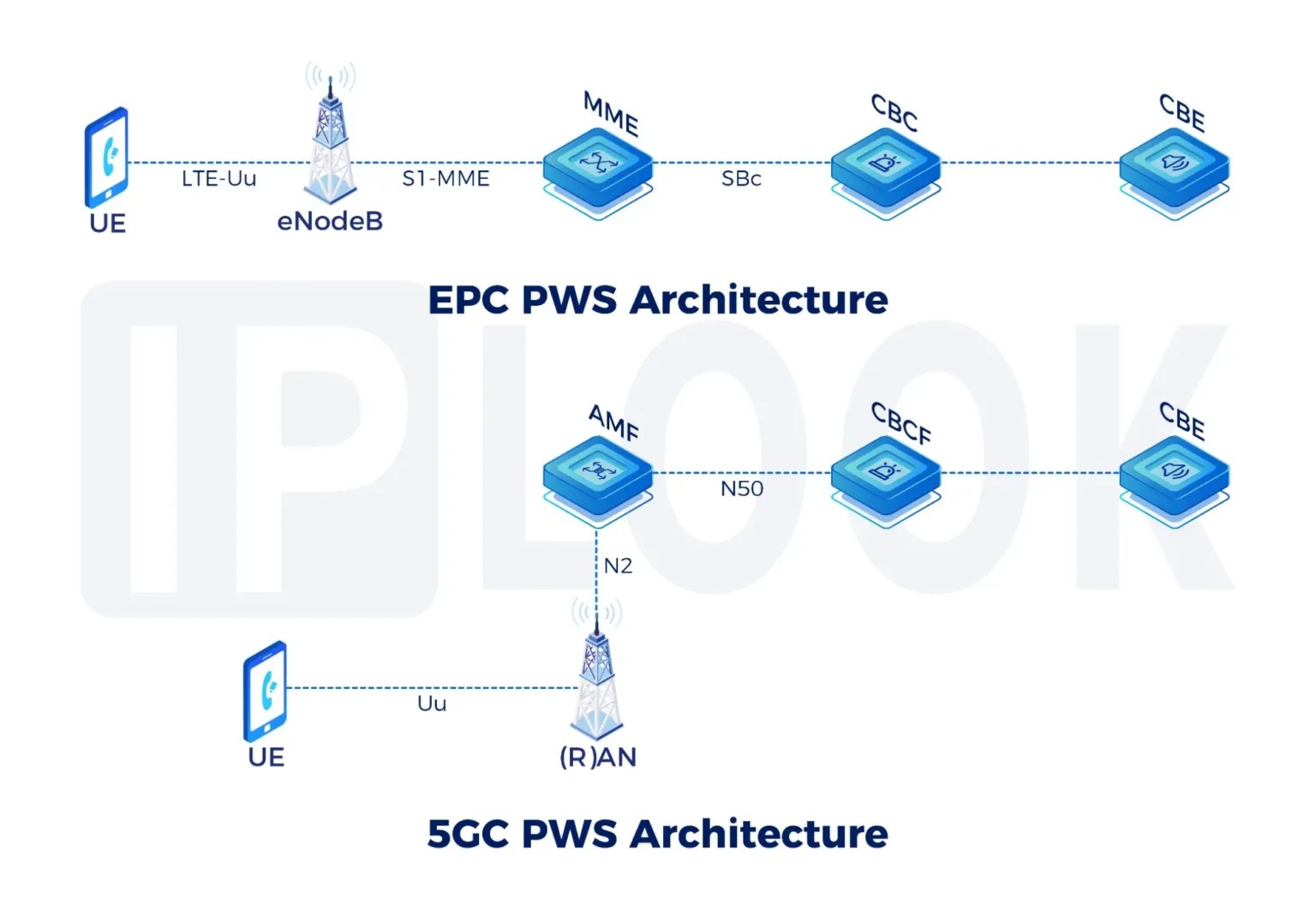
The traditional model of enterprise connectivity often meant navigating rigid contracts with a handful of carriers. Wholesale 5G flips that script by allowing a broader ecosystem of service providers to build tailored packages atop carrier infrastructure. Companies can now tap into ultra-reliable, low-latency networks without the capital drain of building their own, resetting how they scale operations across multiple locations.
Network slicing—one of 5G’s headline capabilities—finds its practical footing through wholesale partnerships. An enterprise can essentially book a private slice of the spectrum for a factory floor’s robotic systems, while keeping office communications on a separate, more public-oriented segment. This granular control goes far beyond what legacy networks could offer, turning connectivity from a utility into a strategic asset.
Beyond pure bandwidth, the wholesale model accelerates edge computing deployments. By placing processing power closer to where data originates—whether that’s an oil rig or a downtown smart building—companies cut the round-trip delays that hamper real-time analytics. The result is a landscape where predictive maintenance, augmented reality training, and sensor-driven logistics aren’t just possible; they become everyday operational pillars, all underpinned by a more democratic 5G marketplace.
Key Drivers Behind the Adoption of Private 5G
Industrial environments are demanding more from their connectivity than ever before. Autonomous guided vehicles, real-time video analytics, and massive sensor deployments simply can't operate reliably over Wi-Fi or wired networks alone. The need for very low latency and guaranteed reliability in motion control or augmented reality for field workers pushes manufacturers, ports, and warehouses to look beyond legacy setups. Private 5G steps in as the only wireless technology that can handle such density and predictability, making it a natural fit for Industry 4.0 ambitions.
Another major force is the growing insistence on tight data control and rock-solid security. When sensitive production data, financial transactions, or patient records travel over a public network, it introduces risks that many organizations can't accept. By keeping all traffic on-premises under a dedicated infrastructure, companies eliminate exposure to third-party cores and shared resources. This local governance not only addresses compliance with regulations but also ensures the network continues to function even if external links go down, a critical requirement for utilities, mines, and emergency services that can't afford a single moment of disruption.
Finally, the appeal of a network tailored exactly to the needs of a specific operation cannot be overstated. Off-the-shelf cellular services come with rigid parameters, but a private deployment allows the operator to fine-tune spectrum usage, prioritize critical applications, and adjust coverage with surgical precision. Whether it’s a seaport needing to blanket container yards without interference or a university campus requiring seamless mobility for thousands of devices, the flexibility to design a network from the ground up empowers organizations to break free from one-size-fits-all limitations and unlock new productivity levels.
Real-World Use Cases of Wholesale Private 5G
Across manufacturing floors, wholesale private 5G is quietly reshaping how machines talk to each other. A car assembly plant might use it to coordinate hundreds of robotic arms with sub-millisecond timing, eliminating the need for cumbersome wired connections. What makes this different from earlier networks isn't just speed—it's the ability to handle tens of thousands of sensors in a single hall without interference, all behind a wall of dedicated spectrum that outsiders can't touch.
Port logistics hubs are another arena where this technology changes the game. Cranes unloading container ships rely on real-time video and lidar feeds to place cargo precisely, often in poor weather. Wholesale private 5G ensures those high-definition streams arrive without a hiccup, even when a ship's metal hull would normally wreak havoc on signals. The network slice dedicated to port operations can be tuned for massive upload capacity—something public networks rarely deliver consistently.
In mining, the use case gets grittier but no less transformative. Autonomous haul trucks moving through deep pits depend on constant, deterministic communication to avoid collisions and optimize routes. Wholesale private 5G networks, deployed as a service, let operators spin up connectivity across remote sites without building everything from scratch. They pay for what they use, scaling up during exploration booms or dialing back when a seam runs dry, all while keeping safety-critical systems air-gapped from the public internet.
Overcoming Connectivity Challenges with Private 5G
Private 5G networks are reshaping how industries tackle persistent connectivity hurdles. From dead zones in vast factory floors to interference on crowded Wi-Fi channels, traditional wireless often falls short where reliability matters most. By dedicating licensed or locally authorized spectrum to a single enterprise, organizations gain a clean, predictable air interface. This eliminates the erratic performance caused by public network congestion and allows precise control over latency and throughput—key for time-sensitive robotics or real-time monitoring in harsh environments.
Another overlooked advantage is the ability to tailor coverage to match physical constraints. Warehouses with metal racking, underground mines, and sprawling ports all create unique signal propagation challenges that off-the-shelf solutions rarely address. With private 5G, radio planning can incorporate small cells, beamforming, and network slicing tuned to specific machinery or workflows. Instead of forcing operations to adapt to the network, the network adapts to the operation—supporting seamless mobility for autonomous vehicles or bridging indoor-outdoor transitions without handover drops.
Security and segmentation also become simpler when the network is locally owned. Rather than pushing sensitive data through a carrier's core, private 5G keeps traffic on-premises, reducing exposure to external threats and simplifying compliance. This architecture naturally supports micro-segmentation, isolating critical systems from worker devices or guest access with hardware-enforced policies. For companies struggling with connectivity fragility in high-stakes environments, the shift isn't about faster downloads—it's about building a communications foundation that matches the resilience of their operational goals.
The Future Landscape of Enterprise 5G Networks
The shift toward 5G is quietly rewriting what it means to run a modern business. Instead of merely promising faster downloads, the technology is weaving connectivity into every physical corner of an operation, from autonomous guided vehicles on factory floors to real-time inventory systems that barely blink. The real story lies in how these networks will let businesses treat data not as a batch of reports that arrives the next morning, but as a live pulse that shapes decisions on the spot.
Beneath the buzzwords like 'network slicing' and 'ultra-low latency' sits a more nuanced picture. Different industries are carving out their own DNA within the 5G landscape: a hospital might prioritize isolated slices that guarantee zero interference for remote surgeries, while a logistics hub leans into massive sensor density to track millions of packages without a single missed scan. Security, too, is becoming more of a design principle than a bolt-on afterthought, baked directly into the architecture rather than sprinkled on top.
Peering a few years ahead, the boundaries between physical and digital will start to smear. AI won't just predict machine failures; it'll restructure entire production lines on the fly, while augmented reality layers onto everyday tasks without the jerky lag that plagues current setups. Crucially, the enterprises that thrive won't be the ones with the flashiest tech, but those that reshape their workflows around the assumption that connectivity is no longer a utility—it's a raw material for innovation.
FAQ
They’re dedicated 5G infrastructures built and operated by a neutral host or carrier for multiple enterprises, offering secure, high-performance wireless connectivity without each business having to own the entire network.
Unlike public 5G that serves millions on shared spectrum, a wholesale private 5G setup provides dedicated bandwidth and localized control, ensuring data stays on-premises and performance isn’t affected by consumer traffic peaks.
Manufacturing plants, logistics hubs, seaports, and mines see immediate gains—places where low latency, device density, and rock-solid reliability are critical for automation, real-time monitoring, and safety systems.
It strips away the complexity of spectrum licensing and radio planning for the end user. A single infrastructure serves several tenants on a campus or industrial park, slashing costs and making deployment much faster.
It replaces a patchwork of Wi-Fi access points with a unified wireless fabric that handles high device density, offers seamless mobility, and slices the network to give each application its own guaranteed performance tier.
They bridge the gap between the network operator and the enterprise, customizing the connectivity for specific OT systems, stitching together edge computing, and ensuring the factory floor or warehouse runs without hiccups.
Absolutely. The mix of ultra-low latency, massive sensor density, and network slicing means you can simultaneously run real-time robot control, thousands of asset trackers, and high-definition video analytics without interference.
The upfront build is shared among multiple users, so individual enterprises avoid heavy CapEx. Instead, they usually pay a subscription or usage-based fee, turning a major infrastructure investment into a predictable operational expense.
Conclusion
The shift toward wholesale private 5G networks is rapidly transforming how enterprises approach connectivity. Instead of relying on traditional public networks or building their own infrastructure from scratch, businesses are turning to wholesale models that offer dedicated, secure, and high-performance 5G access. This approach allows systems integrators and service providers to deliver scalable solutions tailored to specific operational needs, from manufacturing floors to logistics hubs. By decoupling infrastructure management from service delivery, wholesale private 5G empowers organizations to focus on core activities while enjoying the low latency, reliability, and massive device support that next-gen connectivity demands.
Behind this momentum lie several key drivers: the surge in IoT deployments, the need for real-time data analytics, and the growing emphasis on network sovereignty. Real-world use cases already illustrate the impact—automated guided vehicles in warehouses, remote surgery support in healthcare, and predictive maintenance in oil and gas facilities. These applications demonstrate how private 5G overcomes longstanding connectivity hurdles, such as patchy Wi-Fi coverage and latency-sensitive operations. Looking ahead, the future of enterprise 5G will be defined by tighter integration with edge computing and AI, enabling even more responsive and intelligent ecosystems. As wholesale models mature, they will become the backbone of digital transformation across industries, fostering innovation without the burden of proprietary infrastructure.
Contact Us
Contact Person: Shimmy
Email: [email protected]
Tel/WhatsApp: 85253392231
Website: https://www.iplook.com